Table of Contents
Introduction
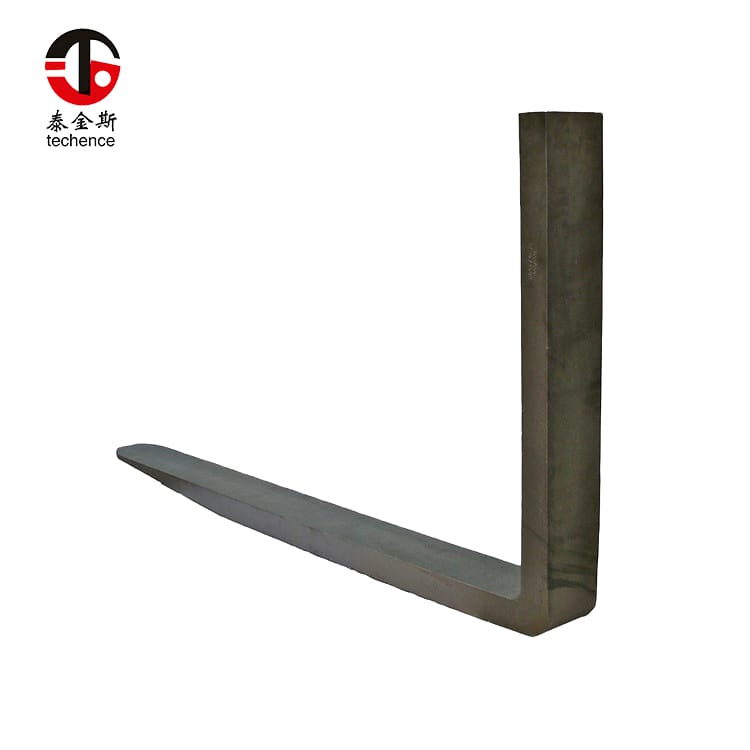
Moving heavy, long, or oversized loads is a daily challenge in warehouses, factories, logistics yards, construction material handling, and industrial storage areas. Standard forklift forks are often suitable for common pallets, but they may not provide enough support when the load is longer than the original fork length. That is where forklift fork extensions become useful.
Forklift fork extensions are designed to slide over existing forklift forks and increase the usable support length. They help operators handle longer pallets, wide packaging, steel sections, pipes, timber, panels, and other bulky materials with better contact under the load. For many operations, they are a practical and flexible attachment because they can be installed when needed and removed after use.
However, choosing them for heavy loads requires more than simply selecting the longest size available. Fork extensions affect load center, stability, rated capacity, turning behavior, and operating safety. OSHA’s interpretation on fork extensions states that fork extensions directly affect forklift stability, capacity, and safe operation. That means buyers should treat them as a technical handling component, not just a simple accessory.
This guide explains how to choose forklift fork extensions for heavy loads from a practical purchasing and application perspective. It covers sizing, capacity, material, structure, safety rules, common mistakes, and supplier selection, so you can make a more confident decision before ordering.
What Are Forklift Fork Extensions?
Forklift fork extensions are steel sleeves or extension attachments that fit over the original forklift forks. Their main purpose is to increase fork length so the forklift can better support long or oversized loads.
They are also commonly called forklift fork extenders, fork extensions for forklifts, pallet fork extensions, forklift extension forks, or fork extension sleeves. Although the names may vary, the basic idea is the same: they extend the supporting surface of the original forks.
A forklift itself is a powered industrial truck used to lift and move materials over short distances, and its forks are one of the most important load-bearing parts of the machine. The general design and function of a forklift show why fork length, load position, mast stability, and counterweight balance all matter during material handling.
Fork extensions should not be confused with replacement forks. They are usually used as removable attachments for specific handling tasks. If your operation handles long and heavy loads every day, longer forged forks or custom forklift forks may sometimes be a better long-term option. For buyers comparing fork solutions, the Techence forklift fork product category is a relevant internal reference for standard and custom fork-related products.
Why Heavy Loads Require the Right Fork Extensions
Heavy loads are more demanding than light or medium pallet loads because they create higher stress on the forklift, fork arms, fork extensions, and load center. When forklift fork extensions are too long, poorly fitted, or too light for the application, they may increase the risk of load instability.
A common misunderstanding is that longer fork extensions automatically make lifting safer. In reality, longer support only helps when the extension length, forklift capacity, load weight, and load center are properly matched. If the load sits too far forward, the forklift may lose part of its safe handling capacity.
OSHA’s forklift load handling guidance explains that many forklifts are rated using a 24-inch load center. The load center is the distance from the face of the forks to the load’s center of gravity. When a load moves farther forward, the forklift’s safe handling capacity can decrease. This is why choosing forklift fork extensions for heavy loads requires careful attention to load position, not only total load weight.
For example, a long but lightweight carton may require more length but not high structural strength. A shorter steel component may require less length but much higher load capacity. The buyer must evaluate both dimensions and weight together.
When Should You Use Forklift Fork Extensions?
Forklift fork extensions are useful when the original forks are too short to support the load properly. They are especially practical for occasional handling of longer items or when different load sizes are handled in the same facility.
Common applications include long pallets, oversized cartons, construction boards, timber, steel profiles, plastic sheets, pipes, packed machinery parts, warehouse storage goods, and industrial materials with a long base.
They are often used in warehouses where pallet sizes are not always consistent. They are also useful in factories that need to move long materials between production, storage, and loading areas. In logistics operations, they can help support bulky goods during short-distance movement.
However, they are not suitable for every task. If the load is extremely heavy, unstable, high-value, or handled repeatedly throughout the day, a more specialized fork solution may be needed. In those cases, buyers should compare forklift fork extensions with longer forks, heavy-duty forks, or custom attachments from a professional manufacturer.
Forklift Fork Extensions vs Longer Forks
Before choosing fork extensions, it is important to understand the difference between temporary extensions and longer replacement forks.
Forklift fork extensions slide over existing forks. They are removable, flexible, and convenient for handling different load sizes. Longer replacement forks are complete fork arms designed from the beginning with a longer working length and rated load capacity.
For occasional long-load handling, forklift fork extensions are often more practical. For continuous heavy-duty handling, longer forks may provide better strength and stability because they are manufactured as one complete load-bearing structure.
| Option | Best Application | Main Advantage | Key Limitation |
|---|---|---|---|
| Forklift fork extensions | Occasional long pallet or oversized load handling | Flexible, removable, and easy to store | Do not increase forklift rated capacity |
| Longer replacement forks | Frequent long-load handling | Stronger integrated structure | Less flexible and requires fork replacement |
| Heavy-duty custom forks | Repeated industrial heavy-load handling | Built for specific size and capacity needs | Requires detailed technical confirmation |
| Forklift attachments | Special material handling tasks | Can solve non-standard handling problems | Must be matched with forklift capacity and safety rules |
If your facility only occasionally handles long loads, forklift fork extensions may be enough. If your operation handles heavy and oversized materials every shift, custom forks or stronger attachment solutions may be more appropriate. For this kind of selection, a professional supplier’s experience becomes important.
Key Factors to Consider Before Buying Fork Extensions
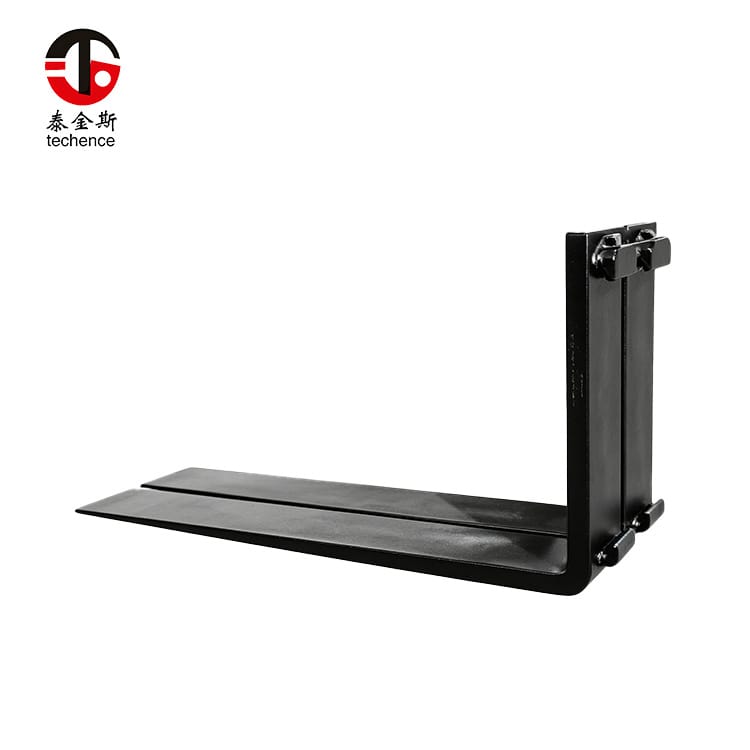
Choosing forklift fork extensions should start with the load, not the product catalog. A good buyer should collect several pieces of information before ordering.
The first factor is forklift rated capacity. Fork extensions cannot increase the lifting ability of the forklift. They only change how the load is supported. If the load is already close to the forklift’s rated limit, extending the load center may create a safety issue.
The second factor is original fork size. You need to measure the original fork length, width, and thickness. Fork extensions must fit the forks correctly. If the internal width is too narrow, the extension will not install properly. If it is too wide, it may move during operation.
The third factor is load size. A long pallet, wide crate, pipe bundle, or steel plate may require different support length and contact area. The more uneven or flexible the load is, the more important support distribution becomes.
The fourth factor is handling frequency. Light occasional use and daily heavy-duty use should not be treated the same. High-frequency operations usually need stronger material, better welding, reinforced structure, and more careful inspection.
The fifth factor is working environment. Indoor warehouses, outdoor yards, loading areas, manufacturing plants, and material storage zones all create different wear conditions. Surface treatment, corrosion resistance, and impact resistance can influence service life.
How to Choose the Right Length
Length is usually the first thing buyers ask about, but it should never be selected in isolation. The right length depends on the original fork length, load length, load center, and support requirement.
A widely used industry rule is that fork extensions should not exceed 150% of the original fork length. In practical terms, if the original fork is 48 inches long, the extension should generally not be longer than 72 inches. This rule exists because excessive extension length can move the load center forward and reduce forklift stability.
That does not mean you should always choose the maximum allowed length. For heavy loads, shorter and stronger support may be safer than an over-length extension. The goal is to support the load properly while keeping the center of gravity as close as possible to the forklift.
Before choosing length, ask these questions:
What is the original fork length?
How long is the load?
Where is the load’s center of gravity?
Does the load need full support or partial support?
Will the forklift turn, reverse, lift high, or travel over uneven ground?
Will the extension be used occasionally or frequently?
If the load is long but light, a standard length may work. If the load is both long and heavy, the buyer should confirm capacity, load center, and structural strength with the supplier before ordering.
How Load Capacity Affects Selection
Load capacity is one of the most important selection points for forklift fork extensions. A fork extension may look strong from the outside, but its actual performance depends on steel thickness, internal clearance, welding quality, reinforcement design, and how the load is distributed.
For heavy loads, you should not only ask, “How much can the extension carry?” You should also ask, “Where is the load weight located?” A compact heavy load close to the fork face is very different from a long heavy load sitting farther forward.
OSHA’s load center guidance shows that when the load center increases, safe capacity can decrease. This principle is especially important for forklifts using fork extensions because the added length may encourage operators to pick up loads farther from the fork face.
A professional selection process should include:
Forklift rated capacity
Original fork capacity
Fork extension rated capacity
Actual load weight
Load length and width
Load center position
Maximum lifting height
Travel distance
Ground condition
Handling frequency
Forklift fork extensions should always be selected as part of a complete handling system. The forklift, original forks, extensions, operator, and load must work together safely.
Material and Structure Options
Most forklift fork extensions for industrial use are made from steel. Steel provides strength, durability, and resistance to impact, which makes it suitable for warehouse, factory, logistics, and construction material handling.
For heavy loads, steel forklift fork extensions are usually preferred because they can provide stronger support than lightweight alternatives. The exact material grade, wall thickness, and reinforcement design should match the application. If the load is dense, sharp-edged, or handled frequently, reinforced forklift fork extensions may be a better choice.
There are also different structural designs. Open-bottom fork extensions are usually easier to install and remove. Closed-bottom fork extensions may provide more contact and support, depending on the design and application. Some extensions use retaining pins, locking loops, or other securing devices to help prevent accidental movement.
Surface treatment is also worth considering. A good coating can help reduce corrosion, improve visibility, and extend service life. In outdoor or humid environments, corrosion protection becomes more important.
Safety Rules for Using Forklift Fork Extensions
Forklift fork extensions must be used correctly. Even a well-made extension can become unsafe if it is overloaded, poorly secured, or used with the wrong load.
The first rule is to secure the extensions properly. They should not be able to slide off the original forks during operation. The locking device must be checked before use.
The second rule is to avoid overloading. Fork extensions do not increase forklift capacity. If the forklift, fork arms, or extensions are not rated for the load, the operation should not continue.
The third rule is to keep the load balanced. The load should sit evenly across both forks. Side loading, off-center loading, and sudden movement can increase risk.
The fourth rule is to keep the load as close as possible to the fork face. The farther the load moves forward, the greater the effect on stability.
The fifth rule is to reduce speed and avoid sharp turns. Fork extensions increase the effective fork length, which can change how the forklift behaves during travel and turning.
The sixth rule is operator awareness. Operators should understand how fork extensions affect load center, visibility, turning radius, and stopping distance.
Common Mistakes When Buying Fork Extensions
Many problems start before the extensions are even installed. Poor purchasing decisions can lead to poor handling performance.
One common mistake is choosing only by length. A buyer may request the longest available extension without checking whether the forklift and original forks can safely support the load at that length.
Another mistake is ignoring the original fork size. If the extension does not fit correctly, it may be difficult to install or may move during operation.
A third mistake is using light-duty extensions for heavy loads. Low-strength extensions may bend, deform, or wear quickly under high-frequency industrial use.
A fourth mistake is failing to consider the load center. Even when the load weight appears acceptable, the forward position of the load may reduce stability.
A fifth mistake is overlooking inspection and maintenance. Fork extensions should be checked regularly for bending, cracks, worn locking devices, damaged welds, corrosion, or deformation.
A sixth mistake is buying from a supplier without technical support. For heavy loads, buyers need more than a product size list. They need practical advice based on load data and handling conditions.
How to Match Fork Extensions to Different Applications
Different industries use forklift fork extensions in different ways. The correct choice depends on the material being handled.
For warehouse and logistics operations, the main requirement is usually flexible pallet handling. The load may be bulky but not extremely dense. Standard or medium-duty extensions may be suitable if they match the fork size and load conditions.
For construction material handling, loads may include boards, panels, pipes, and prefabricated materials. These items may be long, heavy, and sometimes uneven. Stronger steel construction and reliable locking are important.
For manufacturing plants, forklift fork extensions may be used for machine parts, fixtures, molds, or industrial packaging. These loads often require better control and careful positioning.
For steel, pipe, and timber handling, the load may be long and concentrated. In these applications, buyers should pay close attention to material thickness, extension structure, and actual load distribution.
For special or repeated heavy-load applications, a custom solution may be more reliable. Techence provides forklift forks, attachments, channel steel, hydraulic cylinders, and mast assembly products through its forklift products range, which can help buyers compare related handling components in one place.
What Information Should Buyers Provide to a Supplier?
A clear inquiry helps the supplier recommend the right fork extension faster and more accurately. Instead of only asking for a price or length, buyers should provide technical handling details.
Useful inquiry information includes:
Forklift model or rated capacity
Original fork length
Original fork width
Original fork thickness
Required extension length
Load weight
Load length, width, and height
Load material type
Handling frequency
Indoor or outdoor use
Maximum lifting height
Whether the load is centered or uneven
Whether custom dimensions are required
This information helps the supplier evaluate whether standard forklift fork extensions are enough or whether heavy-duty, reinforced, or custom extensions are needed.
For complex applications, the Techence contact page can be used as a practical inquiry destination for buyers preparing fork size, load data, and application details.
Maintenance and Inspection Tips
Forklift fork extensions should be inspected regularly, especially when used for heavy loads. A simple inspection routine can prevent many problems before they become serious.
Check the extension body for bending or deformation. If the sleeve no longer sits straight on the fork, it should not be used for heavy handling.
Inspect welds and reinforced areas. Cracks or visible damage may indicate fatigue or overloading.
Check locking pins, loops, or retaining devices. If the locking system is worn, loose, or missing, the extension may move during operation.
Look for corrosion, dents, or sharp internal edges. These can affect fit, durability, and safe installation.
Keep the extensions clean and dry when not in use. Dirt, rust, and debris can make installation harder and reduce service life.
Store them properly. Fork extensions should not be thrown on uneven ground or stacked in a way that causes bending.
Forklift fork maintenance also matters because extensions rely on the original forks for support. Techence’s article on forklift fork maintenance provides related inspection and service-life ideas for fork users.
How to Evaluate a Fork Extension Supplier
For heavy-load applications, supplier selection is just as important as product size. A reliable supplier should understand both manufacturing and application risk.
A strong supplier should be able to discuss fork size, steel thickness, load capacity, welding quality, locking method, surface treatment, packaging, and customization options. The supplier should also ask questions about the load and forklift, not only quote a standard model.
Experience matters because forklift fork extensions are used in real working environments, not just shown in product images. Heavy loads, uneven floors, frequent loading cycles, and rough handling all test the quality of the product.
Techence states that it specializes in forklift forks and attachments with more than 20 years of production and export experience. Its company background and product focus are introduced in The Techence Difference, which is relevant for buyers comparing long-term forklift fork and attachment suppliers.
Practical Selection Checklist
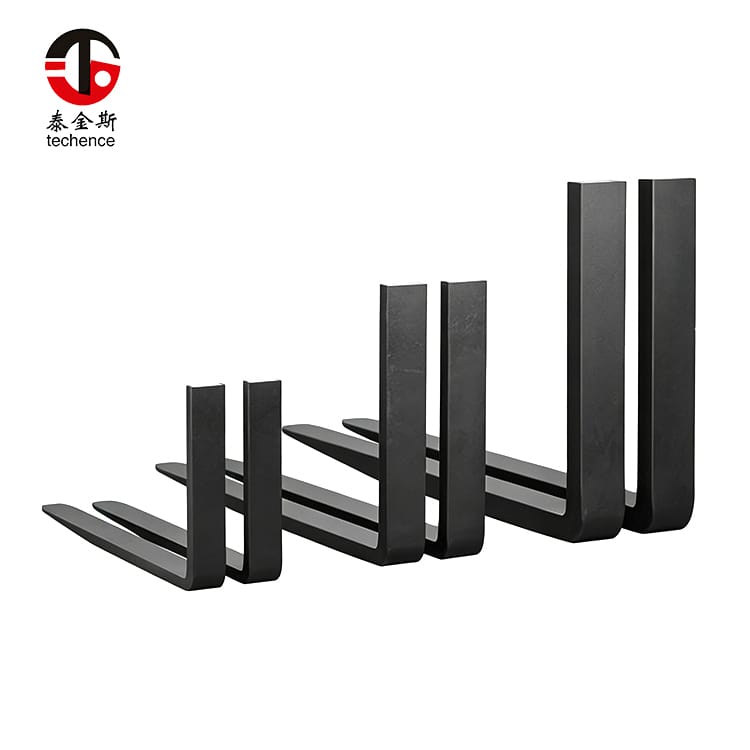
Before ordering forklift fork extensions, use this checklist to reduce the risk of choosing the wrong product.
Confirm the forklift rated capacity.
Measure the original fork length, width, and thickness.
Confirm the load weight and load center.
Choose extension length based on load support, not maximum length.
Avoid extensions longer than appropriate for the original fork length.
Select steel or reinforced structure for heavy loads.
Confirm the locking method.
Review the working environment.
Check whether standard or custom dimensions are needed.
Ask the supplier for technical confirmation if the load is heavy, long, or uneven.
This checklist is simple, but it reflects the core logic of safe selection. The right fork extension should fit the forklift, support the load, match the working frequency, and maintain a reasonable safety margin.
Conclusion
Choosing forklift fork extensions for heavy loads is not just a product selection task. It is a material handling decision that affects safety, efficiency, equipment life, and daily workflow.
The most important point is to look at the whole handling system. The forklift, original forks, fork extensions, load weight, load center, operator behavior, and work environment must all match. A longer extension is not automatically better. A stronger and properly fitted extension is usually more valuable than an oversized one.
For heavy loads, buyers should focus on fork compatibility, extension length, steel structure, rated capacity, locking method, load center, and supplier experience. When these factors are checked carefully, forklift fork extensions can become a practical solution for long pallets, oversized materials, and demanding industrial handling tasks.
FAQ
What are forklift fork extensions used for?
Forklift fork extensions are used to increase the support length of existing forklift forks. They are commonly used for long pallets, oversized loads, wide packaging, pipes, timber, steel materials, and other items that need more support than standard forks can provide.
Do forklift fork extensions increase forklift capacity?
No. Forklift fork extensions do not increase the rated lifting capacity of the forklift. They only extend the fork support length. The forklift capacity, original fork capacity, load weight, and load center must still stay within safe operating limits.
How do I choose the right size fork extensions?
Measure the original fork length, width, and thickness first. Then compare those measurements with the load length, load weight, and load center. The right size should support the load without pushing the center of gravity too far forward.
Are forklift fork extensions safe for heavy loads?
They can be safe when they are properly sized, correctly secured, used within rated capacity, and operated by trained personnel. Safety depends on the forklift, original forks, extensions, load position, ground condition, and handling method.
Can forklift fork extensions be customized?
Yes. Forklift fork extensions can be customized for special fork sizes, extension lengths, material thickness, locking methods, and application requirements. Customization is often useful for heavy-duty, high-frequency, or non-standard material handling.