Table of Contents
Introduction
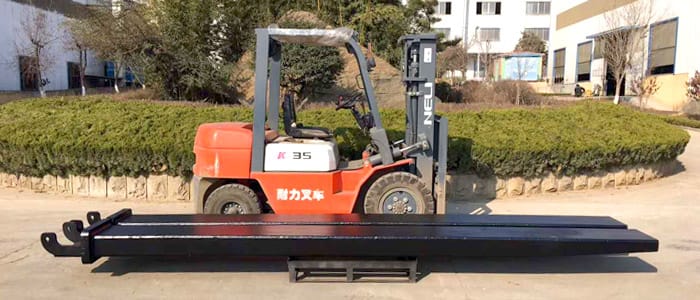
Choosing the right forks forklift is not just a small equipment detail. It directly affects lifting stability, operator confidence, workplace safety, equipment efficiency, and long-term handling performance. Forks are the main contact point between the forklift and the load, so even a small mismatch in fork size, capacity, or structure can create serious handling problems.
Many users focus first on the forklift model, but the forks often decide whether the machine can perform well in daily operation. A forklift may have enough power, but if the forks are too short, too thin, worn, or unsuitable for the load shape, the whole lifting process becomes unstable and inefficient.
This guide explains how to choose forks forklift for safer, faster, and more efficient load handling. It covers load type, capacity, fork dimensions, material strength, custom requirements, inspection, and maintenance from a practical material handling perspective.
Why Forks Forklift Selection Matters in Daily Operations
Forks forklift carry the full load during lifting, moving, stacking, loading, and unloading. They must support not only the static weight of the goods but also the extra force created during acceleration, braking, turning, and uneven ground movement.
In many workplaces, fork problems do not appear immediately. A fork may look suitable at first, but after repeated lifting, poor sizing or insufficient strength can lead to unstable loads, faster wear, difficult pallet entry, or reduced operating efficiency.
According to the general definition of a forklift, this type of industrial truck is designed to lift and move materials over short distances. In real operations, the forks decide how safely and efficiently that lifting function is transferred to the load.
A properly selected forks forklift can help improve load stability, reduce unnecessary repositioning, support smoother lifting, and make repetitive handling work more predictable. This is especially important in environments where operators handle different load shapes, weights, and working conditions throughout the day.
Understand the Working Role of Forks Forklift
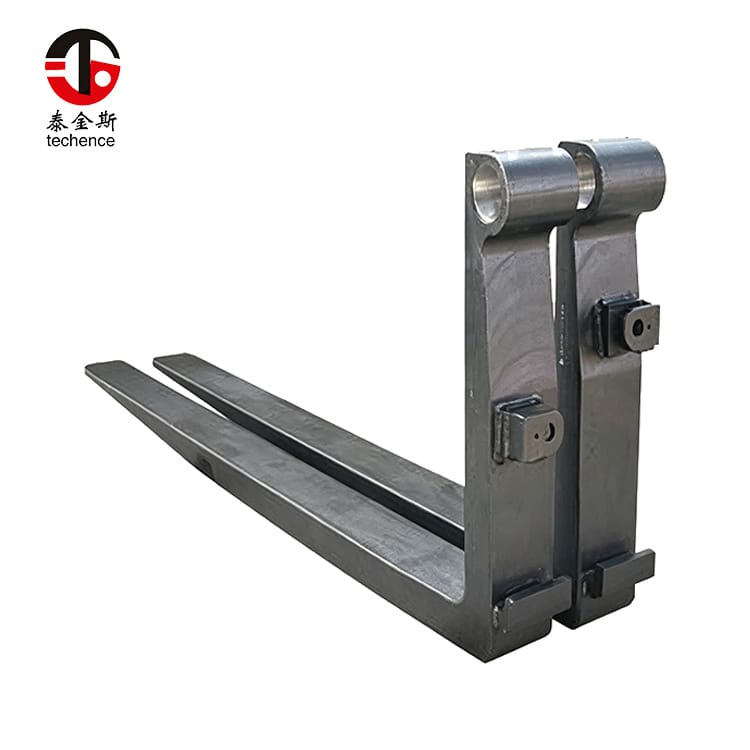
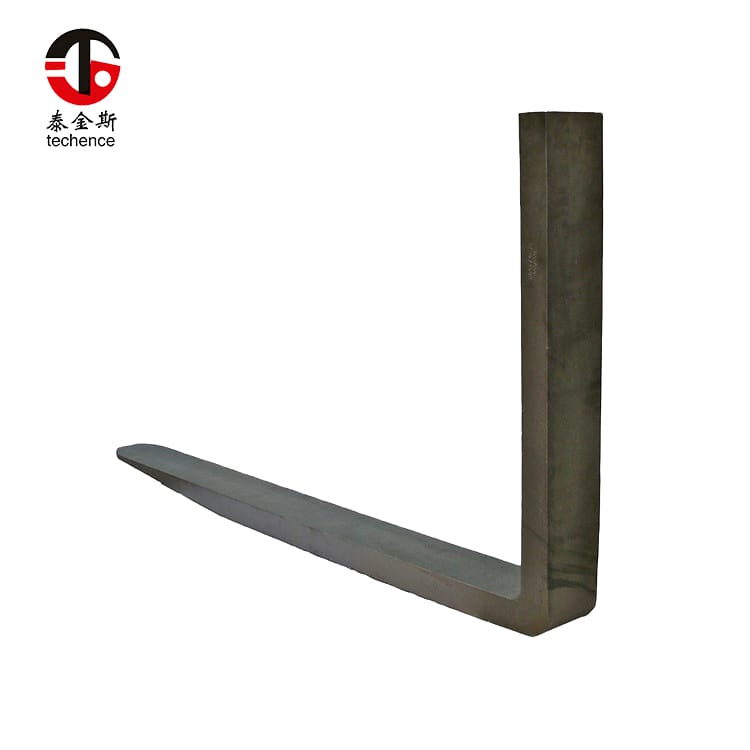
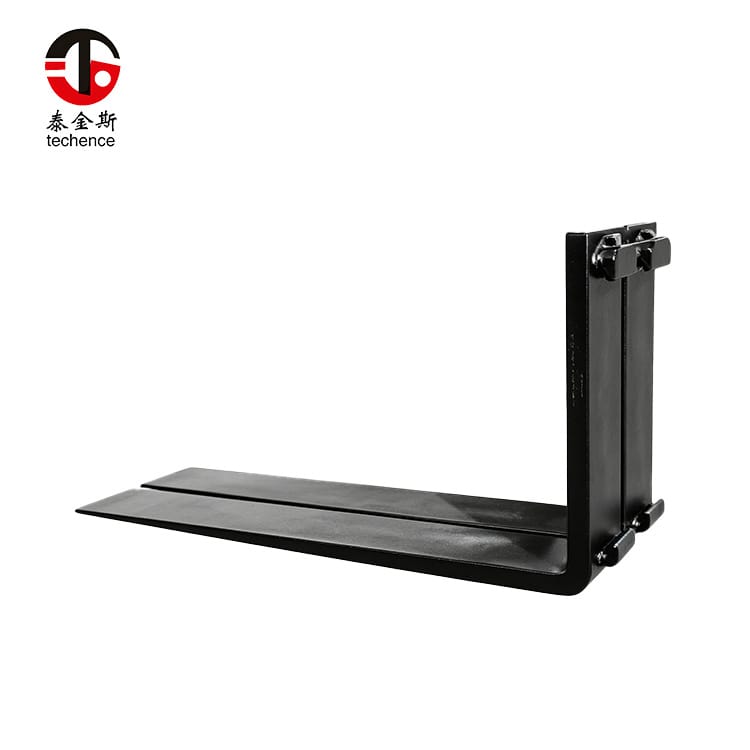
The basic function of forks forklift is to slide under the load, support it from below, and transfer the weight to the forklift carriage and mast. Although this sounds simple, fork performance depends on several technical details.
The fork blade must enter the pallet or lifting space smoothly. If the tip shape is too blunt, too thick, or poorly finished, operators may spend more time positioning the forks. This can slow down repetitive handling and may also damage pallets or goods.
The fork heel is another critical area. It receives high stress when the load is lifted, especially when the load center is far from the fork face. A well-designed heel helps maintain strength and reduces the risk of deformation during demanding work.
Fork geometry also matters. Fork length, width, thickness, taper, angle, and mounting style all influence how the fork behaves under load. A fork is not just a metal arm; it is a load-bearing component that must match the machine and the application.
Match Forks Forklift to the Load Type
The right forks forklift should be selected according to the actual load, not only the forklift model. Different loads create different pressure points and stability requirements.
For standard palletized goods, regular forklift forks may work well when the load size, pallet opening, and weight range are consistent. In this situation, smooth fork entry, correct fork spacing, and reliable rated capacity are the main concerns.
For long materials, the fork length becomes more important. If the forks do not support enough of the load depth, the load may sag, tilt, or shift during movement. Longer forks can improve support, but they must still match the operating space and forklift capacity.
For heavy compact loads, fork thickness, material strength, and rated capacity become more important than length alone. Heavy loads placed close to the fork face may look stable, but they still create high stress on the fork heel.
For irregular loads, standard forks may not provide ideal contact. Machinery parts, shaped materials, construction components, and non-standard pallets may require customized fork dimensions or special design considerations.
Check Load Capacity and Load Center Carefully
Load capacity is one of the most important factors when choosing forks forklift. It is not enough to check the load weight only. The load center must also be considered.
The load center is the distance from the fork face to the center of gravity of the load. When the load center moves farther forward, the forks and forklift experience greater leverage. This means a long load can create more stress than a compact load of the same weight.
For example, a short, dense load placed close to the fork face may be easier to handle than a long load with weight distributed far from the forklift. This is why fork length, load shape, and rated capacity should always be reviewed together.
Dynamic conditions also matter. Loads are not always lifted in perfect stillness. Turning, braking, surface vibration, and repeated operation can increase stress. In demanding environments, the fork should provide enough safety margin for real working conditions, not only ideal conditions.
Choose the Right Fork Length, Width, and Thickness
Fork dimensions directly affect safety, stability, and handling speed. The three most important dimensions are fork length, width, and thickness.
Fork length should match the load depth. If the forks are too short, the load may not be fully supported. If the forks are too long, they may extend beyond the load and create interference in tight spaces. The right length provides enough support while still allowing smooth movement.
Fork width affects contact area. Wider forks can distribute pressure better for certain loads, but they must still fit into pallets, frames, or lifting openings. If the fork is too wide for the load channel, handling becomes difficult or impossible.
Fork thickness affects strength and durability. Thicker forks may provide stronger support, but excessive thickness may reduce entry clearance. This is important when working with low-clearance pallets or special load structures.
The best fork is not always the largest one. The best forks forklift is the one that matches the load, equipment, operating space, and handling frequency.
Compare Standard Forks Forklift and Custom Forks Forklift
Standard forks forklift are suitable for many common applications. They are often used for regular pallet handling, warehouse movement, logistics operations, and general industrial lifting where load sizes are predictable.
Custom forks forklift are more suitable when the application involves heavy loads, long materials, special load shapes, limited entry space, or machine-specific requirements. Customization may include fork length, width, thickness, mounting style, load capacity, surface treatment, and special structural details.
A standard fork can work efficiently in stable and repetitive conditions. A custom fork can improve performance when standard dimensions do not fully match the work. The key is to define the real operating conditions clearly before selecting the fork design.
For example, if the work involves uneven loads, frequent impact, or longer load centers, custom dimensions may improve stability and reduce unnecessary handling adjustments. If the work involves standard pallets and consistent load sizes, standard forks may be practical and efficient.
Evaluate Material Strength, Forging Quality, and Surface Finish
Forks forklift must handle repeated stress, so material strength and manufacturing quality are important. A fork may look simple from the outside, but its performance depends on internal structure, heat treatment, dimensional accuracy, and surface quality.
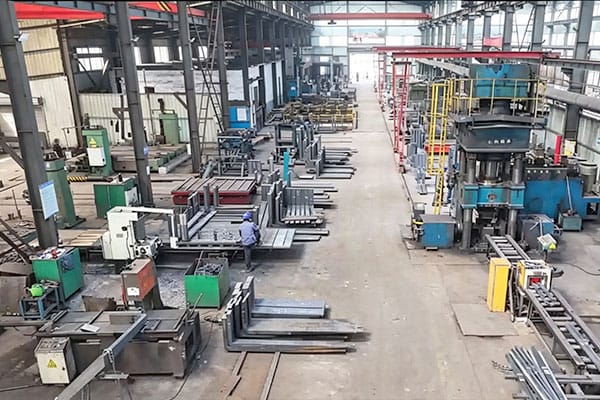
Forged forks are commonly used for demanding lifting work because forging can improve grain structure and overall strength when properly controlled. For industrial applications, the forged forklift fork structure is a relevant reference when evaluating strength, load-bearing performance, and practical durability.
Surface finish also affects daily use. A smooth surface helps the fork enter pallets more easily and reduces unnecessary friction. A rough or poorly finished surface may slow down work, damage load contact points, or accelerate wear.
When evaluating fork quality, important technical points include material grade, heat treatment, heel strength, blade straightness, surface condition, locking structure, and dimensional consistency.
Forks Forklift Selection Table for Common Applications
The table below summarizes common application conditions and the fork features that should be considered.
| Application Type | Load Characteristics | Fork Selection Focus | Practical Goal |
|---|---|---|---|
| Standard warehouse handling | Palletized goods with regular dimensions | Proper length, smooth tips, stable rated capacity | Faster positioning and stable lifting |
| Heavy-duty industrial handling | Dense or high-weight materials | Stronger thickness, higher load capacity, reinforced heel area | Better resistance to bending and fatigue |
| Long material handling | Long beams, pipes, boards, or extended goods | Longer fork length and balanced support | Reduced load sagging and improved stability |
| Irregular load handling | Uneven or non-standard goods | Custom fork dimensions or special contact design | Safer support and easier positioning |
| High-frequency logistics work | Repetitive lifting and movement | Durable surface, consistent dimensions, easy inspection | Lower wear and smoother daily operation |
| Equipment-specific applications | Special carriage or machine requirements | Correct mounting style and technical matching | Secure fit and reliable lifting performance |
This comparison helps users move from simple size selection to application-based fork selection. In real operation, the correct fork should match the load behavior, not just the load weight.
Safety Inspection Before Using Forks Forklift
Even high-quality forks forklift need regular inspection. Forks work under repeated stress, and small damage can become a serious safety risk if ignored.
The heel area should be checked carefully because it carries high stress during lifting. Visible wear, cracks, deformation, or sharp surface damage may indicate that the fork is no longer safe for normal use.
Fork blades should also be inspected for bending. A bent fork can make the load sit unevenly and may increase the risk of shifting during movement. Fork tips should remain aligned so that both forks enter the pallet or load space evenly.
Locking pins and mounting points are also important. If the forks are not securely locked to the carriage, they may shift during operation. This can affect load balance and create avoidable handling risks.
A practical inspection should include:
Heel wear
Surface cracks
Blade bending
Fork tip alignment
Locking pin condition
Mounting fit
Surface damage
Signs of overload or impact
Inspection should be treated as part of normal operation, not only as a maintenance task after a problem appears.
Maintenance Practices That Extend Fork Service Life
Good maintenance helps forks forklift remain safe and efficient for longer. Fork maintenance does not need to be complex, but it should be consistent.
After operation, forks should be kept clean, especially when used in abrasive, wet, or dusty environments. Dirt, particles, and surface residue can hide early damage or accelerate wear.
Operators should avoid using forks for pushing, dragging, or side loading. Forks are designed mainly for lifting and supporting loads from below. Side force and impact can create stress that the fork was not designed to handle.
Regular checks should be recorded. If a fork has experienced impact, overload, or abnormal handling, it should be inspected before returning to normal work. High-frequency operations may require more frequent inspection because wear develops faster.
Proper maintenance protects the forks, the forklift, the load, and the people working around the equipment.
Common Fork Selection Mistakes to Avoid
One common mistake is choosing forks forklift only by length. Length is important, but it does not define the full performance of the fork. Capacity, width, thickness, material, carriage fit, and load center all matter.
Another mistake is ignoring the load shape. A fork that works well for standard pallets may not be suitable for long, uneven, or heavy compact loads. Load behavior should always guide fork selection.
Some users also overlook fork entry clearance. If the fork is too thick or too wide for the pallet or lifting channel, daily operation becomes slower and less efficient.
Another issue is continuing to use forks after visible damage appears. Forks may still lift loads after damage, but hidden stress can develop quickly. Once cracks, bending, or severe wear appear, professional inspection is necessary.
A more reliable approach is to select forks based on the full handling environment instead of one single dimension.
Technical Factors to Confirm Before Final Fork Selection
Before confirming a forks forklift solution, review the actual working conditions carefully. The goal is not simply to choose stronger forks, but to choose forks that fit the real application.
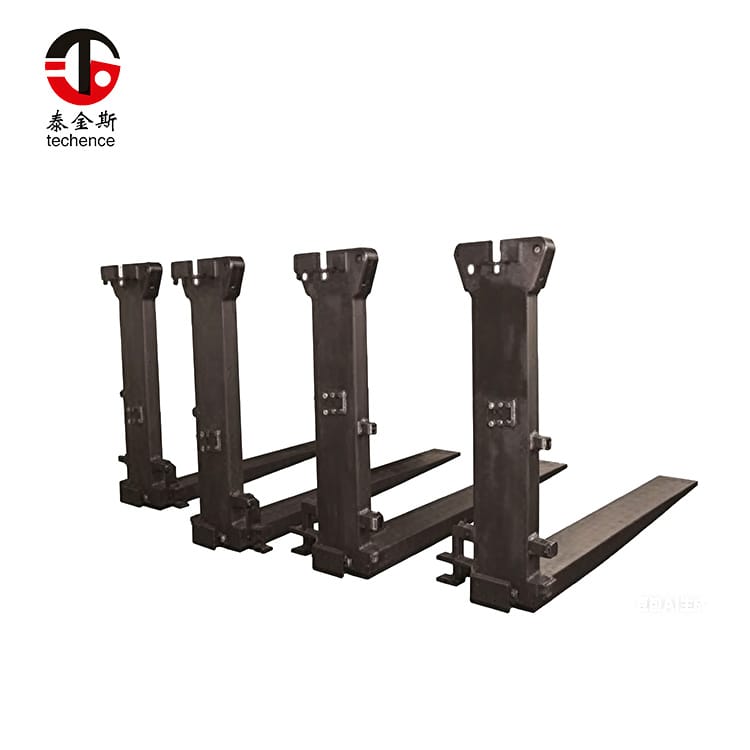
The first factor is forklift carriage compatibility. Forks must fit the carriage securely and match the locking structure. Poor compatibility can affect stability even if the fork itself is strong.
The second factor is load contact area. Some loads require broad support, while others need precise entry into narrow spaces. Fork width and tip design should match the load structure.
The third factor is operating space. Long forks may improve load support, but they can also create movement challenges in narrow aisles or compact work areas.
The fourth factor is lifting frequency. Forks used all day in repetitive operations need consistent dimensional accuracy and good wear resistance. Forks used for heavy-duty conditions need stronger material performance and reliable heel design.
The Shandong Techence website provides relevant product context for industrial fork applications where strength, structural consistency, and application matching are important.
A complete technical review should include forklift model, carriage type, load weight, load center, load size, fork dimensions, surface condition, working environment, lifting frequency, and maintenance plan.
Conclusion
Choosing the right forks forklift is a practical decision that affects safety, productivity, and long-term equipment performance. The most suitable fork is not simply the longest, thickest, or strongest option. It is the fork that matches the load type, load center, forklift structure, working space, and handling frequency.
A well-selected fork can improve load stability, reduce positioning time, support smoother lifting, and lower the risk of premature wear. A poorly selected fork can create hidden safety risks, reduce efficiency, and increase maintenance problems.
When fork selection is based on real working conditions and technical details, the entire handling process becomes safer, faster, and more reliable.
FAQ
What are forks forklift used for?
Forks forklift are used to lift, support, and move pallets, materials, machinery parts, and industrial goods. They are the main load-bearing contact point between the forklift and the object being handled, so correct size and capacity are essential for safe operation.
How do I choose the right forks forklift?
Choose forks forklift by checking load weight, load center, fork length, width, thickness, carriage compatibility, and working environment. The right fork should support the load fully, fit the equipment securely, and allow stable movement during daily operation.
Why does load center matter for forks forklift?
Load center affects the stress placed on both the forks and the forklift. When the load center moves farther forward, leverage increases. Even if the weight stays the same, the forks may experience higher stress, so load shape and fork length must be reviewed together.
When should forks forklift be replaced?
Forks forklift should be replaced or professionally inspected when cracks, bending, serious heel wear, uneven fork tips, damaged locks, or visible deformation appear. Continuing to use damaged forks can reduce load stability and increase safety risks.
Are custom forks forklift better than standard forks?
Custom forks forklift are better for long, heavy, irregular, or equipment-specific loads. Standard forks work well for regular pallet handling, but custom dimensions can improve support, stability, and efficiency when standard fork sizes do not match the application.