Table of Contents
Introduction
A pallet fork may look like a simple lifting component, but it plays a major role in material handling safety, load stability, and daily working efficiency. Whether it is used on a forklift, loader, telehandler, skid steer, or other handling equipment, the pallet fork is the direct support point between the machine and the load.
If the pallet fork is too short, too thin, poorly matched, or not strong enough for the application, the load may become unstable during lifting or movement. If the fork is selected correctly, it can help improve load support, reduce handling adjustments, and make lifting work more predictable.
This guide explains how to choose a pallet fork from a practical technical perspective. It covers structure, load type, capacity, fork size, safety inspection, maintenance, and common mistakes, helping equipment users improve handling performance without relying on guesswork.
What Is a Pallet Fork?
A pallet fork is a fork-shaped lifting component designed to slide under pallets, crates, materials, and other supported loads. It is commonly used with material handling machines to lift, move, stack, load, and unload goods.
The basic idea is simple: two fork arms support the load from underneath. However, the actual performance depends on fork strength, dimensions, spacing, mounting style, load center, and the condition of the working environment.
In general material handling, a forklift is designed to lift and move materials over short distances. A pallet fork supports this function by creating stable contact with the load. When the fork is properly matched to the machine and the load, handling becomes safer and more efficient.
The term pallet fork is sometimes used broadly. In some applications, it refers to forklift forks. In others, it refers to fork attachments used on loaders, skid steers, telehandlers, or agricultural equipment. Because of this, correct selection should always start with the actual machine and working condition.
Why Pallet Fork Selection Matters in Material Handling
The pallet fork carries the load during lifting, travel, lowering, stacking, and positioning. It must handle not only the static weight of the load but also the dynamic forces created by movement, braking, turning, uneven ground, and repeated operation.
A poorly selected pallet fork can create several problems. The load may tilt forward, fork tips may not enter the pallet smoothly, the fork heel may experience excessive stress, or the operator may need extra time to reposition the machine. Over time, these issues can reduce productivity and increase inspection or maintenance pressure.
A suitable pallet fork can help improve:
Load balance during movement
Fork entry efficiency
Support for palletized or long materials
Operator control
Equipment stability
Fork service life
Daily handling consistency
The key is to treat the pallet fork as part of the whole lifting system. The machine, fork, load, working surface, and operator method all affect the final result.
Understand the Main Structure of a Pallet Fork
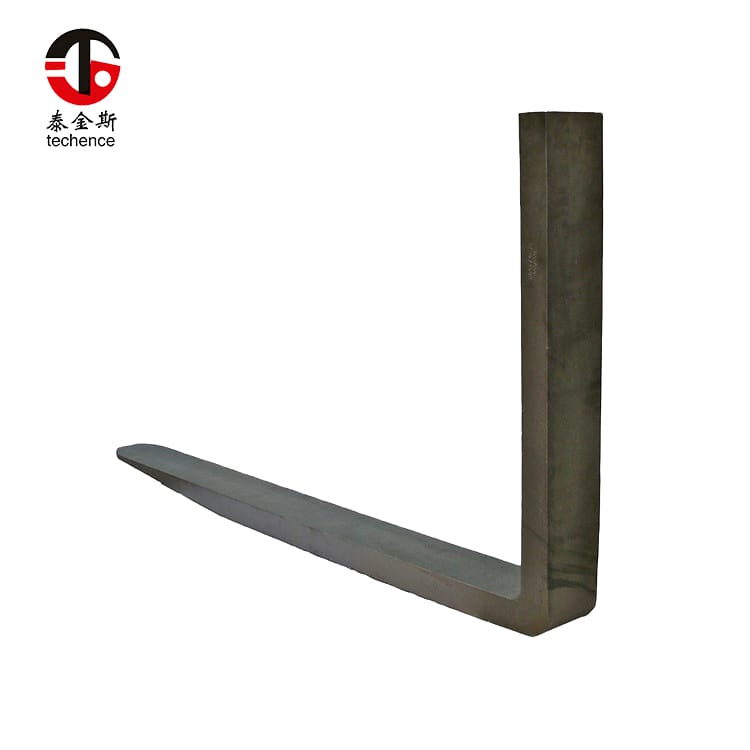
A pallet fork is not just a straight piece of steel. Its performance depends on several structural areas.
The fork blade is the horizontal part that goes under the load. It must be long enough to support the load depth and strong enough to resist bending under working conditions.
The fork heel is the curved or angled transition area between the horizontal blade and the vertical shank. This area often carries high stress during lifting, especially when the load center is far from the fork face.
The mounting structure connects the pallet fork to the machine or carriage. It must fit securely and remain stable during lifting and movement. Poor mounting fit can affect safety even when the fork itself is strong.
The fork tip helps the fork enter pallets or load spaces smoothly. A well-shaped tip improves positioning speed and reduces unnecessary impact on pallets or goods.
When evaluating pallet fork quality, these structural areas should be reviewed together instead of judging only by fork length.
Match the Pallet Fork to the Load Type
Different loads require different pallet fork features. The most suitable fork is the one that matches the load shape, weight distribution, and contact area.
For standard palletized goods, the fork should enter the pallet smoothly and support the load evenly. Fork spacing, blade width, and fork length should match the pallet structure.
For long materials, such as boards, pipes, beams, or extended packages, fork length becomes more important. If the fork does not support enough of the load, the material may sag or shift during movement.
For irregular loads, stable contact is more difficult. Machinery parts, construction components, and non-standard crates may create uneven pressure on the fork surface. In this situation, fork width, spacing, and load contact points should be reviewed carefully.
For heavy-duty handling, capacity, fork thickness, material strength, and heel design become especially important. A compact heavy load can still create high stress, even if it does not look large.
The best selection method is to describe the real load first, then match the pallet fork to that load.
Check Pallet Fork Capacity and Load Center
Capacity is one of the most important factors when choosing a pallet fork. However, capacity should not be judged by load weight alone.
The load center is the distance from the fork face to the center of gravity of the load. When the load center moves farther forward, leverage increases. This creates greater stress on the fork and the machine, even if the load weight stays the same.
For example, a compact load placed close to the fork face is usually easier to handle than a long load with the same weight but a forward center of gravity. This is why fork length, load shape, and load center must be evaluated together.
When reviewing pallet fork capacity, consider:
Maximum load weight
Normal working load weight
Load center distance
Load shape and contact area
Machine rated capacity
Fork mounting compatibility
Handling frequency
Ground and movement conditions
A safe pallet fork selection should reflect real working conditions, not only ideal lifting conditions.
Choose the Right Pallet Fork Length, Width, and Thickness
Fork dimensions directly affect handling performance. The three most important dimensions are length, width, and thickness.
Pallet fork length should match the load depth. If the fork is too short, the front part of the load may not be supported. If the fork is too long, it may extend beyond the load and create interference in narrow working areas.
Fork width affects contact area and pressure distribution. Wider forks may support certain loads better, but they must still fit into pallets, frames, or lifting channels.
Fork thickness affects strength and fork entry. A thicker fork may provide stronger support, but excessive thickness can make it harder to enter low-clearance pallets or tight load spaces.
The right pallet fork is not always the biggest option. It is the option that provides the correct support while still fitting the machine, load, and workspace.
Pallet Fork Selection Table for Common Applications
The table below summarizes how different applications influence pallet fork selection.
| Application Type | Load Characteristics | Pallet Fork Focus | Practical Goal |
|---|---|---|---|
| Warehouse handling | Standard palletized goods | Correct length, smooth fork tips, stable spacing | Faster pallet entry and stable movement |
| Industrial material handling | Dense or heavy loads | Higher capacity, stronger thickness, reliable heel design | Better resistance to bending and fatigue |
| Construction material handling | Long, uneven, or rough materials | Longer fork length and strong support structure | Reduced sagging and improved load stability |
| Agricultural handling | Bulk materials, crates, and mixed loads | Durable structure and practical mounting fit | Reliable work under variable conditions |
| Machinery handling | Irregular shapes and high-value components | Balanced support and customized contact area | Safer positioning and reduced load movement |
| High-frequency logistics | Repetitive lifting and moving | Wear resistance, dimensional consistency, easy inspection | Longer service life and smoother workflow |
This comparison shows that pallet fork selection is not only about one measurement. The safest result comes from matching the fork with the load, equipment, and daily working environment.
Pallet Fork vs Standard Forklift Forks
A pallet fork and standard forklift forks are closely related, but they are not always used in the same way.
Standard forklift forks are usually mounted on a forklift carriage and used mainly for pallet handling, stacking, and warehouse movement. A pallet fork can also refer to fork attachments used on other machines, such as loaders, telehandlers, or skid steers.
The main difference is the machine interface and application environment. Forklift forks are designed around forklift carriage systems, while pallet fork attachments may need specific mounting frames or attachment plates.
For demanding industrial fork applications, a forged forklift fork is a relevant reference when evaluating structural strength, load-bearing performance, and fork durability.
In practical selection, the question is not which term is better. The important point is whether the fork matches the machine, load, mounting system, and working conditions.
Safety Inspection Before Using a Pallet Fork
Even a high-quality pallet fork needs regular inspection. Forks work under repeated stress, and visible damage may indicate a deeper safety issue.
Before use, check the fork blade for bending, deep scratches, cracks, or surface deformation. A bent blade can make the load sit unevenly and may increase the risk of shifting.
The fork heel should be checked carefully because it often carries high stress. Cracks or severe heel wear should not be ignored.
Fork tips should remain aligned. Uneven fork tips make load entry more difficult and may cause uneven support. The mounting structure should also be checked to ensure the pallet fork is securely attached to the machine.
A basic inspection should include:
Blade straightness
Heel wear
Surface cracks
Fork tip alignment
Mounting fit
Locking condition
Visible deformation
Signs of overload or impact
Inspection should be part of routine operation, not only a reaction after a problem appears.
Maintenance Tips for Longer Pallet Fork Service Life
Proper maintenance helps a pallet fork remain safe and efficient for longer. The most important rule is consistency.
After operation, clean the fork surface and remove dust, mud, abrasive particles, or material residue. Surface buildup can hide cracks or wear marks.
Avoid using pallet forks for pushing, dragging, prying, or side-loading. These actions create stress that the fork may not be designed to handle. Forks are primarily designed to support and lift loads from underneath.
Store forks properly when they are not in use. They should not be left in areas where they may be struck, dragged, or exposed to unnecessary impact.
For frequent operations, inspection records are useful. If a fork has experienced abnormal impact or overload, it should be checked before returning to normal work.
Maintenance supports not only fork service life but also load stability and workplace safety.
Common Pallet Fork Selection Mistakes to Avoid
One common mistake is choosing a pallet fork only by length. Length is important, but capacity, width, thickness, material, mounting fit, and load center are equally important.
Another mistake is ignoring the machine type. A fork that fits one machine may not fit another. Mounting style and attachment compatibility must always be confirmed.
Some users also overlook load shape. A standard fork may work well for regular pallets but not for long, uneven, or irregular goods.
Using damaged forks is another serious mistake. A pallet fork with cracks, bending, or severe heel wear may still appear usable, but its load-bearing reliability may already be reduced.
A better approach is to evaluate the full handling system before selecting the fork.
Technical Factors to Confirm Before Final Selection
Before finalizing a pallet fork specification, review the technical conditions of the application.
The first factor is machine compatibility. The fork must fit the carriage, frame, or attachment system securely. Poor fit can reduce stability and create unwanted movement during lifting.
The second factor is load behavior. Some loads stay stable during lifting, while others shift, sag, or concentrate pressure on a small area. Fork spacing and contact length should match that behavior.
The third factor is working environment. Rough ground, frequent turning, narrow aisles, and repeated lifting can all affect fork performance.
The fourth factor is inspection access. Forks that are used frequently should be easy to inspect for wear, cracks, bending, and mounting condition.
The Shandong Techence website provides relevant product context for industrial fork applications where structural consistency, load support, and practical handling performance are important.
A complete technical review should include machine model, mounting style, load weight, load center, load size, fork length, width, thickness, surface condition, handling frequency, and maintenance plan.
Conclusion
A pallet fork is a key load-bearing component in material handling. Choosing the right one affects safety, efficiency, operator control, and long-term equipment performance.
The best pallet fork is not simply the longest or thickest option. It is the fork that matches the machine, load type, load center, working space, and handling frequency.
When pallet fork selection is based on real working conditions and technical details, the result is more stable lifting, smoother movement, fewer handling adjustments, and better daily reliability.
FAQ
What is a pallet fork used for?
A pallet fork is used to lift, support, and move pallets, crates, materials, and other loads from underneath. It helps machines handle goods more efficiently when the fork size, capacity, and mounting style match the load and equipment.
How do I choose the right pallet fork?
Choose a pallet fork by checking machine compatibility, load weight, load center, fork length, width, thickness, mounting style, and working environment. The right fork should support the load fully and remain stable during lifting and movement.
What pallet fork length should I use?
Pallet fork length should match the load depth and working space. The fork should provide enough bottom support without extending too far beyond the load. Very long forks may improve support but can reduce maneuverability in compact areas.
Why does pallet fork capacity matter?
Pallet fork capacity matters because the fork must safely support the load under real working conditions. Load center, movement, ground condition, and handling frequency can all affect stress, so capacity should be reviewed together with load shape and machine rating.
When should a pallet fork be inspected or replaced?
A pallet fork should be inspected regularly and removed from use if cracks, bending, severe heel wear, damaged mounting parts, uneven fork tips, or visible deformation appear. These signs may reduce load stability and increase operational risk.