Table of Contents
Introduction
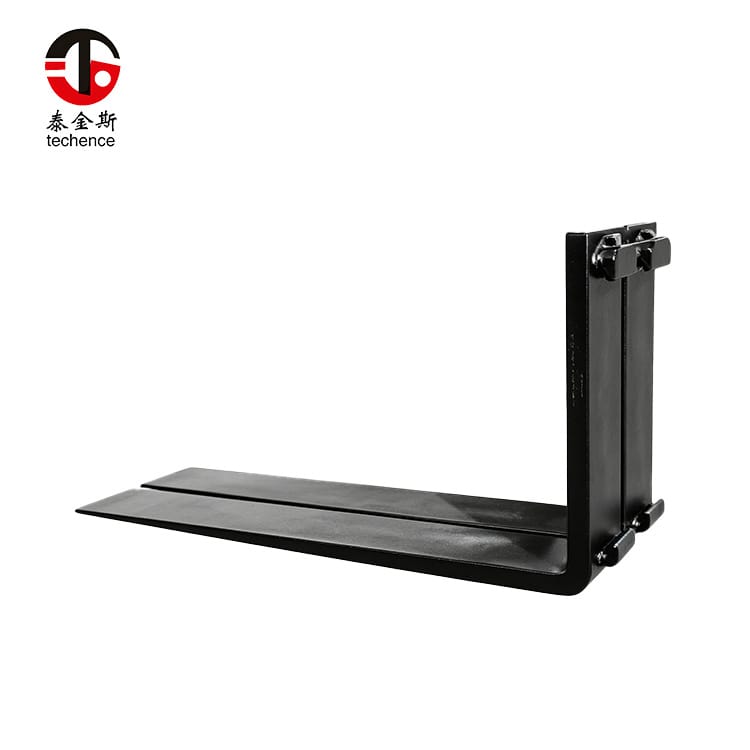
Fork extensions for a forklift are useful when a load is longer than the standard forks can properly support. They help increase the contact length under the load, improve load support, and make certain handling tasks more stable when used correctly.
However, fork extensions are not a simple “make the fork longer” accessory. They change how the load sits on the forklift, how far the load center moves forward, and how much stress is placed on the forks, mast, carriage, and truck. If the extension is not matched correctly, the handling process can become less stable instead of safer.
This guide explains how to evaluate fork extensions for a forklift from a practical material handling perspective. It covers fit, load type, extension length, stability, inspection, maintenance, and technical selection details so that operators and equipment teams can use fork extensions more safely and efficiently.
What Are Fork Extensions for a Forklift?
Fork extensions are attachments that slide over the existing forklift forks to increase their usable length. They are normally used when the original fork length is not enough to support a longer load.
The main purpose of fork extensions is to provide better contact under the load. For example, when handling long pallets, wide materials, lightweight bulky goods, or extended packaging, standard forks may not reach far enough to support the load evenly. In that situation, fork extensions can help distribute support over a longer area.
A forklift itself is an industrial truck designed for short-distance lifting and moving, and the forklift concept depends heavily on load balance, fork position, and stability. Fork extensions become part of that lifting system, so they must be treated as load-bearing equipment, not as casual accessories.
Why Fork Extensions Matter in Load Handling
The main reason fork extensions for a forklift matter is load support. When a load is not properly supported, it may bend, sag, shift, or tilt during movement. This can slow down handling and increase operational risk.
In daily work, operators often face loads that are longer than expected. Standard forks may enter the load space but fail to support the full depth. If the back of the load is supported but the front is not, the load may lean forward. If the forks are positioned unevenly, one side may carry more pressure than the other.
Fork extensions help solve this problem by increasing the support area. They can make positioning easier, reduce repeated adjustments, and help the operator move long or bulky loads more smoothly.
But the benefit only appears when the extension is correctly matched. If the extension is too long, too loose, too weak, or used with an unsuitable load, it can reduce stability. That is why fork extension selection should always consider both load support and forklift capacity.
When Fork Extensions Should Be Used
Fork extensions are suitable when the load is longer than the standard forks and needs additional bottom support. They are often used for lightweight but bulky goods, long pallets, packaged materials, boards, crates, and other loads where support length matters more than extreme lifting force.
They are especially useful when the original forks are structurally suitable but not long enough for a specific handling task. In this case, extensions can improve contact without changing the entire fork system.
Good use cases usually have these features:
The load is longer than the standard fork length
The load needs more bottom support
The load is stable and evenly distributed
The working space can safely allow longer fork reach
The extension fits securely over the original fork
The forklift capacity remains suitable for the changed load center
Fork extensions should support smoother handling, not force the forklift beyond its proper operating condition.
When Fork Extensions Should Not Be Used
Fork extensions for a forklift should not be used as a shortcut for handling loads that exceed the forklift’s rated ability. They should also not be used to compensate for damaged forks, incorrect forklift size, or poor operating practice.
If the load is very heavy, highly compact, unstable, or has a long forward center of gravity, simply adding extensions may increase leverage and stress. In that situation, longer dedicated forks or another handling method may be more suitable.
Fork extensions should also not be used when they do not fit tightly on the original forks. Loose extensions can shift during lifting, create uneven pressure, and affect operator control. Damaged or bent extensions should not stay in operation.
A useful way to think about this is simple: fork extensions are designed to improve support length, not to increase the basic lifting capacity of the forklift.
Key Factors to Check Before Using Fork Extensions
Before using fork extensions for a forklift, several technical factors should be checked carefully.
Fork length and extension length
The extension must match the original fork length. If the extension is too long compared with the base fork, the unsupported front section may experience too much force. This can create bending stress and reduce control.
The extension should also match the type of load being handled. A longer extension may support a long load better, but it may also make turning, positioning, and working in narrow areas more difficult.
Load center and stability
When fork extensions are used, the load may sit farther forward. This changes the load center. A forward load center increases leverage and can reduce stability.
Even if the load weight does not change, the handling condition changes when the load center moves. This is why operators should not evaluate fork extensions by weight alone. Load shape, load position, and load center are equally important.
Fit, locking, and fork coverage
The extension should slide over the fork properly and stay locked in place during movement. A secure fit helps prevent shifting and uneven loading.
The inside width and height of the extension should match the fork dimensions. If the fit is too tight, installation may be difficult. If the fit is too loose, the extension may move during operation.
A reliable fork extensions design should focus on fit, stability, structural consistency, and practical load support.
Fork Extensions for a Forklift Selection Table
The table below summarizes important selection factors and how they affect handling performance.
| Selection Factor | What to Check | Why It Matters | Practical Result |
|---|---|---|---|
| Original fork size | Fork length, width, and thickness | The extension must fit the existing fork correctly | Secure installation and stable support |
| Load length | Total load depth and contact area | Longer loads need more support underneath | Less sagging and better balance |
| Load weight | Actual working load | Extensions do not increase forklift capacity | Safer operation within limits |
| Load center | Distance from fork face to load center of gravity | Forward load center increases leverage | Better stability judgment |
| Extension structure | Wall thickness, locking method, and surface finish | Weak or loose extensions affect control | More reliable handling |
| Working space | Aisle width, turning area, and load path | Longer forks need more movement space | Fewer positioning problems |
| Inspection condition | Cracks, bending, wear, and locking parts | Damage can reduce safety | Lower risk during operation |
| Handling frequency | Occasional or repeated use | Frequent use requires stronger durability | Longer service life |
This table shows that fork extension selection is not only about length. The safest result comes from matching the extension, forklift, load, and operating environment together.
Safety Inspection Before Operation
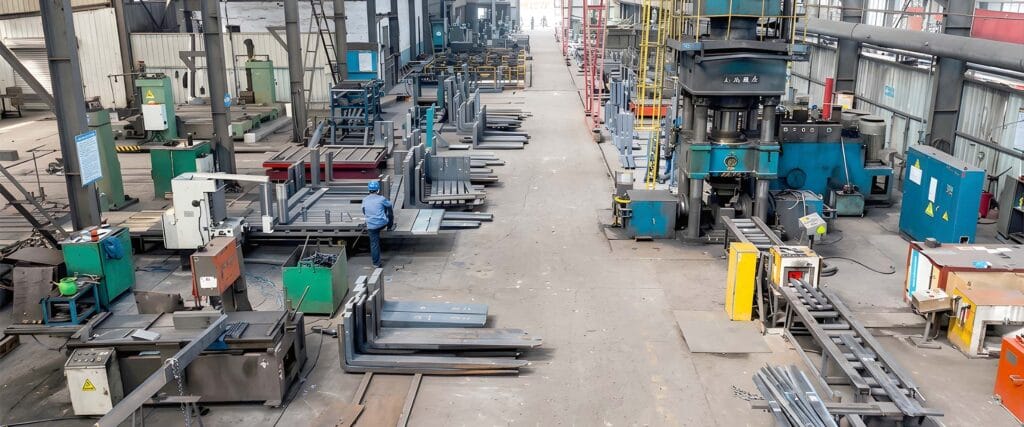
Fork extensions should be inspected before use. A quick visual check can prevent many handling problems.
Start with the body of the extension. Look for cracks, bending, worn edges, deep scratches, or deformation. If the extension is visibly damaged, it should not be used until checked by a qualified person.
Next, check the locking device. The extension should stay fixed on the fork and should not slide forward during movement. Any missing, loose, or damaged locking component can create serious instability.
Then check the fit on the original fork. Both extensions should sit evenly and match the fork shape. If one side is loose and the other side is tight, the load may not be supported evenly.
The original forklift forks should also be inspected. Fork extensions should never be installed over damaged forks. A weak base fork can make the entire lifting system unsafe, even if the extension itself looks fine.
Fork Extensions vs Longer Forks
Fork extensions and longer forks are not the same solution. They may look similar during operation, but their structure and use cases are different.
Fork extensions are added over existing forks. They are useful for occasional or application-specific long-load support. They are flexible and can be removed when not needed.
Longer forks are complete fork components designed with their full length as part of the original structure. For frequent heavy-duty long-load handling, dedicated longer forks may provide better structural reliability.
The right choice depends on how often the longer reach is needed, how heavy the load is, how the load center changes, and how much support the operation requires. If long-load handling is occasional and the load is suitable, fork extensions can be practical. If the work requires long reach every day under demanding conditions, dedicated longer forks may be more appropriate.
For applications where the fork itself must be structurally stronger, a forged forklift fork can provide a useful reference point when comparing integral fork strength with removable extension support.
Common Mistakes to Avoid
One common mistake is assuming that fork extensions increase forklift capacity. They do not. In many cases, they move the load center forward, which can make the lifting condition more demanding.
Another mistake is using extensions that are much longer than the original forks. If too much of the extension is unsupported, the front section may be exposed to high bending stress.
Some operators also ignore fit. A loose extension may seem acceptable when empty, but it can shift when carrying a load. Fit and locking should always be checked before operation.
Another mistake is using fork extensions for loads that are too unstable. If the load shape causes rolling, sliding, or uneven pressure, longer support alone may not solve the handling risk.
The safest approach is to treat fork extensions as part of the lifting system. The forklift, original forks, extensions, load, and operator method must all work together.
Maintenance Tips for Longer Service Life
Good maintenance helps fork extensions for a forklift stay reliable for longer. After use, the extensions should be cleaned and checked for impact marks, surface damage, and deformation.
If the extensions are used in dusty, wet, or abrasive environments, cleaning becomes more important. Dirt and debris can hide early wear or damage. Smooth contact surfaces also help reduce unnecessary friction during load handling.
Extensions should be stored properly when not in use. They should not be left in places where they can be struck by other equipment, dragged across rough ground, or exposed to unnecessary damage.
Regular records are also helpful. If an extension has been involved in impact, overload, or abnormal handling, it should be inspected before being used again.
Maintenance is not only about extending service life. It also supports safer daily operation.
Technical Details to Confirm for Better Handling Performance
Before using fork extensions for a forklift in regular operation, the technical conditions should be reviewed carefully.
The first detail is the original fork condition. Extensions depend on the strength and shape of the base fork. If the original fork is worn, bent, cracked, or incorrectly sized, the extension cannot create a safe lifting system.
The second detail is load behavior. Long, lightweight loads are different from long, dense loads. A stable load with wide contact is easier to handle than a narrow load with concentrated pressure.
The third detail is operating path. Longer fork reach affects turning, stacking, aisle movement, and loading position. Even when the load is stable, the working environment must allow enough space for safe movement.
The fourth detail is operator visibility. Longer loads and extensions may reduce the operator’s view of the fork tips. Slower positioning and careful communication may be needed in complex environments.
The fifth detail is the inspection routine. Fork extensions should have a clear inspection process, especially when used frequently or in demanding work areas.
When these factors are checked together, fork extensions can support safer reach, better load contact, and more efficient handling.
Conclusion
Fork extensions for a forklift can be a practical solution when standard forks are too short for long or bulky loads. They help improve load support, reduce sagging, and make certain material handling tasks smoother.
However, they must be selected and used carefully. Fork extensions do not increase the forklift’s lifting capacity. They also change load center behavior, working space requirements, and stress distribution. Safe use depends on correct fit, secure locking, suitable load type, proper inspection, and good operating practice.
The best result comes from treating fork extensions as part of the complete handling system. When the extension length, fork condition, load shape, and working environment are all properly matched, forklift operation becomes safer, more stable, and more efficient.
FAQ
What are fork extensions for a forklift used for?
Fork extensions for a forklift are used to increase the support length of existing forks when handling long or bulky loads. They help support more of the load from underneath, improving balance and reducing sagging when the load is suitable for extension use.
Do fork extensions increase forklift capacity?
No. Fork extensions do not increase forklift capacity. They may move the load center forward, which can increase leverage and reduce stability. The forklift, original forks, extensions, and load position must stay within safe operating limits.
How do I choose the right fork extensions for a forklift?
Choose fork extensions by checking original fork size, load length, load weight, load center, fit, locking method, working space, and inspection condition. The extension should fit securely and support the load without creating excessive forward leverage.
When should fork extensions not be used?
Fork extensions should not be used on damaged forks, unstable loads, overloaded conditions, or applications where the load center becomes unsafe. They should also not be used if the extensions are loose, cracked, bent, or not properly locked onto the forks.
Are fork extensions better than longer forklift forks?
Fork extensions are useful for occasional long-load support, while longer forklift forks may be better for frequent or demanding long-load handling. The better option depends on load weight, load center, usage frequency, working space, and structural requirements.