Table of Contents
Introduction
Fork extensions are useful attachments designed to increase the usable length of existing forklift forks when a load needs more bottom support. In daily material handling, long pallets, wide crates, bulky packaging, boards, panels, and extended goods may not sit safely on standard fork length. Fork extensions help solve this problem by giving the load more contact area underneath.
But fork extensions should never be treated as a simple way to make a forklift stronger. They do not increase the basic lifting capacity of the forklift. In fact, they can change the load center and increase leverage if they are used incorrectly. That is why safe use depends on correct length, secure fit, proper load positioning, and regular inspection.
This article explains what makes fork extensions safe for long load handling. It focuses on structure, application matching, load center, inspection, maintenance, and technical details that help operators and equipment teams use fork extensions more effectively.
What Are Fork Extensions?
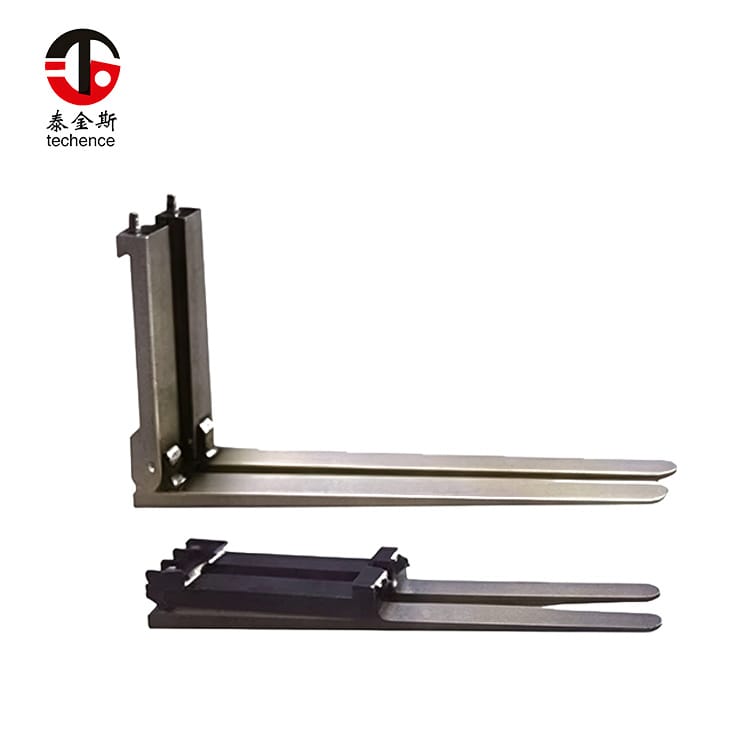
Fork extensions are sleeve-style attachments that slide over existing forklift forks to extend their reach. They are commonly used when the original forks are strong enough for the task but not long enough to support the load properly.
The main function of fork extensions is to improve support length. They help reduce load sagging, improve contact under long materials, and make certain handling tasks more stable. They are often used for long pallets, packaged products, lightweight bulky loads, crates, and extended materials.
A forklift is designed to lift and move materials over short distances, but its safe operation depends on load position, center of gravity, fork condition, and equipment stability. Once fork extensions are installed, they become part of the lifting system, so they must be evaluated with the same care as the original forks.
Why Fork Extensions Are Used in Material Handling
Fork extensions are used because standard forks are not always long enough for every load. In many operations, one forklift may handle different load sizes throughout the day. Some loads fit standard forks well, while others need more support underneath.
When a load extends too far beyond the fork tips, the unsupported area may sag, tilt, or shift. This can make movement slower and less predictable. Fork extensions help support more of the load depth, which can improve balance and reduce repeated positioning.
Fork extensions are especially helpful when the load is long but relatively stable. They can make handling smoother when the load weight, load shape, and working environment are suitable.
Typical reasons for using fork extensions include:
Improving support for long pallets
Reducing load sagging during movement
Helping stabilize bulky but light materials
Supporting wide packaging or crates
Improving contact area under extended goods
Reducing repeated fork repositioning
Making occasional long-load handling more practical
The value of fork extensions comes from better support, not greater lifting force.
How Fork Extensions Affect Load Support
Fork extensions improve load support by increasing the contact length under the load. This is useful when the load needs more bottom support than the original forks can provide.
However, longer support also changes the handling condition. When the load sits farther forward, the load center may move away from the forklift. This increases leverage. Even when the total load weight stays the same, the forklift and forks may experience higher stress.
This is why operators should not judge fork extensions only by the length of the load. They also need to consider the load center, weight distribution, fork condition, extension fit, and working surface.
A well-matched fork extension helps the load sit more evenly. A poorly matched extension can make the load harder to control. The difference depends on how the extension works with the original forks and the actual load.
Key Safety Factors Before Using Fork Extensions
Safe fork extension use starts before the load is lifted. Several factors should be checked every time the extensions are installed.
Base fork condition
Fork extensions depend on the strength of the original forks. If the base forks are cracked, bent, heavily worn, or misaligned, the extensions cannot create a safe lifting system. The original forks should be inspected first because they remain the main structural support.
The heel area of the fork deserves special attention. This area carries high stress during lifting, especially when the load center moves forward. If there is visible heel wear or deformation, the fork should be reviewed before extensions are used.
Extension length
Extension length should match the original fork length and the load requirement. If the extension is too short, it may not provide enough support. If it is too long, too much of the front section may be unsupported by the base fork.
A longer extension may look helpful, but excessive extension length can increase bending stress and reduce control. The right length provides better support without creating unnecessary leverage.
Load center position
Load center is one of the most important safety factors. It refers to the distance from the fork face to the load’s center of gravity. When the load center moves forward, the forklift becomes less stable.
Fork extensions may move the load center farther from the machine. This is why load weight, load length, and load position must be checked together. A long but light load may be suitable, while a long dense load may require a different handling method.
Locking and fit
Fork extensions should fit securely over the original forks. They should not be excessively loose, uneven, or able to slide forward during operation. The locking system should be easy to inspect and strong enough to keep the extension in place.
Both extensions should sit at the same height and angle. If one side is loose or misaligned, the load may not be supported evenly.
Fork Extensions Selection Table for Common Applications
| Application Type | Load Condition | Fork Extensions Focus | Practical Handling Goal |
|---|---|---|---|
| Long pallet handling | Load is longer than standard forks | Correct extension length and secure locking | Better support and less front-end sagging |
| Bulky packaged goods | Large but relatively stable loads | Smooth surface and enough contact area | Easier positioning and stable movement |
| Boards and panels | Long flat materials | Balanced fork spacing and stable extension fit | Reduced bending and better load control |
| Crates and containers | Extended load base | Strong structure and reliable fork coverage | More even support during transport |
| Occasional long-load work | Mixed load sizes in daily operation | Removable extension with practical length | Flexible handling without changing forks |
| Frequent extended-load handling | Repeated long-load movement | Review of full fork system and durability | Better long-term stability and service life |
This table shows that fork extensions should be selected according to load behavior, not only load size. The safest result comes from matching the extension, base fork, machine, load, and working area.
Fork Extensions vs Standard Longer Forks
Fork extensions and longer forks are related, but they are not the same solution.
Fork extensions slide over existing forks. They are useful when longer support is needed for specific tasks or occasional long-load handling. They can be removed when standard fork length is enough.
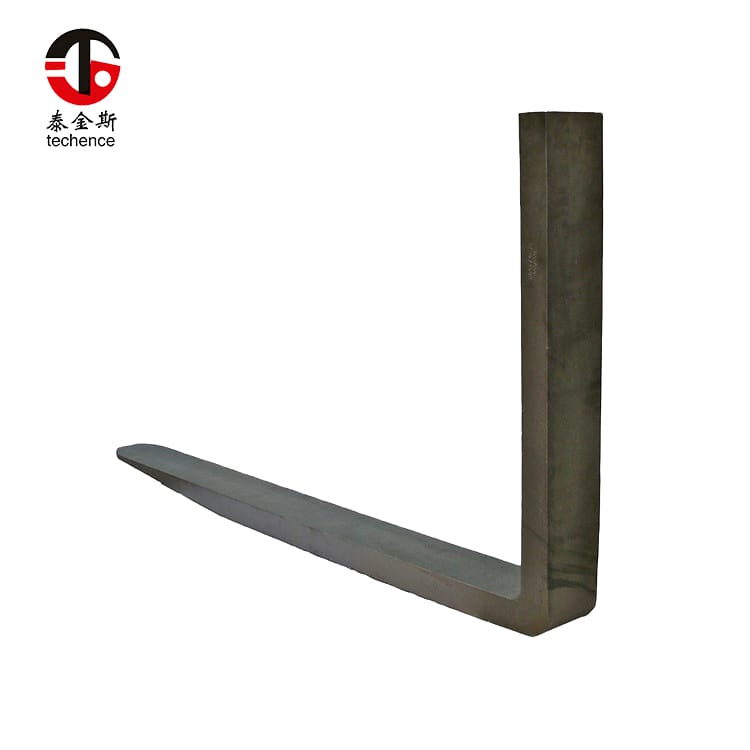
Longer forks are complete fork components designed with their full length as part of the original structure. They are often more suitable when long-load handling is frequent, heavy, or technically demanding.
Fork extensions are practical when the base forks are in good condition and the load is suitable. Longer forks may be better when the work requires permanent long reach, higher structural consistency, or stronger load-bearing performance.
For applications where full fork strength is a major concern, a forged forklift fork provides a useful reference for understanding the difference between integral fork strength and removable extension support.
The right choice depends on load type, work frequency, load center, handling distance, and operating environment.
How to Check Fork Extensions Before Operation
A quick inspection before operation can prevent many common problems. Fork extensions should be checked every time they are installed, especially when handling long or bulky loads.
Start with the extension body. Look for cracks, bending, deformation, deep scratches, worn edges, or surface damage. If the extension is visibly damaged, it should not be used until it has been properly reviewed.
Next, inspect the locking part. The lock should hold the extension in place and prevent forward sliding. A missing or damaged lock can create serious instability during movement.
Then check the fit. The extension should slide over the fork smoothly and sit evenly. It should not rock, tilt, or shift excessively. Both extensions should align with each other so the load is supported evenly.
Finally, check the original forks. Extensions should never be used over damaged base forks. A weak or bent fork can make the full lifting system unsafe, even if the extension looks fine.
Common Fork Extensions Mistakes to Avoid
One common mistake is assuming that fork extensions increase forklift capacity. They do not. They increase support length, but they may also move the load center forward and increase leverage.
Another mistake is choosing extensions that are too long for the base forks. Excessive length can create unsupported front sections and higher bending stress.
Some users ignore load behavior. Fork extensions are helpful for stable long loads, but they are not suitable for unstable materials that roll, slide, shift, or concentrate weight unevenly without proper control.
Another mistake is poor locking. If an extension is not locked securely, it may move during operation. Even small movement can affect load balance.
Using fork extensions on damaged forks is also unsafe. The base forks remain the main support structure, so their condition matters as much as the extension itself.
A safe approach is to treat fork extensions as part of the whole handling system, not as a quick accessory.
Maintenance Practices for Longer Service Life
Good maintenance helps fork extensions stay reliable and easier to inspect. After use, clean the extensions and remove dust, mud, debris, moisture, or abrasive particles. A clean surface makes cracks, bending, and wear easier to see.
The locking parts should be checked regularly. If a lock becomes loose, worn, or difficult to secure, the extension should not be used until the problem is corrected.
Fork extensions should be stored properly when not in use. They should not be dragged across rough ground, struck by other equipment, or left in locations where they can bend or become damaged.
Operators should avoid using fork extensions for pushing, dragging, prying, or side-loading. These actions create stress that the extension is not designed to handle.
A practical maintenance routine should include:
Cleaning after use
Visual inspection
Locking part check
Surface damage check
Fit review
Impact history review
Proper storage
Base fork inspection
Maintenance is not only about longer service life. It also supports safer handling and more predictable operation.
Technical Factors That Improve Handling Stability
Several technical details can improve the stability of fork extensions in daily use.
The first is correct fork coverage. The extension should have enough contact with the base fork to remain supported and aligned. Too much unsupported length can reduce stability.
The second is extension wall strength. A stronger structure helps resist bending and deformation during normal use, especially when handling long loads.
The third is surface finish. A smooth and consistent surface helps the extension enter load spaces more easily and reduces unnecessary friction.
The fourth is load contact. The load should sit evenly across both extensions. If the load rests mainly on one fork or one small contact point, handling becomes less stable.
The fifth is operator visibility. Longer fork reach can make it harder to judge fork tip position. Careful positioning and steady movement are important when using extensions.
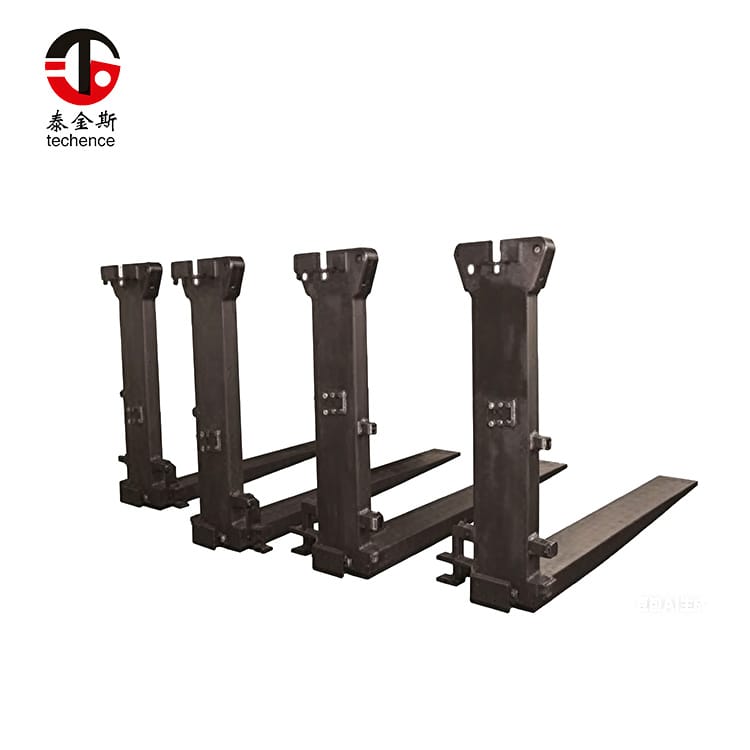
The fork extensions structure should be reviewed with fit, locking reliability, support length, and surface condition in mind before regular use.
When these details are checked together, fork extensions can improve long load support while helping the forklift remain easier to control.
Conclusion
Fork extensions are practical tools for handling long, bulky, or extended loads when standard forks do not provide enough support length. They help improve contact area, reduce sagging, and make certain material handling tasks smoother.
However, safe use depends on correct selection and careful operation. Fork extensions do not increase forklift capacity. They can change the load center, increase leverage, and affect handling stability if used incorrectly.
The safest results come from checking base fork condition, extension length, locking fit, load center, load behavior, inspection routine, and working space. When fork extensions are matched properly to the equipment and load, they can support safer, more stable, and more efficient long load handling.
FAQ
What are fork extensions used for?
Fork extensions are used to increase the support length of existing forklift forks when handling long or bulky loads. They help support more of the load from underneath, reducing sagging and improving stability when the load is suitable for extension use.
Do fork extensions increase forklift capacity?
No. Fork extensions do not increase forklift capacity. They only extend the support length. In some cases, they move the load center forward, which can increase leverage and reduce stability if the load is not positioned correctly.
How do I choose the right fork extensions?
Choose fork extensions by checking the base fork size, extension length, load length, load weight, load center, fit, locking method, and working space. The extensions should sit securely, align evenly, and support the load without excessive forward leverage.
When should fork extensions not be used?
Fork extensions should not be used on damaged base forks, unstable loads, overloaded conditions, poor locking, cracked extensions, bent extensions, or loads with an unsafe forward center of gravity. They should only be used when the full lifting system remains stable.
Are fork extensions better than longer forks?
Fork extensions are useful for occasional long-load support, while longer forks may be better for frequent or demanding long-load handling. The right option depends on load weight, load center, handling frequency, working space, and structural support needs.