Table of Contents
Table of Contents
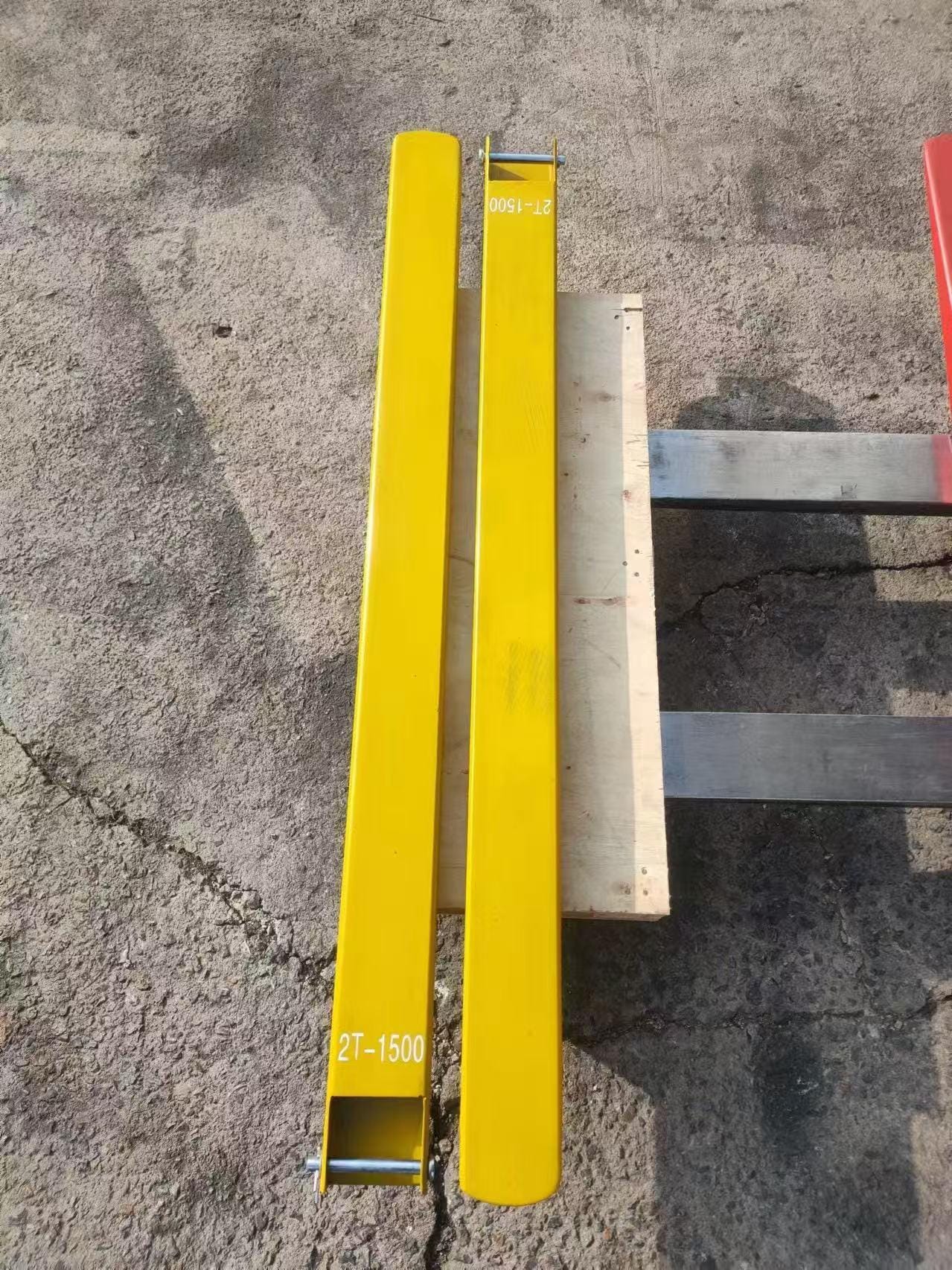
Forklift fork extensions can solve a common material-handling problem: a load is stable and within the truck’s capability, but the installed forks do not provide enough support beneath it. The right extensions can improve load engagement without requiring a permanent fork change. The wrong ones can create poor fit, excessive leverage, damaged equipment, or an unstable load.
This guide explains how to specify forklift fork extensions for real operating conditions. It is written for warehouse managers, equipment dealers, fleet teams, and buyers who need a practical way to compare options before requesting a quotation.
Why Forklift Fork Extensions Need Careful Selection
An extension changes more than the visible length of a fork. It may also change how far the load sits from the fork face, how the load is supported, and how forces are transferred through the original fork and carriage. That is why forklift fork extensions should be selected as part of the complete truck-and-load system, not as a generic accessory.
The starting point is always the forklift manufacturer’s instructions and the rated data plate. In the United States, the OSHA powered industrial truck standard addresses truck modifications and safe operation. Local rules may add further requirements, so the responsible safety professional should review the proposed setup before use.
Start With the Load, Not the Extension
Before measuring the forks, document the load. Record its weight, overall depth, underside construction, center of gravity, and the direction from which it will be handled. A long but light load may need broad support, while a compact dense load may create a more demanding load-center condition.
Forklift fork extensions are not a remedy for an overloaded truck, damaged forks, an unsuitable pallet, or a load that cannot be stabilized. They should support a defined handling task that has already been checked against the truck’s capacity and operating environment.
Measure the Existing Forks Correctly
Accurate measurements prevent loose fit, installation difficulty, and unnecessary movement. Measure each original fork rather than relying only on a model number. Wear, previous replacement, and fleet mixing can leave two apparently similar trucks with different fork dimensions.
- Fork blade length, measured from the inside face of the heel to the tip
- Blade width at several points along the fork
- Blade thickness, including any relevant taper
- Fork condition, especially heel wear, bending, cracks, and tip damage
- Available clearance around the fork and load
Share these measurements with the supplier when ordering forklift fork extensions. Photographs and a simple dimensional drawing can help confirm details, but they do not replace verified measurements.
Check Length and Load Center
The extension should provide the support required by the load without adding avoidable length. Excessive overhang can reduce maneuvering clearance and encourage operators to position the load farther forward. It can also increase the effective load center, which may reduce the truck’s available capacity.
Do not apply a universal length ratio without checking the specific product, truck, fork, and applicable rules. Some forklift fork extensions are designed around a stated maximum relationship to the supporting fork length. Treat the extension manufacturer’s limit as a boundary, then confirm that the complete configuration remains acceptable for the task.
| Input to Confirm | Why It Matters |
|---|---|
| Load weight and depth | Determines capacity demand and support requirement |
| Original fork dimensions | Controls fit and retention |
| Required extension length | Affects support, clearance, and load center |
| Truck data plate | Defines the approved rated configuration |
| Operating surface and aisle | Influences stability and maneuvering space |
Confirm Fit and Retention
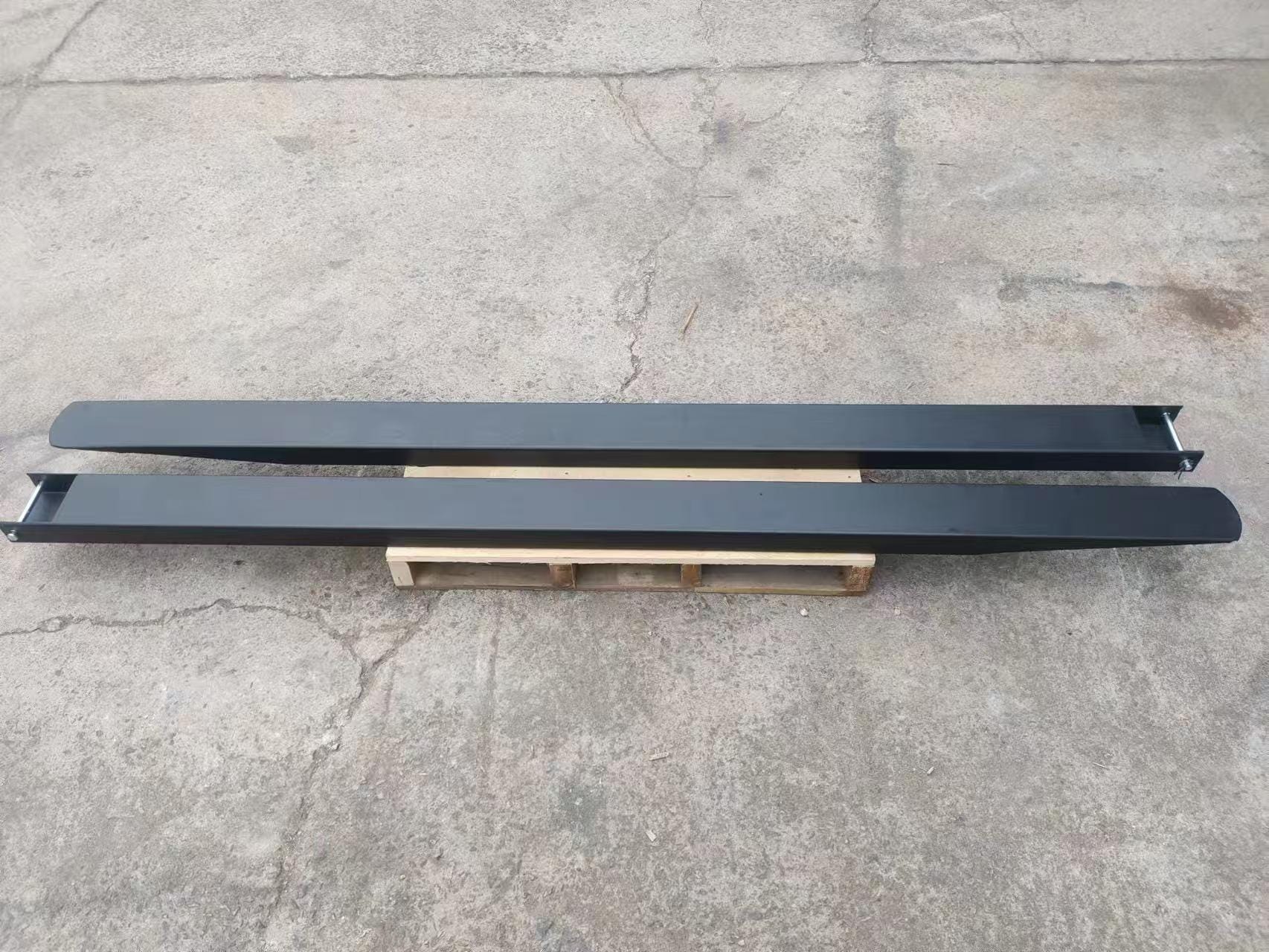
Good forklift fork extensions slide onto the supporting forks with appropriate clearance and remain secured during travel, lifting, lowering, and withdrawal from the load. The retention method must be compatible with the fork heel and must be fully engaged before operation.
A loose extension can shift or rattle; an overly tight one may not seat correctly or may be difficult to remove. Ask the supplier to confirm the required internal dimensions, entry design, locking arrangement, material specification, finish, and identification markings. For the underlying fork itself, ISO 2330 is a useful reference point for the technical vocabulary and requirements applied to fork arms.
Inspect Before Every Use
Operators should inspect forklift fork extensions before installation and use. Remove them from service if there are cracks, distorted sections, damaged retaining components, severe corrosion, illegible identification, or any condition that prevents full seating. The original forks must also pass the normal pre-use inspection.
- Verify that the extension matches the assigned fork and truck.
- Clean debris from the extension interior and fork surface.
- Install each extension completely and engage the retaining device.
- Check that both extensions are aligned and similarly positioned.
- Test the setup at low height in a controlled area before handling the load.
Training matters as much as hardware. Operators need to understand that forklift fork extensions alter the truck’s working envelope. Turns, ramps, doorways, rack clearances, and pedestrian separation may all require extra attention.
When Custom Forklift Fork Extensions Make Sense
Standard forklift fork extensions may suit common forks and occasional long-load handling. A custom specification is more appropriate when the forks have unusual dimensions, the application needs a particular surface finish, the load requires a tightly controlled support length, or the retaining arrangement must match a special operating condition.
A useful inquiry includes the forklift model, rated capacity, fork dimensions, load weight, load dimensions, required support length, operating environment, and applicable market requirements. This information allows an engineering or sales team to identify conflicts early instead of treating customization as a cosmetic choice.
Buyer Checklist
Before approving a purchase, use this forklift fork extensions checklist to confirm the following points:
- The handling task and load are clearly defined.
- The forklift manufacturer or qualified responsible party has approved the configuration where required.
- The extension length is no greater than needed.
- Internal width, height, and retention details match the original forks.
- The truck’s rated capacity remains adequate at the actual load center.
- Operators have inspection and operating instructions.
- Each extension can be identified and paired with the correct equipment.
Choosing forklift fork extensions is ultimately a specification exercise, not a shortcut. Start with verified load data, measure the supporting forks, evaluate the changed load center, and confirm fit and retention before purchase. That process produces a safer, more useful solution and gives the supplier the information needed to manufacture or recommend the correct extension.