جدول المحتويات
مقدمة
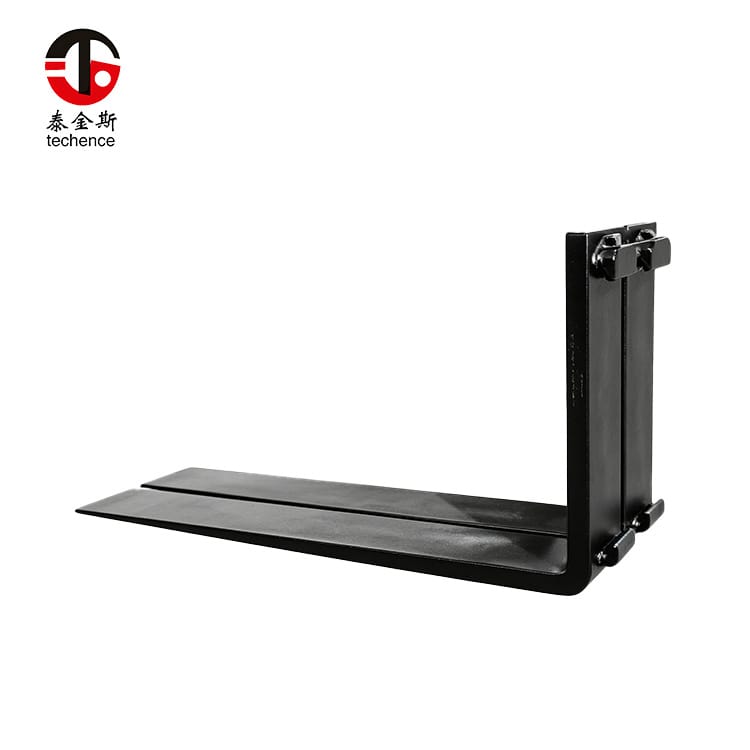
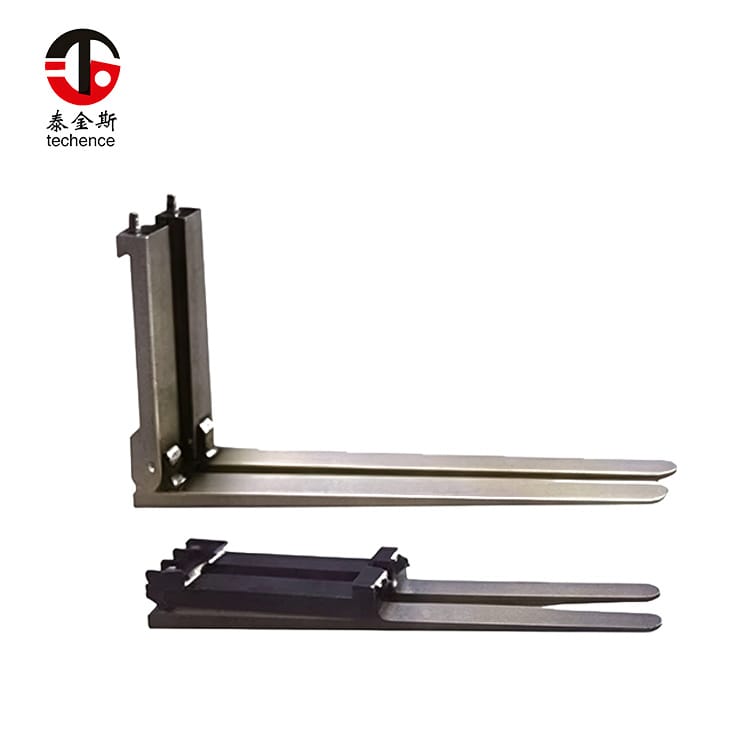
Fork entry is one of the shortest movements in a forklift handling cycle, but it can determine whether the rest of the cycle is smooth, slow, or unsafe. When pallet openings are low, support boards are closely spaced, or the approach angle is difficult to control, a thick fork tip may strike the pallet instead of entering beneath the load.
Full Taper Forks are designed to address this problem. Their blades gradually reduce in thickness toward a relatively thin tip, creating a lower entry profile than many conventional fork designs. This geometry can help operators enter restricted pallet openings with less contact, fewer alignment corrections, and less disturbance to the load.
However, selecting Full Taper Forks is not simply a matter of choosing the thinnest available tip. The forks still need to support the load, match the forklift carriage, maintain suitable capacity, resist the actual duty cycle, and fit the working environment.
Before selecting them, you should answer five practical questions:
- How much vertical clearance is available at the load-entry point?
- Where will the load be positioned along the fork blade?
- What is the maximum load weight and load center?
- Does the fork section match the forklift carriage and capacity?
- Will the operating environment expose the fork tips to repeated impact?
This guide explains when Full Taper Forks are appropriate, how they differ from standard fork profiles, which specifications matter, and how to inspect them during service.
What Are Full Taper Forks?
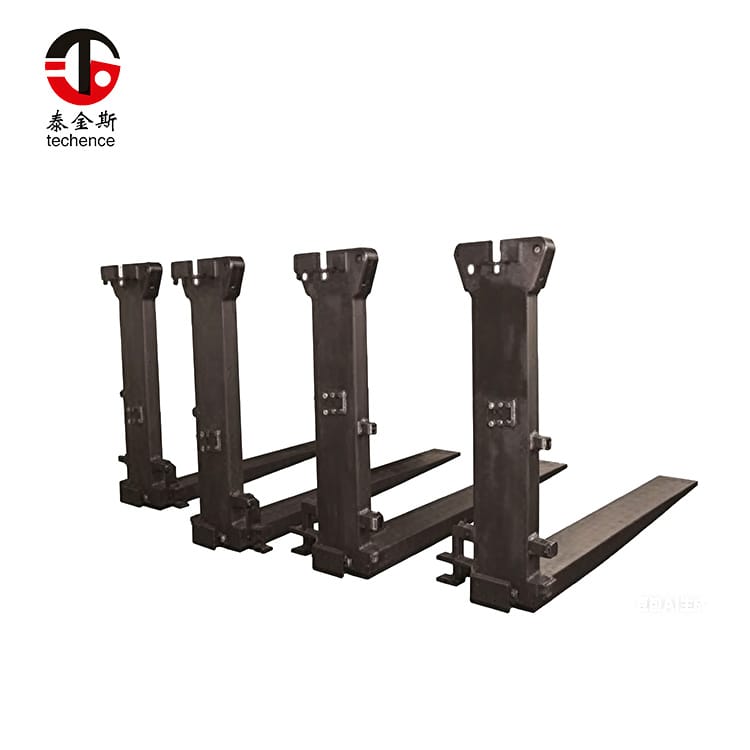
Full Taper Forks are forklift fork arms with a blade profile that becomes progressively thinner toward the tip over a substantial portion of the blade length.
The word “full” describes the extended tapering area. Instead of reducing thickness only near the final section of the blade, the transition generally begins farther back, creating a longer and smoother approach to the tip.
A رافعة شوكية uses its fork arms to enter beneath, support, lift, transport, and place a load. Because the forks form the direct connection between the forklift and the load, changes in blade geometry affect entry clearance, support behavior, operator visibility, and the way contact occurs during pallet engagement.
How the Full Taper Profile Works
A conventional fork blade usually maintains much of its original thickness before tapering near the tip. A full taper design reduces the blade thickness more gradually over a longer distance.
This creates three practical effects:
- The tip can enter a lower opening.
- The transition from the tip to the main blade is less abrupt.
- The fork may slide beneath a supported load with less sudden vertical contact.
The taper does not create additional lifting capacity. Its main purpose is to improve entry geometry while preserving an appropriate supporting section behind the tip.
Full Taper Does Not Mean Sharp
A thin fork tip should not be confused with a cutting edge. The tip still needs sufficient edge shape, width, surface condition, and structural integrity for industrial handling.
An excessively sharp or damaged tip may catch packaging, split pallet boards, or create concentrated contact. A functional taper should provide controlled entry rather than act as a wedge that damages the load-support structure.
Why Fork Geometry Matters
Fork selection is often reduced to capacity and length, but blade geometry can be equally important.
Two forks with the same nominal length may behave differently because of variations in:
- Tip thickness
- Tip length
- Taper start position
- سمك الشفرة
- عرض الشفرة
- Underside profile
- Heel radius
- Surface finish
The correct profile depends on both the space available for entry and the support required after the fork is fully inserted.
When Full Taper Forks Are the Right Choice
Full Taper Forks are most useful when entry clearance is a repeated operational constraint rather than an occasional inconvenience.
Low-Clearance Pallets
Some pallets and load platforms provide limited space between the lower support surface and the floor. A standard fork tip may contact the pallet board, packaging, or ground before reaching the intended opening.
A thinner entry profile can reduce this problem, particularly when the operator approaches on a level surface and the pallet structure is in serviceable condition.
Before selection, measure the actual opening under loaded conditions. A pallet may provide adequate clearance when empty but sit lower after the load causes boards or supports to deflect.
Closely Spaced Load Supports
Certain containers, skids, frames, and handling bases have support members positioned close to the entry path. The available opening may become narrower farther inside the load.
A longer taper can help the blade progress through the entry area more gradually. However, the complete fork section must still fit between the supports after insertion.
Smooth Entry Beneath Delicate Loads
When a fork strikes the edge of a pallet or supporting base, the impact can shift stacked goods, damage packaging, or disturb an unstable load.
Full Taper Forks may help reduce abrupt contact, provided the forks are correctly aligned and the operator enters at a controlled speed.
They do not eliminate the need for suitable packaging, stable stacking, correct fork spacing, or adequate operator visibility.
Frequent Pallet Engagement
The operational value of easier entry increases when forklifts engage pallets repeatedly throughout a shift.
A small reduction in alignment corrections can improve the consistency of the complete handling cycle. The potential benefit is highest where operators regularly experience tip contact with otherwise suitable pallet openings.
Restricted Approach Angles
Racks, containers, machinery, platforms, or nearby stored goods may limit the forklift’s approach angle. The operator may not always be able to align the forks perfectly before entry.
A tapered profile can provide greater entry tolerance, but it should not be used to justify severe misalignment. Side loading, twisting, and impact remain harmful to the fork and pallet.
When Full Taper Forks May Not Be the Best Option
A thinner tip is useful only when it solves a real entry problem without creating an unsuitable operating condition.
Severe Impact Environments
Operations involving broken surfaces, damaged pallets, debris, uncontrolled driving, or repeated contact with hard structures may expose the fork tip to frequent impact.
In such environments, the selection process should place greater emphasis on tip durability, operating discipline, pallet condition, and ground clearance.
A tapered profile cannot compensate for repeated misuse.
Loads Carried Near the Fork Tips
Forklift loads should generally be positioned as far back toward the fork heel as the load and carriage arrangement safely allow.
If an operation regularly carries loads near the fork tips, the problem should be investigated before selecting a different taper. Possible causes include:
- Forks that are too short
- Loads with inaccessible support points
- Incomplete fork insertion
- Obstructed pallet openings
- Poor operating procedures
- Incorrect load orientation
The thinner section near the tip is intended primarily for entry. It should not become the main load-bearing area during transport.
Maximum-Stiffness Applications
Some handling tasks prioritize blade stiffness, impact resistance, and section depth more than low-profile entry.
A standard taper, polished fork, reinforced design, or application-specific fork may be more appropriate when entry clearance is generous but the load is highly concentrated or the operating environment is severe.
Damaged Pallets
Full Taper Forks should not be selected as a permanent solution to broken, collapsed, or poorly constructed pallets.
A thinner fork may enter some damaged openings, but it may also pass beneath loose boards or encounter hidden obstructions. Pallet condition remains an independent safety and quality issue.
Uneven Ground
When the forklift, pallet, or load rests on an uneven surface, the available entry height can differ from one side to the other.
Before changing the fork design, determine whether floor condition, tire condition, pallet placement, or mast tilt is creating the entry problem.
Full Taper Forks vs Standard Taper Forks
Both designs can be suitable when correctly matched to the load. The difference lies primarily in how and where the blade thickness reduces.
| Comparison Factor | شوكات مستدقة كاملة | Standard Taper Forks |
|---|---|---|
| Tapered area | Extends across a larger part of the blade | Concentrated nearer the fork tip |
| Tip profile | Generally designed for lower entry clearance | Usually provides a more conventional entry profile |
| Entry behavior | Gradual transition beneath low-clearance loads | Suitable for standard pallet openings |
| Primary advantage | Improved access beneath restricted entry points | Balanced general-purpose performance |
| Main selection concern | Matching thin-tip entry with sufficient supporting section | Confirming the tip can enter the intended pallet |
| Typical application | Low pallets, close supports, restricted openings | General pallet and material handling |
| Misuse risk | Treating the thin section as the main carrying area | Forcing a thicker tip into an unsuitable opening |
| Inspection focus | Tip damage, taper wear, blade thickness, heel condition | Tip, blade, heel, hooks, and locking parts |
Entry Performance
Full Taper Forks normally provide the greatest practical advantage during the initial engagement stage.
A thinner tip requires less vertical space to begin entering the pallet. The longer transition may then guide the main blade beneath the load more progressively.
Standard taper forks may perform equally well when pallet openings are consistent and provide adequate clearance.
Blade Stiffness
Blade stiffness depends on more than the taper name. Thickness, width, length, material, heat treatment, load position, and manufacturing quality all contribute.
A full taper design should therefore be evaluated using its rated application and complete cross-sectional profile, not by comparing tip thickness alone.
Load-Support Characteristics
Once the fork is fully inserted, the load should be supported by a suitable area of the blade rather than concentrated at the tips.
If the pallet or support point contacts only the tapered section, review the fork length, pallet geometry, insertion depth, and load position.
Application Suitability
The most suitable profile is the one that resolves the actual entry condition while still satisfying capacity, compatibility, visibility, durability, and service requirements.
Selecting Full Taper Forks where no clearance problem exists may add little operational value.
Understand the Full Taper Fork Structure
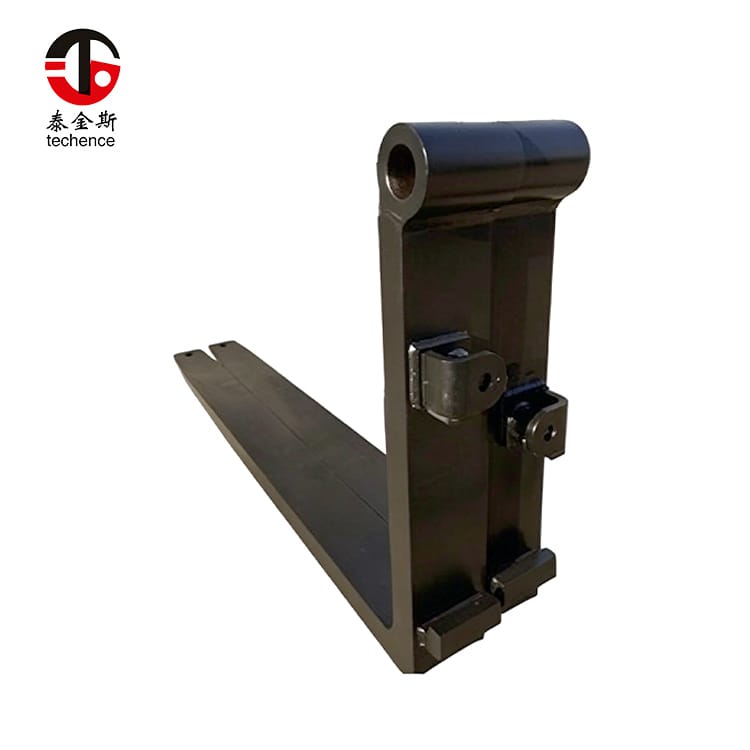
Each section of a fork performs a different function. Understanding these sections helps buyers describe their requirements accurately.
Fork Tip
The tip is the leading end that first enters the pallet or load-support opening.
Important tip characteristics include:
- Thickness
- Width
- Edge shape
- Surface condition
- Length of the thinnest section
- Transition into the blade
- Left-to-right consistency
A thin tip with a rough edge, upward bend, or damaged corner may perform worse than a slightly thicker tip with accurate geometry and a smooth surface.
شفرة
The blade is the horizontal portion that supports the load. Its width and thickness affect contact area, stiffness, fit, and rated performance.
The blade must fit the pallet opening without creating excessive clearance that allows unstable support.
Heel
The heel is the curved transition between the horizontal blade and vertical shank. It transfers the load from the blade into the mounted section of the fork.
Because the heel experiences significant stress, it should be inspected for cracks, deformation, wear, and surface damage. Grinding or uncontrolled repair around this area can alter its geometry and material condition.
عرقوب
The shank is the vertical section connected to the carriage. Its height, thickness, hook positions, and locking arrangement must match the forklift.
The shank also affects how high the blade sits relative to the carriage and floor.
Hooks and Locking Components
Hook-type forks attach to the upper and lower carriage bars. The fork lock prevents unintended sideways movement.
Correct hook fit should provide secure engagement without excessive looseness or interference. Worn hooks, damaged carriage bars, or missing locking parts can compromise the mounting even when the blade is in good condition.
Match Full Taper Forks to the Load
The load should determine the fork specification. Begin with actual measurements rather than nominal descriptions.
Load Weight
Record the maximum expected load, including the goods, pallet, container, packaging, fixtures, and any material retained during handling.
Do not select forks from the average load alone. Occasional heavy loads can determine the required capacity.
The capacity must be considered for the fork pair and the complete forklift configuration.
Load Dimensions
Measure:
- Load width
- Load depth
- Load height
- Pallet opening width
- Pallet opening height
- Distance between pallet supports
- Position of the load center
- Required insertion depth
The load depth is especially important when selecting fork length.
Load Center
The load center is the horizontal distance from the fork face or relevant reference point to the load’s center of gravity.
As this distance increases, the forward turning effect on the forklift also increases. A long load or incomplete insertion may therefore reduce the usable capacity of the complete configuration.
A thin tip does not change this principle. The load should still be positioned correctly along the blade.
Pallet Opening Height
Measure the lowest usable opening, not the largest visible gap.
The measurement should account for:
- Loaded pallet deflection
- Uneven pallet boards
- Floor variation
- Packaging extending below the pallet
- Debris
- Damaged supports
- Fork approach angle
- Fork tip height above the floor
A small difference between tip thickness and pallet clearance may not be enough when real operating variation is considered.
Load Distribution
A load may have the correct total weight but distribute that weight unevenly.
Dense materials concentrated near one side, liquid movement, off-center machinery, and irregular components can create unequal loading between the forks.
Document the center of gravity instead of assuming it is at the geometric center.
Load Variation
Review both common and difficult loads. A useful load survey includes:
- The heaviest load
- The deepest load
- The lowest pallet opening
- The most flexible pallet
- The most fragile packaging
- The most uneven center of gravity
- The least accessible support point
This prevents a fork from being selected around an ideal sample that does not represent daily operation.
Check Forklift and Carriage Compatibility
Full Taper Forks are not automatically compatible with every forklift.
فئة النقل
The carriage class defines important mounting dimensions, including the hook arrangement and carriage-bar relationship.
Confirm the actual carriage rather than relying only on the forklift’s nominal capacity. Masts and carriages may have been changed during the machine’s service life.
Hook Dimensions
Required measurements may include:
- Upper-hook opening
- Lower-hook position
- Distance between hooks
- Hook width
- Shank height
- Carriage-bar dimensions
- Locking-pin position
A fork that appears to hang on the carriage can still be incorrect if the hooks do not seat fully.
Fork Section
Fork section normally refers to blade width and thickness. These dimensions affect:
- سعة
- Stiffness
- Pallet fit
- Fork spacing
- Visibility
- Weight
- Carriage compatibility
When comparing Full Taper Forks, ask where the stated thickness is measured. The tip, tapered section, and main blade do not have the same thickness.
Fork Length
Fork length should provide adequate load support without creating unnecessary projection beyond the load.
Forks that are too short may encourage tip loading or incomplete support. Forks that are unnecessarily long can affect maneuvering, load-center conditions, visibility, and the risk of contacting objects behind a pallet.
تباعد الشوكة
Fork spacing should support the load evenly and match the pallet openings.
Moving the forks too close together can reduce lateral stability. Moving them too far apart can interfere with the pallet or place support under weak areas.
Capacity Documentation
The fork rating, forklift rating, mast configuration, load center, lift height, and any installed attachment should be considered together.
The lowest applicable limit governs the operation. A high-capacity fork does not increase the forklift’s approved lifting capacity.
Use the Entry–Support–Clearance Selection Method
A Full Taper Fork can be evaluated with an original three-part framework: Entry, Support, and Clearance.
Compatibility and capacity remain mandatory gates before this framework is applied.
Entry
Ask whether the tip can begin entering the lowest valid pallet opening without striking the floor, pallet board, packaging, or support structure.
Evaluate:
- Tip thickness
- Tip edge condition
- Approach height
- Pallet deflection
- Floor level
- Mast tilt
- Visibility
- Operator positioning
The objective is controlled entry, not the smallest possible tip dimension.
Support
Ask whether the load will rest on a suitable portion of the blade after complete insertion.
Evaluate:
- Fork length
- Load depth
- Support-point location
- Load-center position
- Fork spacing
- عرض الشفرة
- Load distribution
- Required insertion depth
A design that enters easily but leaves the load supported near the tips has not solved the complete handling problem.
Clearance
Ask whether the entire fork can move through the operating path without interference.
Clearance includes more than pallet entry. Check:
- Space around pallet supports
- Ground clearance
- Rack beams
- تحميل مسند الظهر
- Carriage position
- Nearby loads
- Doorways
- Turning space
- Fork projection behind or beyond the load
Mandatory Compatibility Gate
Before scoring entry, support, and clearance, confirm:
- Correct carriage mounting
- Suitable fork capacity
- Suitable forklift capacity
- Correct fork pair
- Appropriate material and manufacturing specification
- Acceptable operating condition
A fork that fails any of these requirements should not be accepted simply because its tip fits the pallet.
Compare Full Taper Fork Specifications
The following table explains how common specifications influence performance.
| تخصيص | What It Controls | What to Verify | Risk of Incorrect Selection |
| Tip thickness | Initial entry clearance | Lowest loaded pallet opening and approach variation | Repeated impact or unnecessary reduction in tip section |
| Taper length | Transition beneath the load | Location of pallet supports and required insertion distance | Load may contact the tapered area incorrectly |
| سمك الشفرة | Stiffness and capacity contribution | Rated load, load center, length, and material | Excessive deflection or incompatibility |
| عرض الشفرة | Load contact and lateral fit | Pallet openings and support strength | Poor fit or concentrated loading |
| Fork length | Load support depth | Load depth and insertion requirements | Tip loading, excessive projection, or maneuvering problems |
| Heel geometry | Stress transfer into the shank | Manufacturing quality and inspection condition | Increased stress concentration |
| Shank height | Position on the carriage | Carriage dimensions and mast arrangement | Incorrect mounting or blade height |
| Hook arrangement | Carriage connection | Carriage class and actual bar dimensions | Loose, incomplete, or impossible engagement |
| نظام القفل | Side-position retention | Lock-pin location and carriage notches | Unintended fork movement |
| القدرة المقدرة | Permitted load condition | Capacity per pair, load center, and application | Overloading or incorrect assumptions |
| Fork weight | Handling and truck configuration | Installation method and complete capacity review | Difficult mounting or altered operating characteristics |
| Surface condition | Entry and contact behavior | Smoothness, scale, damage, and protective treatment | Packaging damage or poor insertion |
Specifications should be reviewed as a system. Increasing length while keeping the same section, for example, may change stiffness and capacity conditions. Reducing tip thickness without controlling the transition can affect durability and load contact.
Evaluate Material and Manufacturing Quality
The visible fork profile is only one part of product quality.
Material Selection
Fork material needs appropriate strength, toughness, fatigue resistance, and response to heat treatment.
A material designation alone is not enough. Consistent material control, forming, thermal processing, testing, and traceability determine whether the final fork meets the intended performance.
Forming Process
Forks are shaped so the blade, heel, and shank form a continuous load path.
The manufacturing process should maintain suitable grain flow, section geometry, and dimensional control. Irregular transitions or uncontrolled material removal can create areas of concentrated stress.
المعالجة الحرارية
Heat treatment influences strength, toughness, hardness, and resistance to repeated loading.
An excessively hard component may become less tolerant of impact, while insufficient strength can contribute to permanent deformation. The correct balance depends on the fork design and application.
Heel Quality
The heel deserves particular attention because it transfers bending forces from the blade into the shank.
Quality checks should look for:
- Correct radius
- Smooth transition
- Consistent section
- Absence of cracks
- Controlled surface condition
- Accurate blade-to-shank angle
Dimensional Consistency
A fork pair should work as a matched set. Differences in blade height, tip shape, taper profile, hook location, or length can cause uneven load support.
Inspect both forks together rather than evaluating each one in isolation.
Traceability
Useful identification may include:
- Manufacturer
- Fork type
- Capacity information
- Load-center condition
- Production or batch number
- Material or process records
- Inspection results
- Applicable drawing revision
Traceability helps maintenance teams confirm what is installed and identify a compatible replacement later.
Inspect Full Taper Forks Before Use
The thinner entry profile makes tip condition particularly important, but the complete fork still requires inspection.
Compare Fork-Tip Height
Place the fork pair in a comparable unloaded position and check whether the tips are at the same height.
A meaningful difference may indicate bending, twisting, uneven hook wear, carriage damage, or an unmatched pair.
Examine Blade Wear
Inspect the underside of the blade and the transition through the tapered area.
Wear reduces section thickness and may change the designed taper profile. Measuring at consistent locations makes trend monitoring more useful than visual inspection alone.
Check the Heel
Look for:
- Cracks
- Surface lines requiring further evaluation
- Deformation
- Impact marks
- Grinding
- Heat discoloration
- Unapproved welds
- Changes in heel angle
The fork should be removed from service when its condition falls outside the applicable inspection criteria.
Inspect the Tips
Tip damage may include:
- Upward or downward bending
- Chipped corners
- Sharp burrs
- Deep gouges
- Unequal taper
- Surface folding
- Excessive wear
- Packaging-catching edges
Do not grind the tip casually to make it thinner. Removing material changes the design and may create an uneven fork pair.
Inspect Hooks and Locks
Check that both hooks engage the carriage correctly and that the fork lock enters its intended position.
Watch for excessive movement, enlarged openings, missing retainers, damaged welds, worn carriage bars, and difficulty operating the lock.
Check for Permanent Deformation
A fork that remains bent or twisted after unloading has experienced a condition requiring technical evaluation.
Replacing the fork without investigating the load, handling method, or forklift configuration can lead to another failure.
Maintain Full Taper Forks in Daily Operation
Good operating practices protect the taper profile and the complete fork structure.
Avoid Carrying Loads on the Tips
Insert the forks as fully as the load and pallet design allow. The load should sit back on a suitable supporting area of the blade.
Tip loading increases bending and can damage the pallet, fork, or load.
Control Entry Speed
The thin profile helps access restricted openings, but it should not be driven into the pallet at speed.
Slow entry gives the operator time to correct height and alignment before impact occurs.
Keep Forks Level
Uneven mast tilt or fork height can cause one tip to contact the pallet first.
Before entry, confirm that both forks align with the pallet openings and that the mast position suits the handling task.
Use Appropriate Fork Spacing
Set the forks far enough apart to support the load stably while remaining aligned with the entry openings.
Repeated entry with incorrect spacing can damage pallet boards and fork edges.
Inspect the Pallet
Look for broken boards, protruding nails, collapsed supports, debris, wrapping material, and deformed openings.
Full Taper Forks improve access to low openings; they do not make damaged load supports safe.
Avoid Side Loading
Forks are primarily designed to support loads vertically. Dragging, prying, pushing sideways, or using one fork independently can introduce forces outside normal handling conditions.
Record Wear Measurements
Create fixed measurement points along the blade, taper, and heel. Record the results during scheduled inspections.
Consistent records help identify abnormal wear before it becomes visually obvious.
Common Full Taper Fork Selection Mistakes
Choosing Only by Length
Length is important, but it does not confirm capacity, fork section, taper profile, hook fit, or carriage compatibility.
Assuming the Thinnest Tip Is Always Best
The correct tip is thin enough for the required entry but still designed for the load, duty cycle, and expected impact conditions.
An unnecessarily thin tip does not automatically improve the complete handling process.
Ignoring the Taper Length
Two forks may have similar tip thicknesses but very different transitions into the main blade.
The position of pallet supports and the required insertion depth determine which taper profile fits the application.
Ignoring Carriage Measurements
A correct blade can still be unusable when the hooks, shank, lock, or carriage dimensions do not match.
Carrying Loads Too Far Forward
Easy fork entry should be followed by complete insertion. Carrying the load near the tips increases the load center and reduces support quality.
استبدال شوكة واحدة فقط
A replacement fork should be evaluated against the remaining fork for length, section, height, capacity, taper, hook position, and wear.
Pairing a new fork with a significantly worn or deformed fork may create uneven support.
Using Full Taper Forks to Solve Floor Problems
If the tips repeatedly strike the ground, inspect the floor, tires, mast position, fork height, pallet placement, and operator procedure.
Changing the taper may hide rather than correct the underlying issue.
Relying on Nominal Pallet Dimensions
Real pallets vary because of deflection, wear, repair, loading, moisture, debris, and manufacturing tolerances.
Measure representative pallets under actual operating conditions.
A Practical Full Taper Fork Selection Checklist
Before finalizing the specification, record the following information.
تحميل المعلومات
- الحد الأقصى لوزن الحمولة
- Load depth and width
- Load-center position
- Pallet type
- Minimum opening height
- Support-member positions
- Load fragility
- تردد التعامل
Existing Fork Information
- Blade length
- عرض الشفرة
- سمك الشفرة
- Tip thickness
- Taper length
- أبعاد عرقوب
- Hook dimensions
- Locking arrangement
- Capacity markings
- Current wear condition
معلومات الرافعة الشوكية
- Forklift model
- Equipment identification number
- القدرة المقدرة
- مركز التحميل المقدر
- Mast type
- Lift height
- فئة النقل
- أبعاد النقل
- المرفقات المثبتة
- التعديلات السابقة
Operating Information
- Floor condition
- Aisle width
- Rack configuration
- Frequency of pallet entry
- Exposure to impact
- الاستخدام الداخلي أو الخارجي
- Cleaning conditions
- Inspection schedule
Where standard dimensions do not match the load, a Full Taper Forks specification review should include drawings, measurements, photographs, load data, carriage details, and the complete handling sequence.
خاتمة
Full Taper Forks are most appropriate when low pallet openings, closely spaced supports, or restricted entry conditions repeatedly interfere with normal fork engagement.
Their extended taper can provide a thinner and more gradual entry profile, but that advantage must be evaluated together with load support, blade section, fork length, load center, carriage compatibility, manufacturing quality, and operating conditions.
A dependable selection process follows four principles:
- Measure the real loaded pallet opening.
- Confirm that the load will rest on a suitable part of the blade.
- Match the fork section and hooks to the forklift and carriage.
- Inspect the complete fork pair throughout its service life.
The best Full Taper Forks are not simply the forks with the thinnest tips. They are the forks that enter the required load support smoothly, carry the load in the correct position, fit the forklift accurately, and maintain reliable performance under the actual duty cycle.
الأسئلة الشائعة
What are Full Taper Forks used for?
Full Taper Forks are used where standard fork tips have difficulty entering low-clearance pallets, skids, containers, or closely spaced supports. Their extended taper creates a thinner, more gradual entry profile while the main blade supports the load after full insertion.
Are Full Taper Forks weaker than standard forks?
Not automatically. Fork performance depends on blade width, thickness, length, material, heat treatment, taper geometry, rated capacity, and load position. A properly specified full taper design should be evaluated according to its documented capacity and application.
How do I choose the correct Full Taper Fork length?
Choose a length that supports the load sufficiently without projecting unnecessarily beyond it. Record the load depth, pallet design, insertion access, load center, and surrounding clearance. Fork length should be reviewed with the blade section and rated capacity.
Can Full Taper Forks fit any forklift?
No. The hooks, shank height, locking system, blade section, capacity, and carriage class must match the forklift. The actual carriage should be measured because equipment modifications or mast replacements may differ from the original configuration.
How should Full Taper Forks be inspected?
Inspect the tips, tapered sections, blade undersides, heels, shanks, hooks, locks, markings, and fork-pair height. Look for cracks, wear, bending, burrs, impact damage, loose mounting, and unequal geometry. Follow the manufacturer’s inspection limits.