Inhaltsverzeichnis
Einleitung
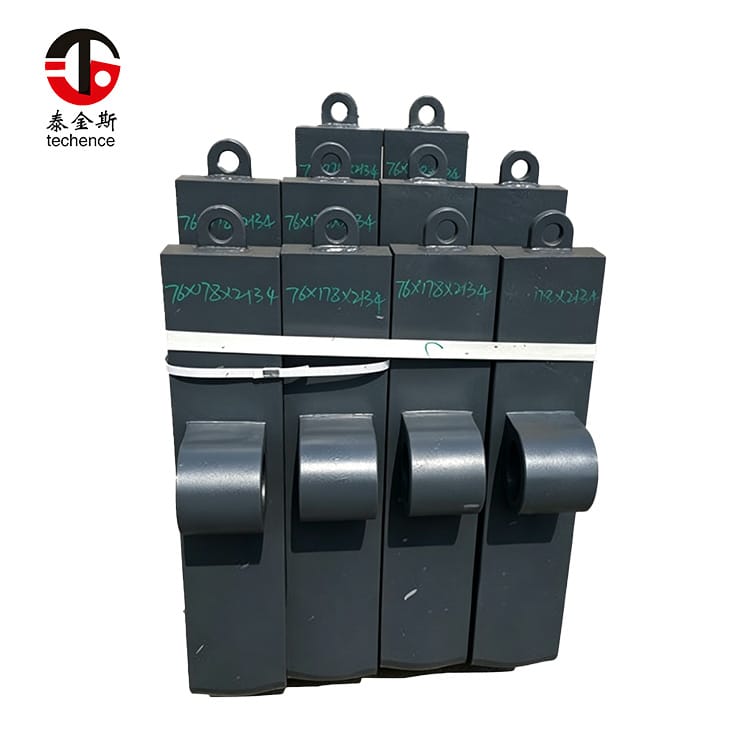
Schwere Ladung verhält sich selten wie eine gewöhnliche Lagerpalette. Sie kann länger, dichter, weniger ausgewogen, schwieriger zu erreichen oder nur von wenigen Strukturpunkten getragen werden. Wenn ein Gabelstapler Industriemaschinen, Stahlprodukte, schwere Kufen, große Stückladungen oder Stückgut umschlägt, bieten Standardgabelabmessungen möglicherweise nicht die erforderliche Unterstützung oder Haltbarkeit.
Portgabeln sind für diese anspruchsvollen Handhabungsbedingungen ausgelegt Sie verwenden im Allgemeinen größere Blattabschnitte, verstärkte Lastpfade, Hochleistungsmontageanordnungen und Abmessungen, die um die tatsächliche Ladung herum ausgewählt werden, anstatt ein Standardpalettenformat.
Der Name stammt von ihrer häufigen Verwendung in Port-Terminal-Betrieb, (wo sich Fracht zwischen Lagerbereichen, Ladeplattformen, Transportausrüstung und Bereitstellungszonen bewegen kann. Ihr Nutzen beschränkt sich jedoch nicht auf Einrichtungen am Wasser. Ähnliche Gabeln können überall dort verwendet werden, wo schwere, lange oder konzentrierte Lasten eine substanziellere Gabelkonstruktion erfordern.
Portgabeln sollten nicht einfach deshalb ausgewählt werden, weil ein Gabelstapler eine hohe Nennkapazität hat Die komplette Konfiguration muss Folgendes berücksichtigen:
- Maximales Lastgewicht
- Lastabmessungen und Schwerpunkt
- Gabellänge, -breite und -dicke
- Laststützstellung
- Gabelabstand
- Gabel- und Wagengewicht
- Hubhöhe
- Mastkonfiguration
- Montageverfahren
- Oberflächenbedingungen
- Auswirkungen und Arbeitszyklus
- Inspektions - und Wartungsanforderungen
Die effektivste Konstruktion ist nicht unbedingt die größte verfügbare Gabel. Es ist die Gabel, die die reale Last richtig trägt, sicher zum Gabelstapler passt, die überprüfte Restkapazität beibehält und in der tatsächlichen Betriebsumgebung eine konstante Leistung erbringt.
Was sind Port Forks?
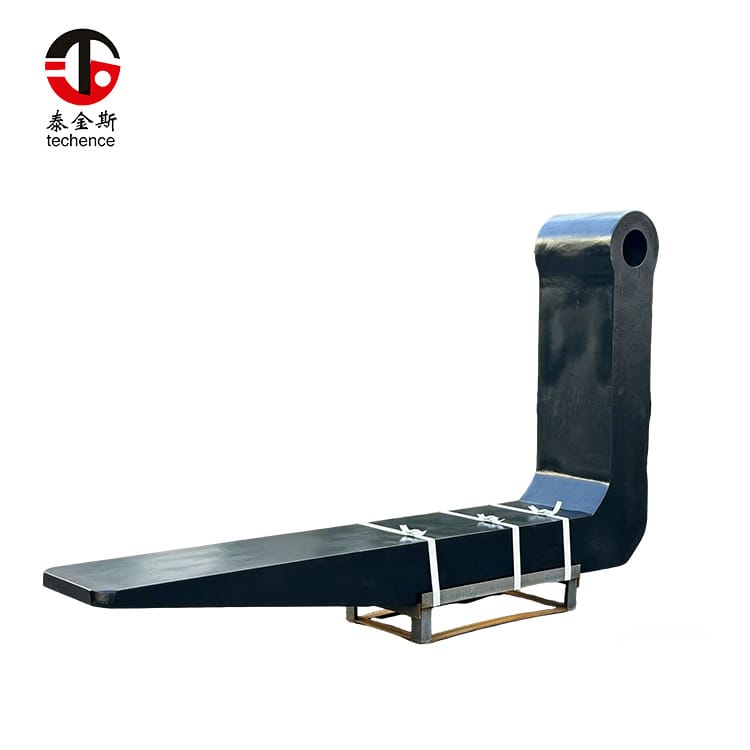
Hafengabeln sind Hochleistungsgabelarme, die für anspruchsvolle Frachtumschlaganwendungen entwickelt wurden. Sie werden typischerweise an Hochleistungsgabelstaplern, schweren Flurförderzeugen, Endschleppern mit Hebesystemen oder speziell angefertigten Materialtransportmaschinen installiert.
Ihre Konstruktion kann Folgendes umfassen:
- Große Blattquerschnitte
- Verlängerte Klingenlängen
- Verstärkte Absätze
- Schwere Schenkel
- Haken, Stift, Schaft oder integrierte Montage
- Benutzerdefinierter Gabelabstand
- Anwendungsspezifische Spitzenprofile
- Geschmiedete oder sorgfältig geformte tragende Abschnitte
Im Gegensatz zu allgemeinen Lagergabeln werden Backbordgabeln häufig um eine einzelne Ladungsfamilie oder einen einzelnen Betriebsprozess herum spezifiziert.
Hochleistungsgabelkonstruktion
Die von einer Gabel getragene Last erzeugt Biegebeanspruchung entlang des Blattes und konzentrierte Beanspruchung um die Ferse, mit zunehmendem Lastgewicht, Lastmittelpunkt, Gabellänge werden diese Beanspruchungen anspruchsvoller.
Eine Backbordgabel benötigt daher einen durchgehenden Strukturweg von der Klinge durch die Ferse in den Schaft oder das Montagesystem.
Eine große Außengröße allein garantiert keine geeignete Leistung Materialeigenschaften, Schmiedequalität, Wärmebehandlung, Fersengeometrie, Maßhaltigkeit und Oberflächenbeschaffenheit beeinflussen alle das Endergebnis.
Typische Hafen- und Terminalanwendungen
Portgabeln können zur Handhabung verwendet werden:
- Schwere Paletten
- Industriemaschinen
- Stahlplatten
- Metallbündel
- Großgussteile
- Schwere Kisten
- Strukturelle Komponenten
- Lange Skids
- Projektfracht
- Einheitliche Stückgutladungen
- Schwere Behälter oder Rahmen für den Gabelumschlag
- Ausrüstung mit speziellen Gabeltaschen
Die Last muss weiterhin geeignete Stützpunkte bieten. Ein schwerer Gegenstand ohne geeignete Gabeleintrittsbereiche kann eine Halterung, einen Hubbalken, eine Klemme, einen Spreizer oder eine andere technische Befestigung erfordern.
Portforks sind keine Containerspreizer
Portgabeln und Containerstreuer erfüllen unterschiedliche Funktionen.
Portgabeln tragen Fracht von unten Sie gelangen in Gabeltaschen, Palettenöffnungen, Kufen, Rahmen oder Räume unter einer Last.
Ein Behälterstreuer greift normalerweise von oben in dafür vorgesehene Hebepunkte ein, er ist um eine andere Hebeweise und Lastbahn herum ausgelegt.
Es sollte nicht davon ausgegangen werden, dass große Backbordgabeln jeden Frachtcontainer direkt anheben. Die Ladung muss für den Gabeleingriff ausgelegt oder zugelassen sein und die ausgewählten Stützpunkte müssen die Kontaktkräfte tolerieren.
Diese Unterscheidung verhindert einen häufigen Auswahlfehler: die Wahl eines größeren Gabelpaares für eine Last, die tatsächlich ein anderes Hebesystem erfordert.
Welche Arten von Ladungen eignen sich für Portforks?
Hafengabeln funktionieren am besten, wenn die Ladung über stabile, zugängliche und strukturell geeignete Stützpunkte verfügt.
Einheitliche schwere Fracht
Eine Einheitslast ist so angeordnet, dass sich mehrere Gegenstände wie eine Handhabungseinheit verhalten.
Beispiele sind:
- Umreifbare Metallbündel
- Gesicherte Maschinen auf Kufen
- Verstärkte Kisten
- Gewickelte Industriekomponenten
- Schwere Produkte, die an einem Transportrahmen befestigt sind
Die Unitisierungsmethode muss beim Gabeleintritt, beim Heben, Fahren, Bremsen, Drehen und Platzieren sicher bleiben.
Stahl- und Metallprodukte
Stahlplatten, Stangen, Profile, Spulen, Gussteile und gefertigte Baugruppen können eine konzentrierte Belastung erzeugen.
Beim Umschlag von Metallladung prüfen Sie:
- Kontaktpunktposition
- Belastungssteifigkeit
- Oberflächenreibung
- Scharfe Kanten
- Lastablenkung
- Gefahr einer Seitwärtsbewegung
- Erforderlicher Gabelabstand
- Schutz der Gabeloberfläche
- Schutz der Produktoberfläche
Eine schwere Last, die auf eine breite Kufe verteilt ist, verhält sich anders als das gleiche Gewicht, das auf zwei schmalen Stützen konzentriert ist.
Industriemaschinen
Maschinen können einen ungleichmäßigen Schwerpunkt haben, da Hauptkomponenten wie Motoren, Getriebe, Pumpen, Gegengewichte oder Rahmen auf einer Seite positioniert sind.
Die äußeren Dimensionen geben nicht immer den wahren Gleichgewichtspunkt preis.
Identifizieren Sie vor dem Umgang mit Maschinen:
- Zugelassene Hebe- oder Gabeleintrittspunkte
- Schwerelosigkeitsmarkierungen
- Flüssigkeitsbewegung
- Abnehmbare Komponenten
- Verpackungs- oder Versandrahmenstärke
- Minimale Gabeleinfügung
- Erforderliche Zurückhaltung
Projekt und Breakbulk Cargo
Die Projektladung umfasst häufig ungewöhnliche Abmessungen, einen Umschlag mit geringem Volumen und komplexe Unterstützungsvorkehrungen.
Für diese Lasten können Backbordgabeln kundenspezifische Abmessungen erfordern Der Auswahlprozess sollte Zeichnungen, Lastdaten, Handhabungssequenzen und tatsächliche Stützorte anstelle einer allgemeinen Beschreibung wie “schwere Ladung” verwenden”
Schwere Paletten, Kufen und Rahmen
Hochleistungspaletten und Kufen können vorhersehbare Gabeleintrittspunkte bieten, ihr Zustand muss jedoch überprüft werden.
Prüfen Sie nach:
- Gebrochene Balken
- Gebogene Stahlprofile
- Lose Befestigungselemente
- Eingeschränkte Gabelöffnungen
- Verformung unter Belastung
- Ungleichmäßige Stützhöhe
- Trümmer in Gabeltaschen
- Unzureichende Öffnungsbreite
Die Gabel sollte eindringen, ohne Strukturkomponenten zu drücken, zu verdrehen oder auf sie zu treffen.
Wie sich Port Forks von Standard-Gabelstaplergabel unterscheiden
Der Hauptunterschied besteht nicht einfach in der Nennkapazität. Portgabeln sind normalerweise auf anspruchsvollere Geometrie- und Betriebsbedingungen ausgelegt.
| Designfaktor | Standardgabel | Hafengabeln |
|---|---|---|
| Typisches Lastformat | Konventionelle Paletten und Stückgut | Schwere, lange, konzentrierte oder spezialisierte Ladung |
| Klingenabschnitt | Mäßige Breite und Dicke | Größerer Abschnitt für höhere strukturelle Nachfrage ausgewählt |
| Gabellänge | Gewöhnliche Palettentiefen | Kann bei großen Lasten deutlich länger sein |
| Montage | Gemeinsamer Hakenschlitten | Haken, Stift, Schaft oder kundenspezifische Montage |
| Gabelgewicht | Relativ überschaubar | Kann erheblich sein und die Restkapazität beeinträchtigen |
| Lastmittelpunkt | Oft basierend auf der Standardpalettengeometrie | Kann erweitert oder variabel sein |
| Stoßbelastung | Allgemeine Lagerabfertigung | Häufiger Stoß, Außeneinsatz, schwere Oberflächen und schwierige Belastungen |
| Anpassung | Oft aus Standardabmessungen ausgewählt | Häufig rund um Fracht- und Maschinendaten konzipiert |
| Inspektionsschwerpunkt | Verschleiß, Risse, Biegen, Haken, Schlösser | Gleiche Kontrollen plus Durchbiegung, starker Montageverschleiß, Aufprallschäden und Langblattausrichtung |
| Hauptrisiko | Falscher Paletteneingriff oder Überlastung | Hohes Lastmoment, ungleichmäßige Unterstützung, Wagenfehlanpassung, Aufprall und strukturelle Ermüdung |
Größere Gabelabschnitte
Ein größerer Blattabschnitt kann für eine höhere Steifigkeit und Tragfähigkeit sorgen, aber auch Nachteile mit sich bringen.
Dickere Klingen passen möglicherweise nicht zu den verfügbaren Gabeltaschen Breitere Klingen können die Laststützen beeinträchtigen Schwerere Gabeln verbrauchen einen Teil der Kapazität des Gabelstaplers und können sich nur schwer manuell neu positionieren lassen.
Abmessungen sollten daher eher optimiert als maximiert werden.
Längere Klingenlängen
Lange Gabeln bieten eine tiefere Lastunterstützung, aber eine zunehmende Länge bewegt den Kontaktpunkt und den potenziellen Schwerpunkt weiter nach vorne.
Längere Klingen können auch:
- Auslenkung erhöhen
- Manövrierfähigkeit reduzieren
- Über die Rückseite einer Ladung hinausragen
- Kontakt mit Fracht in der Nähe
- Sicht reduzieren
- Gabelgewicht erhöhen
- Benötigen Sie einen größeren Klingenabschnitt
Die Gabellänge sollte auf der erforderlichen Stütztiefe basieren und nicht auf der Annahme, dass zusätzliche Länge immer sicherer ist.
Erhöhtes Gabelgewicht
Hochleistungs-Backbordgabeln können wesentlich mehr wiegen als Standardgabeln. Ihr Gewicht wird Teil der Last, die vor dem Gabelstapler getragen wird.
Das betrifft:
- Resthubvermögen
- Wagenbeladung
- Mastbeladung
- Installationsverfahren
- Gabelpositionierung
- Wartungshandling
- Transport und Lagerung
Das Gabelgewicht muss in die vollständige Kapazitätsüberprüfung einbezogen werden.
Spezialisierte Montagesysteme
Die Standard-Hakenmontage reicht möglicherweise nicht für jede Hochleistungsanwendung aus.
Portgabeln können Folgendes verwenden:
- Verstärkte Haken
- Stiftmontage
- Wellenmontage
- Obere und untere Schließanlagen
- Verschraubte Schnittstellen
- Integrierte Wagen
- Benutzerdefinierte Gabelpositionsrahmen
Die Montagemethode muss die Last ohne übermäßigen Abstand, lokalisierten Verschleiß oder unbeabsichtigte Gabelbewegung übertragen.
Beginnen Sie mit genauen Ladedaten
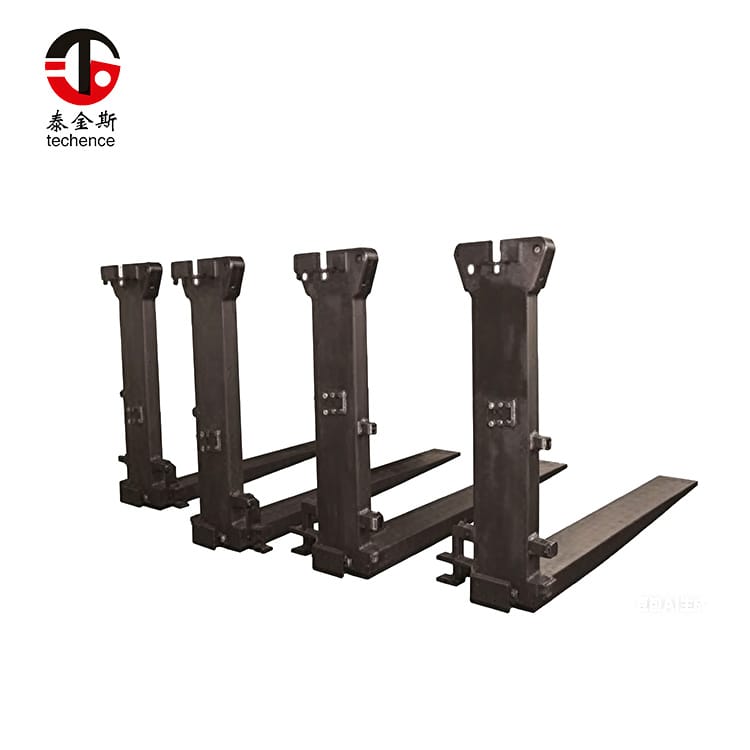
Eine zuverlässige Port-Fork-Spezifikation beginnt mit einer Lastvermessung.
Beginnen Sie nicht mit dem Kopieren der Abmessungen der vorhandenen Gabel, es sei denn, die aktuelle Konfiguration wurde bereits als geeignet überprüft.
Maximales Lastgewicht
Zeichnen Sie die maximale Gesamtlast auf, einschließlich:
- Produkt
- Verpackung
- Skid oder Frame
- Vorrichtungen
- Rückhaltematerialien
- Schutzkomponenten
- Zubehör
- Jeglicher flüssiger oder loser Inhalt
Die maximal genehmigte Ladung ist wichtiger als die durchschnittliche Ladung.
Lastabmessungen
Messen Sie die komplette Last:
- Breite
- Tiefe
- Höhe
- Gabeltaschenbreite
- Gabeltaschenhöhe
- Abstand zwischen Gabeltaschen
- Abstand von der Gabelfläche zur Lastmitte
- Minimale Einstecktiefe
- Maximal zulässige Gabelprojektion
Diese Messungen sollten anhand repräsentativer Belastungen und nicht anhand einer idealen Probe durchgeführt werden.
Zentrum der Schwerkraft
Der Schwerpunkt darf nicht am geometrischen Mittelpunkt liegen.
Es kann sich verschieben, weil:
- Ungleichmäßige Maschinenkomponenten
- Flüssigkeitsbewegung
- Außermittige Stahlbündel
- Unterschiedliche Materialdichten
- Abnehmbare Teile
- Verpackungsverformung
- Lastbewegung während der Fahrt
Wenn der Schwerpunkt nicht markiert ist, sollte der Ladungseigentümer oder das technische Team verifizierte Balance-Informationen bereitstellen.
Support-Point-Standort
Die Stützpunkte bestimmen, wo die Last die Schaufeln berührt.
Eine Gabel kann über eine ausreichende Gesamtkapazität verfügen, erfährt jedoch dennoch eine übermäßige lokale Belastung, wenn die Last auf einer kleinen Fläche ruht.
Aufzeichnung:
- Anzahl der Stützpunkte
- Breite jeder Stütze
- Abstand zwischen Stützen
- Kontaktmaterial
- Ob die Last rutschen kann
- Ob sich die Stützen verformen können
- Ob sich der Kontaktpunkt beim Einsetzen ändert
Lastvariation
Eine für eine Last ausgewählte Gabel kann für eine andere mit demselben Gewicht, aber einem anderen Schwerpunkt oder Stützmuster ungeeignet sein.
Dokumentieren Sie den kompletten Betriebsbereich, einschließlich:
- Schwerste Belastung
- Längste Belastung
- Größte Last
- Am stärksten konzentrierte Last
- Unbeständige Last
- Mit den kleinsten Gabeltaschen laden
- Last mit dem größten Mittelversatz
Verstehen Sie den Lastzentrum und die Restkapazität
Load Center ist eines der wichtigsten Konzepte im Schwergutumschlag.
Sie beschreibt den horizontalen Abstand von der Gabelfläche oder einem anderen definierten Bezugspunkt zum Schwerpunkt der Last.
Warum längere Ladungen den Vorwärtsmoment erhöhen
Das Vorwärtslastmoment kann konzeptionell ausgedrückt werden als:
Lastmoment = Lastgewicht × horizontaler Schwerpunktabstand
Bleibt das Lastgewicht unverändert, bewegt sich der Schwerpunkt aber weiter nach vorne, verstärkt sich der Kehrtwendeffekt.
Beispielsweise kann eine lange Maschine, die in der Nähe ihres Hecks getragen wird, den größten Teil ihres Gewichts weit von der Gabelfläche entfernt ablegen. Dadurch kann ein viel anspruchsvollerer Zustand entstehen als bei einer kompakten Last mit gleichem Gewicht.
Gabelgewicht und Restkapazität
Restkapazität ist die nutzbare Hubkapazität der kompletten Gabelstaplerkonfiguration nach Überlegung:
- Gabelgewicht
- Gabellänge
- Lastmittelpunkt
- Masttyp
- Hubhöhe
- Wagen
- Anhänge
- Gabelstaplergeometrie
- Lastabmessungen
Die ursprüngliche Staplerberechtigung sollte nach der Installation größerer Backbordgabeln nicht als endgültige zulässige Last behandelt werden.
Hubhöhe
Mit steigender Last gewinnen die Gabelstaplerstabilität und die Mastbelastung zunehmend an Bedeutung.
Eine für den Transport auf niedriger Ebene geeignete Konfiguration bietet möglicherweise nicht die gleiche Kapazität bei maximaler Hubhöhe.
Die erforderliche Handhabungshöhe sollte in die Auswahldaten einbezogen werden.
Offset-Ladungen
Eine versetzte Last übt mehr Kraft auf eine Gabel und eine Seite des Wagens aus.
Dies kann sich ergeben aus:
- Ungleichmäßige Belastungsdichte
- Fehlerhafter Gabelabstand
- Fehlalligierter Ansatz
- Ein außermittiger Schwerpunkt
- Ungleiche Traghöhen
- Eine Gabel geht weiter als die andere
Die Gabelpaarkapazität sollte nicht als Erlaubnis interpretiert werden, eine Gabel unverhältnismäßig zu laden.
Wählen Sie die richtigen Port Fork-Abmessungen
Eine vollständige Spezifikation erfordert mehr als die Länge und Nennlast.
Gabellänge
Die Gabellänge sollte ausreichend Halt bieten und gleichzeitig unnötige Projektionen vermeiden.
Zu kurze Gabelungen können verursachen:
- Unvollständige Lastunterstützung
- Spitzenbeladung
- Erhöhter Lastmittelpunkt
- Beschädigung der Kufe
- Belastungsinstabilität
Zu lange Gabelungen können verursachen:
- Reduzierte Manövrierfähigkeit
- Kontakt mit Ladung hinter der Ladung
- Höheres Gabelgewicht
- Erhöhte Auslenkung
- Sichtprobleme
- Unnötige Vorwärtsprojektion
Die gewählte Länge sollte der genehmigten Laststützkonstruktion folgen.
Klingenbreite
Die Klingenbreite beeinflusst die Kontaktfläche, die Passform der Gabeltasche und die seitliche Unterstützung.
Eine breitere Klinge kann den Kontakt über eine größere Fläche verteilen, sie muss jedoch mit ausreichend Arbeitsspiel in die Ladeöffnung passen.
Überprüfen Sie, ob interne Schweißnähte, Bolzen, Verstärkungen oder Schmutz die nutzbare Gabeltaschenbreite verringern.
Klingendicke
Die Klingendicke trägt zur Steifigkeit und Kapazität bei.
Eine dickere Klinge kann jedoch:
- Eine niedrige Öffnung nicht betreten
- Heben Sie die Last beim Einsteigen höher
- Die Oberseite einer Gabeltasche berühren
- Reduzieren Sie die verfügbare Neigungsfreiheit
- Erhebliches Gewicht hinzufügen
Das vollständige Klingenprofil sollte überprüft werden, einschließlich etwaiger Verjüngungen in der Nähe der Spitze.
Gabelabstand
Der Abstand bestimmt, wie die Last seitlich getragen wird.
Zu nahe beieinander positionierte Gabel können eine schlechte Seitenstabilität bieten. Zu weit voneinander entfernte Gabel können schwache Bereiche berühren oder nicht in die dafür vorgesehenen Taschen eindringen.
Das Schlitten- oder Gabelpositionierungssystem muss den erforderlichen Abstand zulassen.
Tippprofil
Portgabeln können je nach Anwendung unterschiedliche Spitzenformen verwenden.
Eine dünnere oder längere Verjüngung kann dabei helfen, eingeschränkte Öffnungen zu betreten, während eine schwerere Spitze Stöße bei schweren Bedingungen besser verträgt.
Das Spitzendesign sollte die Eintrittsfreiheit mit der Haltbarkeit in Einklang bringen.
Fersen- und Schaftgeometrie
Die Ferse überträgt Biegebelastung von der Klinge in den Schaft.
Wichtige Merkmale sind:
- Absatzradius
- Blatt-zu-schaft-winkel
- Abschnittsübergang
- Oberflächenzustand
- Fehlen eines unkontrollierten Schleifens
- Wärmebehandlungskonsistenz
Der Schaft muss ausreichend Strukturfläche für die Montageanordnung bieten.
Passen Sie Port Forks an den Wagen an
Gabel und Schlitten sollten als eine Strukturbaugruppe bewertet werden.
Hakenmontage
Hakengabeln greifen in die oberen und unteren Schlittenstangen ein.
Überprüfen:
- Wagenklasse
- Hakenöffnung
- Unterhakenstellung
- Hakenbreite
- Schafthöhe
- Sperrstiftstellung
- Lafettenverschleiß
- Seitenabstand
Die Haken sollten ohne übermäßige Bewegung voll sitzen.
Stiftmontage
Stiftgabeln schwenken oder hängen an einer Welle oder einem Stift, der durch den oberen Teil der Gabel verläuft.
Wichtige Messwerte sind:
- Stiftdurchmesser
- Gabelaugendurchmesser
- Gabelaugenbreite
- Montageabstand
- Rückhaltesystem
- Seitenabstand
- Stiftmaterial und Zustand
- Tragrahmengeometrie
Ein Stiftsystem muss ausreichend gehalten werden, um seitliche Bewegungen oder ein Lösen zu verhindern.
Schaft- und integrierte Montage
Einige Hochleistungsmaschinen verwenden eine Welle, einen Wagenträger oder eine integrierte Montageanordnung.
Diese Konfigurationen können die Kraftübertragung vereinfachen, erfordern jedoch normalerweise eine präzise Dimensionsanpassung.
Gehen Sie nicht davon aus, dass zwei Maschinen mit ähnlichen Hubkapazitäten austauschbare Gabeln verwenden.
Wagenbreite
Der Schlitten muss eine ausreichende Breite für den erforderlichen Gabelabstand bieten und gleichzeitig die strukturelle Unterstützung beibehalten.
Eine sehr breite Last erfordert möglicherweise einen größeren Schlitten oder ein spezielles Positionierungssystem, anstatt die Gabeln einfach nach außen zu verschieben.
Schlösser und Halter
Gabelverriegelungen und Haltekomponenten verhindern ungeplante Bewegungen.
Prüfen:
- Sicherungsstifte
- Stoppt
- Halteplatten
- Befestigungselemente
- Stiftklammern
- Wellenhalsbänder
- Wagenkerben
- Geschweißte Halterungen
Diese kleineren Komponenten können sicherheitskritisch sein.
Bewerten Sie die Material- und Fertigungsqualität
Portgabeln arbeiten unter wiederholter Biegung, Stößen und Umgebungseinwirkung Ihre Leistung hängt sowohl von der Konstruktion als auch von der Fertigungskontrolle ab.
Geschmiedete Konstruktion
Das Schmieden formt das Material unter kontrollierter Kraft und kann eine kontinuierliche Strukturform durch die Klinge, die Ferse und den Schaft erzeugen.
Ordnungsgemäß hergestellt Schmiedeportgabeln Schweren Abschnitten und anwendungsspezifischen Abmessungen angegeben werden.
Das Wort “geschmiedet” allein reicht nicht aus, um die Qualität zu bestätigen Der Prozess muss durch geeignetes Material, Wärmebehandlung, Maßkontrolle und Inspektion unterstützt werden.
Materialauswahl
Material braucht ein angemessenes Gleichgewicht von:
- Stärke
- Zähigkeit
- Ermüdungswiderstand
- Schlagzähigkeit
- Gegebenenfalls Schweißbarkeit
- Wärmebehandlungsreaktion
- Umweltresistenz
Ein extrem hartes Material ist nicht automatisch besser Überhärten kann die Stoßtoleranz verringern oder sprödes Verhalten erzeugen.
Wärmebehandlung
Die Wärmebehandlung steuert wichtige mechanische Eigenschaften.
Ein konsistenter Prozess sollte Folgendes berücksichtigen:
- Heiztemperatur
- Einweichen
- Kühlung
- Temperierend
- Abschnittsdicke
- Chargenkonsistenz
- Verzerrungskontrolle
- Endhärtebereich
Große Gabelabschnitte erfordern eine sorgfältige Bearbeitung, da Oberfläche und Kern unterschiedlich abkühlen können.
Fersenformation
Die Ferse ist eine der am stärksten beanspruchten Stellen einer Gabel.
Die Fertigungsinspektion sollte bestätigen:
- Glatter Radius
- Korrekter Winkel
- Keine scharfen Übergänge
- Keine sichtbaren Risse
- Durchgängiger Abschnitt
- Keine unkontrollierte Reparatur
- Korrekte Dimensionsbeziehung zwischen Klinge und Schaft
Maßgenauigkeit
Portgabeln sollten als passendes Paar überprüft werden.
Wichtige Paarabmessungen sind:
- Gleiche Klingenlänge
- Gleiche Spitzenhöhe
- Passende Konizität
- Passende Haken- oder Stiftposition
- Gleichmäßiger Klingenabschnitt
- Gleicher Schaftwinkel
- Geeigneter Abstand am Schlitten
Ungleiche Gabeln können zu ungleichmäßiger Unterstützung führen, selbst wenn beide einzeln stark sind.
Rückverfolgbarkeit
Nützliche Produktdokumentation kann Folgendes umfassen:
- Produktidentifikation
- Zeichnungsnummer
- Zeichnungsrevision
- Materialaufzeichnung
- Wärmebehandlungsaufzeichnung
- Inspektionsergebnis
- Kapazitätszustand
- Last-zentrum-zustand
- Fertigungscharge
- Montageabmessungen
Die Rückverfolgbarkeit macht zukünftige Inspektionen und Ersetzungen zuverlässiger.
Passen Sie Port Forks an die Betriebsumgebung an
Der Schwerlastfrachtumschlag wird durch mehr als das Lastgewicht beeinflusst.
Aufprall- und Stoßbeladung
Schock entsteht, wenn die Gabeln zuschlagen:
- Gleitrahmen
- Frachtstützen
- Bodenkanten
- Ladeplattformen
- Fahrzeugstrukturen
- Sonstige gelagerte Materialien
Wiederholter Aufprall kann Spitzen beschädigen, Klingen biegen, Montageteile lösen oder Risse erzeugen.
Eine größere Gabel kann unkontrollierte Stöße nicht ausgleichen Auch Bedienerablauf und Lastzugang sollten verbessert werden.
Außenbelichtung
Arbeiten im Freien können Gabeln aussetzen:
- Feuchtigkeit
- Temperaturschwankung
- Staub
- Salzhaltige Luft
- Oberflächenkontamination
- Stehendes Wasser
- Reduzierte Sicht
Schutzausführungen und Wartungsintervalle sollten zur Umgebung passen.
Schleifladung
Stahlprodukte, Rohgussteile, Stein, Betonelemente und schmutzige Kufen können die Klingenoberfläche abtragen.
Der Oberflächenverschleiß sollte an einheitlichen Punkten gemessen werden und nicht nur visuell beurteilt werden.
Ungleichmäßiger Boden
Ungleichmäßiger Boden beeinflusst die Höhe der Gabelspitze, die Mastposition und den Lastausgleich.
Eine Gabel kann die Last vor der anderen berühren, wodurch ein verdrehter oder ungleichmäßiger Eintritt entsteht.
Der Bodenzustand sollte in den Handhabungsversuch einbezogen werden.
Hochzyklusbetrieb
Eine Gabel, die für wiederholte schwere Zyklen verwendet wird, führt zu Ermüdungserscheinungen, die sich von denen unterscheiden, die gelegentlich verwendet werden.
Hochzyklusanwendungen erfordern Aufmerksamkeit auf:
- Prüffrequenz
- Absatzzustand
- Montageverschleiß
- Gabelausrichtung
- Oberflächenschäden
- Wagenzustand
- Vom Betreiber gemeldete Auswirkungen
- Messaufzeichnungen
Vergleichen Sie Port Forks mit anderen Handhabungslösungen
| Handhabung Lösung | Bestgeeignete Verwendung | Hauptvorteil | Hauptbeschränkung |
| Standardgabeln | Herkömmliche Paletten und moderate Industrielasten | Einfach, vielseitig und weitgehend kompatibel | Möglicherweise fehlen die Abmessungen oder die strukturelle Kapazität für spezielle schwere Fracht |
| Hafengabeln | Schwere, lange, konzentrierte oder anwendungsspezifische Ladung | Hochleistungsunterstützung mit maßgeschneiderten Abschnitten und Montage | Höheres Gewicht und größerer Bedarf an technischer Überprüfung |
| Gabelverlängerungen | Gelegentliche Handhabung längerer genehmigter Lasten | Fügt temporäre Stützlänge hinzu | Ersetzt keine korrekt konstruierte Schwerlastgabel |
| Teleskopgabeln | Kontrollierte Reichweite in tiefe Lager - oder Ladepositionen | Einstellbare Reichweite | Komplexere Mechanismus- und Kapazitätsüberlegungen |
| Gabelpositionierer | Lasten mit wechselnden Breiten | Hydraulische Abstandseinstellung | Löst nicht unzureichende Gabellänge oder - abschnitt |
| Behälterstreuer | Lasten, die für Top-Einsatz ausgelegt sind | Zweckmäßiges Heben von ausgewiesenen oberen Punkten | Nicht für gewöhnliche bodengestützte Fracht geeignet |
| Klemme oder Wiege | Ladung, die Seitenunterstützung oder Formkontakt erfordert | Bessere Kontrolle unregelmäßiger Lasten | Erfordert lastspezifischen Druck und Geometrie |
| Kundenspezifischer Hubrahmen | Einzigartige Maschinen oder Projektladungen | Verteilt Kräfte durch technische Hebepunkte | Spezialisierteres Handhabungsverfahren |
Portgabeln sind geeignet, wenn die Bodenunterstützung die richtige Hebemethode ist, Standardgabeln jedoch nicht die erforderlichen Abmessungen, Lastverteilung oder Haltbarkeit bieten.
Verwenden Sie das LOADS Selection Framework
Eine praktische Möglichkeit, Portgabeln anzugeben, ist die Verwendung des ursprünglichen LOADS-Frameworks.
L: Lastdefinition
Dokument:
- Maximalgewicht
- Abmessungen
- Schwerpunkt
- Support-standorte
- Lastschwankung
- Verpackung
- Stabilität
Die Last sollte definiert werden, bevor die Gabelabmessungen ausgewählt werden.
O: Betriebsbedingungen
Aufzeichnung:
- Hubhöhe
- Reiseroute
- Bodenzustand
- Belichtung
- Schlagfrequenz
- Anzahl der Zyklen
- Be - und Entladebereiche
- Verfügbarer Manövrierraum
A: Befestigung und Wagenanpassung
Bestätigen:
- Gabelstaplermodell
- Wagentyp
- Montageabmessungen
- Gabelabstand
- Schließsystem
- Installierte Anhänge
- Masträumung
- Anforderungen an die Gabelpositionierung
D: Designüberprüfung
Rezension:
- Gabellänge
- Breite
- Dicke
- Tippprofil
- Absatzgeometrie
- Material
- Wärmebehandlung
- Gabelgewicht
- Restkapazität
S: Service und Inspektion
Plan:
- Tägliche Sichtkontrollen
- Geplante Messungen
- Reinigung
- Korrosionskontrolle
- Montageprüfung
- Paarausgleichskontrollen
- Schadensmeldung
- Ersatzkriterien
Alle fünf Elemente sollten vollständig sein, bevor die Gabeln in den Normalbetrieb übergehen.
Führen Sie einen Test zur kontrollierten Handhabung durch
Auf eine technische Überprüfung sollte, sofern praktisch möglich, eine kontrollierte Studie folgen.
Verwenden Sie repräsentative Lasten
Der Prozess sollte Folgendes umfassen:
- Die schwerste zugelassene Ladung
- Die längste Belastung
- Der größte Lastmittelpunkt
- Die kleinste Gabelöffnung
- Die konzentrierteste Unterstützung
- Die schwierigste Bedienfläche
- Eine typische Tageslast
Nur das Testen einer idealen Last kann wichtige Einschränkungen verbergen.
Gabeleintrag überprüfen
Beobachten Sie, ob:
- Beide Gabeln treten gleichmäßig ein
- Die Spitzen berühren die Laststruktur
- Die Klingen passen zu den Gabeltaschen
- Der Betreiber kann die Einstiegspunkte sehen
- Die Gabeln müssen übermäßig geneigt werden
- Trümmer blockieren das Einsetzen
- Die Last bewegt sich beim Einfahren
Überprüfen Sie den anfänglichen Aufzug
Heben Sie die Last nur so weit an, dass die Unterstützung überprüft wird.
Prüfen:
- Lastbilanz
- Gabelauslenkung
- Ungleiche Gabelbelastung
- Bewegung der Verpackung
- Kontaktpunktposition
- Gabel - und Wagengeräusche
- Montagebewegung
Überprüfen Sie die Reisestabilität
Fahrt mit kontrollierter Geschwindigkeit über die vorgesehene Strecke.
Beobachten Sie die Belastung während:
- Beginnend
- Bremsen
- Drehen
- Oberflächenübergänge
- Mastkippen
- Positionierung
- Senkend
Nach dem Prozess prüfen
Nach dem Entladen prüfen Sie:
- Gabelspitzen
- Klingenflächen
- Absatzbereiche
- Haken oder Stifte
- Gabelschlösser
- Wagenstangen
- Laststützpunkte
- Verpackung
- Rutsch - oder Rahmenschaden
Ein erfolgreicher Versuch sollte wiederholbar sein und kein einziger akzeptabler Zyklus.
Hafengabeln prüfen und warten
Schwerlastgabeln erfordern eine disziplinierte Inspektion, da kleine Änderungen auf erhebliche Belastungsprobleme hinweisen können.
Tägliche visuelle Inspektion
Vor der Anwendung prüfen auf:
- Risse
- Biegend
- Verdrehen
- Spitzenschaden
- Oberflächenausbrüche
- Korrosion
- Hitzespuren
- Lose Montage
- Fehlende Schlösser
- Ungleiche Gabelhöhe
- Unlesbare Identifizierung
Gabel-paar-ausrichtung
Die beiden Gabeln sollten eine ebene Auflagefläche bieten.
Ein Unterschied in der Spitzenhöhe kann darauf hinweisen:
- Eine gebogene Gabel
- Ungleicher Hakenverschleiß
- Wagenschaden
- Falsche Montage
- Ein unübertroffener Ersatz
- Dauerverdrehung
Klingenverschleiß
Messen Sie die Blattdicke an definierten Stellen.
Achten Sie auf:
- Unterseitenverschleiß
- Kontaktzonen
- Verjüngte Bereiche
- Abriebspuren
- Lokalisierte Ausdünnung
- Gouges
Der Verschleiß sollte anhand der geltenden Grenzwerte und Herstellerrichtlinien bewertet werden.
Ferseninspektion
Überprüfen Sie die Ferse sorgfältig auf:
- Risse
- Oberflächenlinien
- Wärmeverfärbung
- Schleifen
- Schweißen
- Verformung
- Winkeländerungen
- Schlagmarken
Nicht zugelassenes Erhitzen oder Schweißen kann die Materialeigenschaften verändern.
Haken- und Stiftinspektion
Hakensysteme sollten auf Öffnungsverschleiß, schlechte Sitzplätze und Schäden an der Kutschenstange überprüft werden.
Pin-Systeme sollten auf Folgendes überprüft werden:
- Stiftverschleiß
- Augenabnutzung
- Haltesystemzustand
- Seitenabstand
- Risse um den Montagebereich
- Fehlstellung
Korrosionskontrolle
Oberflächenkorrosion kann Risse verbergen oder den Abschnitt mit der Zeit reduzieren.
Reinigung und Schutzbehandlung sollten die Inspektionsfähigkeit bewahren Schwere Beschichtungen sollten Schäden nicht verbergen.
Wartungsaufzeichnungen
Aufzeichnung:
- Gabelidentifizierung
- Installationsdatum
- Kontrolltermine
- Klingenmessungen
- Gabelhöhenunterschiede
- Impaktereignisse
- Reparaturen
- Wagenzustand
- Laständerungen
- Ersatzentscheidungen
Trenddaten sind nützlicher als isolierte Inspektionshinweise.
Häufige Fehler bei der Auswahl der Portfork
Auswahl nach Kapazität allein
Eine Kapazitätserklärung bestätigt weder Länge, Lastzentrum, Stützgeometrie, Montage noch Kompatibilität.
Zwei gleich schwere Lasten können sehr unterschiedliche Gabelspannungen erzeugen.
Zu lange Gabel auswählen
Zusätzliche Länge erhöht das Gewicht und kann die Last weiter nach vorne bewegen.
Verwenden Sie die kürzeste Länge, die eine vollständige genehmigte Unterstützung bietet.
Ignorieren des Real Load Centers
Die ursprüngliche Bewertung des Gabelstaplers basiert möglicherweise auf einer kompakteren Last.
Lange Industriegüter können einen viel größeren Vorwärtsmoment erzeugen.
Angenommen, schwere Gabel sind universell
Portgabeln variieren in Abschnitt, Länge, Montage, Material, Wagenpassung und Nennbedingungen.
Visuelle Ähnlichkeit ist kein Beweis für die Austauschbarkeit.
Verschleiß ignorieren
Eine neue Gabel, die auf einem verschlissenen Schlitten installiert ist, kann locker bleiben oder ungleichmäßig belastet werden.
Überprüfen Sie die komplette Schnittstelle.
Verwendung von Gabelverlängerungen als permanente Hafengabeln
Gabelverlängerungen können für genehmigte Gelegenheitsaufgaben nützlich sein, bieten jedoch nicht automatisch die Steifigkeit, Montagesicherheit oder Lastverteilung speziell entwickelter Anschlussgabeln.
Ersetzen von nur einer Gabel
Ein Ersatz sollte mit der restlichen Gabel für: verglichen werden
- Länge
- Abschnitt
- Höhe
- Montage
- Kapazität
- Tragen
- Tippprofil
- Schaftwinkel
Ein deutlich nicht übereinstimmendes Paar kann die Last ungleichmäßig tragen.
Neue Ladungen werden nicht überprüft
Eine für die ursprüngliche Ladung geeignete Gabel bleibt möglicherweise nicht mehr geeignet, nachdem sich die Lastabmessungen, Stützpunkte oder Umschlaghöhen geändert haben.
Die Gabeleignung sollte bei jeder Änderung des Betriebsprozesses überprüft werden.
Checkliste für Port Fork-Spezifikationen
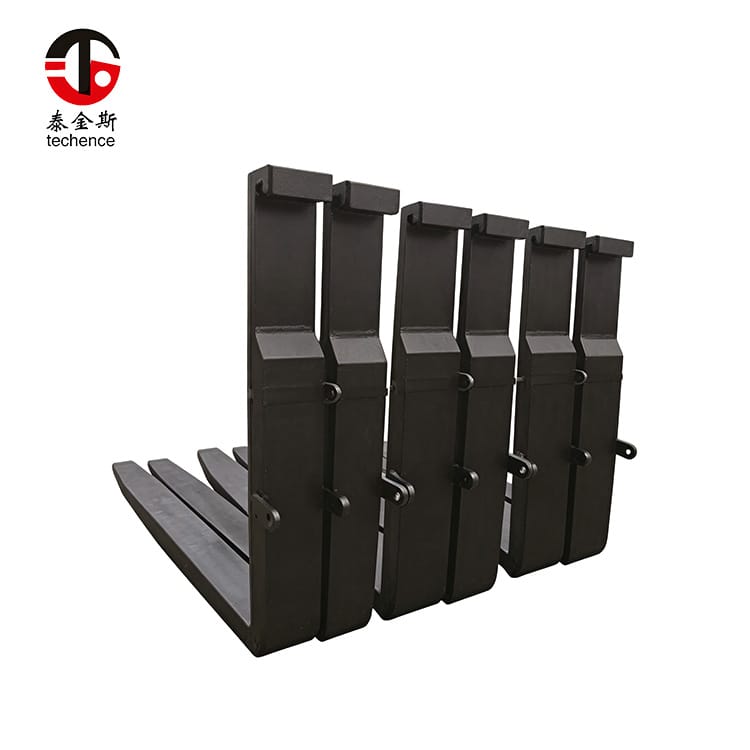
Bevor Sie eine Spezifikation anfordern, bereiten Sie die folgenden Daten vor.
Informationen zum Gabelstapler
- Hersteller und Modell
- Gerätekennzeichnung
- Nennkapazität
- Bemessungslastzentrale
- Masttyp
- Maximale Hubhöhe
- Wagentyp
- Wagenbreite
- Montageabmessungen
- Installierte Anhänge
- Frühere Modifikationen
Informationen laden
- Maximalgewicht
- Breite, Tiefe und Höhe
- Schwerpunkt
- Stützpunktabmessungen
- Fork-pocket-abmessungen
- Verpackung
- Lastschwankung
- Handhabungsfrequenz
Erforderliche Fork-Informationen
- Klingenlänge
- Klingenbreite
- Klingenstärke
- Tippprofil
- Gabelabstand
- Schaftmaße
- Haken - oder Stiftabmessungen
- Schließanordnung
- Anforderungen an die Oberfläche
- Gewichtsbeschränkungen für Gabel
Betriebsinformationen
- Fahrfläche
- Expositionsbedingungen
- Anzahl der Zyklen
- Wirkungsrisiko
- Hubhöhe
- Speichermethode
- Abmessungen des Lade-Bahnsteigs
- Prüfplan
Wenn die Ladung oder Montageanordnung nicht standardmäßig ist, a Überprüfung der Spezifikation benutzerdefinierter Port-Gabel Technische Zeichnungen, Lastfotografien, Informationen zum Schwerpunkt, Wagenmessungen, Hubhöhe und die vollständige Handhabungssequenz sollten enthalten.
Schlussfolgerung
Hafengabeln verbessern den Umschlag schwerer Ladung, indem sie eine Lastunterstützung bieten, die an anspruchsvolle Abmessungen, konzentrierte Gewichte, lange Lastzentren und spezielle Gabelstaplerwagen angepasst werden kann.
Ihr Wert kommt von korrekter Technik und nicht von der Größe allein.
Ein zuverlässiges Auswahlverfahren sollte:
- Definieren Sie die gesamte Last und ihren Schwerpunkt.
- Identifizieren Sie die genauen Supportpunkte.
- Überprüfen Sie die Restkapazität des Gabelstaplers.
- Wählen Sie die geeignete Gabellänge, -breite, -dicke und -verjüngung aus.
- Passen Sie das Montagesystem an den tatsächlichen Schlitten an.
- Bewerten Sie Material, Schmieden, Wärmebehandlung und Maßgenauigkeit.
- Führen Sie einen kontrollierten Handhabungsversuch durch.
- Erstellen Sie ein Inspektions- und Wartungsprogramm.
Die besten Backbordgabeln sind nicht einfach die schwersten Gabeln Sie sind die Gabeln, die die Last in der richtigen Position tragen, die Maschine genau anbringen, innerhalb der überprüften Kapazität bleiben, die Betriebsumgebung tolerieren und während ihrer gesamten Lebensdauer überprüft werden können.
FAQ
Wofür werden Portgabeln verwendet?
Hafengabeln sind Hochleistungsgabelarme, die für Industriemaschinen, Metallprodukte, große Kufen, Projektladung, verstärkte Paletten und andere anspruchsvolle Stückladungen verwendet werden. Sie werden ausgewählt, wenn Standardgabeln nicht die erforderliche Länge, den erforderlichen Querschnitt, die erforderliche Montage oder die erforderliche Lastunterstützung bieten.
Sind Backbordgabeln die gleichen wie Containerstreuer?
Nr. Hafengabeln tragen geeignete Ladung von unten durch Gabeltaschen, Kufen, Rahmen oder Freiflächen Behälterspreizer greifen von oben in dafür vorgesehene Hebepunkte ein Das richtige System hängt von der Lastauslegung und ihrer genehmigten Hebe - oder Stützmethode ab.
Wie wähle ich die richtige Portgabellänge?
Messen Sie die Lasttiefe, die Stützpunktpositionen, die erforderliche Einführtiefe, den Lastmittelpunkt und den verfügbaren Manövrierraum. Die Gabel sollte die Last vollständig tragen, ohne unnötig darüber hinauszuragen oder den Schwerpunkt weiter nach vorne als erforderlich zu bewegen.
Passen Backbordgabeln an jeden Hochleistungsstapler?
Nr. Hafengabeln müssen mit dem Schlittentyp, den Haken - oder Stiftabmessungen, dem Gabelabstand, dem Mastspiel, dem Verriegelungssystem und der Restkapazität des Gabelstaplers übereinstimmen Ähnliche Hubkapazitäten garantieren nicht, dass zwei Gabelstapler austauschbare Montageanordnungen verwenden.
Wie oft sollten Backbordgabeln überprüft werden?
Führen Sie vor dem Betrieb eine Sichtprüfung durch und planen Sie detaillierte Inspektionen nach Arbeitszyklus, Belastungsschwere, Umweltexposition, Herstelleranleitung und geltenden Anforderungen Anwendungen mit hohem Zyklus, hoher Belastung oder korrosiven Anwendungen erfordern normalerweise eine genauere Überwachung.