Tabla de contenidos
Introducción
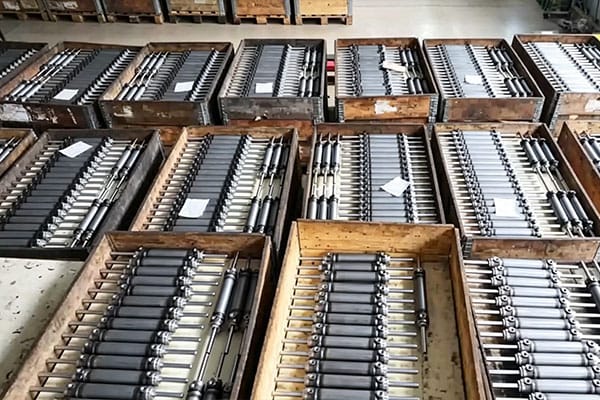
A forklift is not a collection of independent components. It is an integrated lifting, steering, braking, hydraulic, and control system in which the condition of one part can affect several others.
A worn mast roller may create uneven lifting. A leaking seal may reduce hydraulic performance while contaminating nearby surfaces. An incorrectly specified fork may fit the carriage but fail to provide the required capacity. Even a small electrical connector can cause repeated faults when its voltage, sealing level, or pin arrangement does not match the original system.
That is why selecting forklift parts requires more than finding a component with a similar shape. You need to confirm the equipment identity, installation dimensions, operating function, rated performance, material requirements, and working environment.
Key points covered in this guide include:
- The nine main categories of forklift parts
- How to identify the correct replacement component
- Which measurements and specifications should be verified
- How wear patterns reveal underlying equipment problems
- The difference between genuine, OEM, and aftermarket parts
- How to organize replacement priorities according to operational risk
- What to inspect before and after installation
A systematic approach helps prevent repeated repairs, mismatched components, unplanned downtime, and damage to connected systems.
¿qué son las piezas de montacargas?
Forklift parts include every component required to support, lift, control, move, stop, power, and protect the machine.
A carretilla elevadora normally combines a counterbalanced chassis, mast, carriage, forks, steering system, braking system, power source, hydraulic circuits, controls, and operator-protection features. A change in one area can alter how the complete machine performs.
Forklift parts can be divided into five broad groups.
Piezas estructurales
Structural components carry or transfer loads. Examples include forks, carriages, mast channels, frames, mounting brackets, load backrests, and attachment interfaces.
Damage to these components can affect alignment, stability, and load distribution. Structural repairs and replacements should therefore be based on verified dimensions and rated performance rather than appearance alone.
Piezas hidráulicas
Hydraulic components create and control movement. They include pumps, cylinders, control valves, hoses, fittings, seals, reservoirs, and filtration elements.
These parts must match the required pressure, flow, port type, stroke, mounting arrangement, and operating temperature.
Piezas mecánicas
Mechanical parts transfer movement or support rotating and sliding assemblies. Common examples include bearings, bushings, chains, rollers, gears, shafts, pins, hubs, and brake components.
Wear may develop gradually, so increased movement, noise, vibration, heat, or uneven operation should be investigated before a complete failure occurs.
Piezas Eléctricas y de Control
Electrical components monitor conditions, communicate operator commands, and control machine functions. Sensors, switches, relays, displays, controllers, connectors, alarms, lights, and wiring harnesses all belong to this group.
Electrical forklift parts must match the machine’s voltage, connector layout, control logic, environmental protection, and communication system.
Piezas de desgaste y componentes de seguridad
Wear parts are expected to deteriorate through friction, pressure, contamination, heat, or repeated movement. Safety components protect the operator, the load, and nearby personnel.
Some parts belong to both groups. A brake lining is a wear item, but it is also safety-critical. A lift chain experiences normal wear, yet excessive elongation can directly affect lifting reliability.
1. Horquillas y Piezas de Soporte de Carga
Forks are among the most recognizable forklift parts, but their selection involves more than length and capacity.
Hojas de horquilla, tacones, vástago y ganchos
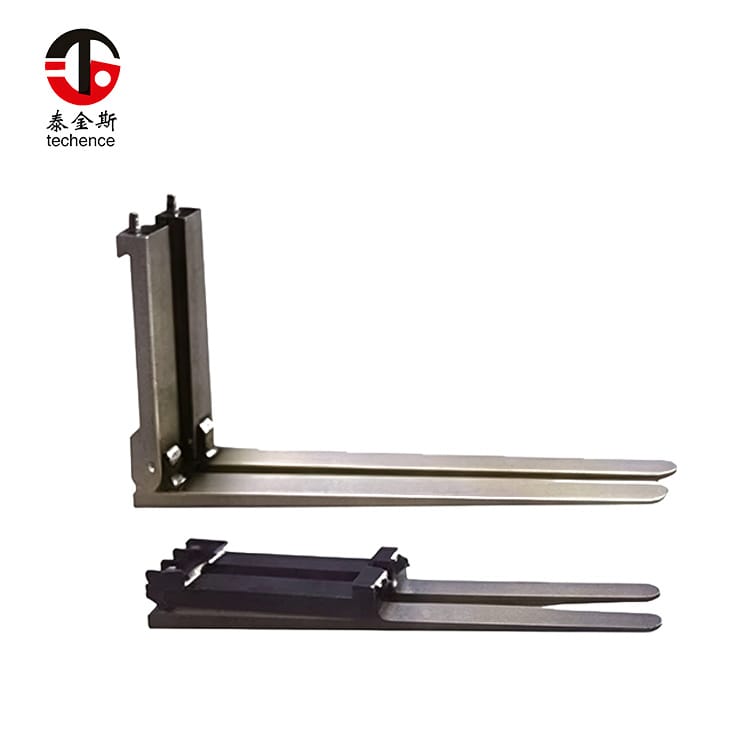
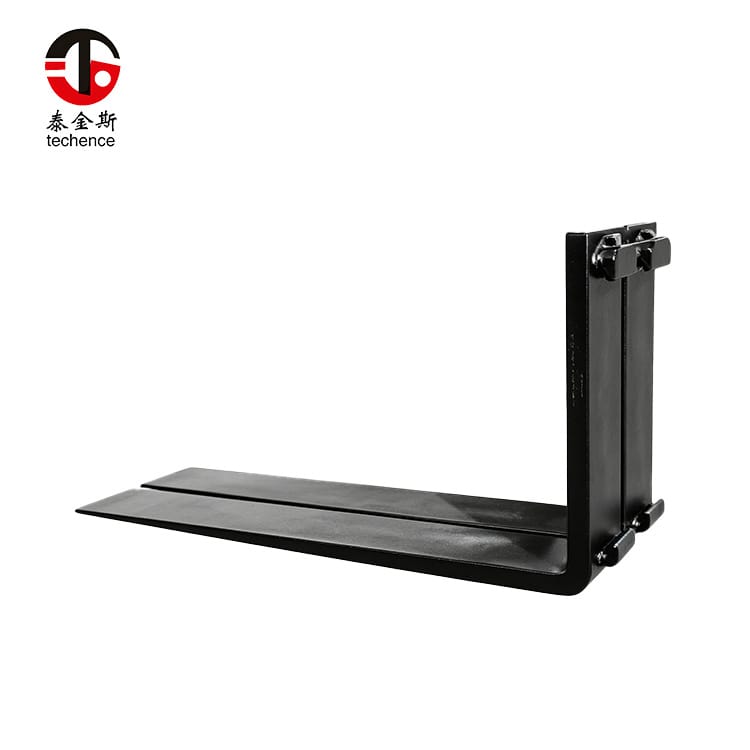
A hook-type fork normally includes a blade that supports the load, a heel where the blade changes direction, a vertical shank, and hooks that connect the fork to the carriage.
The heel is a high-stress area because it transfers force between the horizontal and vertical sections. Wear, cracks, deformation, or uneven fork height should be treated as signs requiring technical inspection.
The replacement fork must be checked for:
- Load capacity
- Condición del centro de carga
- Longitud de la hoja
- Ancho de la hoja
- Grosor de la hoja
- Altura del vástago
- Dimensiones del gancho
- Clase de transporte
- Espaciado de horquillas
- Material and heat-treatment requirements
- Left and right fork consistency
Installing one new fork beside a heavily worn fork can create an uneven support surface. Forks used as a pair should be evaluated together.
Soporte para carro y carga de horquilla
The carriage connects the forks to the mast. It must guide the load smoothly while maintaining correct alignment with the mast rollers and lifting chains.
The load backrest helps prevent suitable loads from moving toward the mast or operator area. Its dimensions, mounting points, and structural condition should match the intended load.
Desgaste y deformación de horquillas
Fork wear often appears on the underside of the blade and around the heel. Even apparently small material loss can reduce the cross-sectional area that resists bending.
Useful inspection observations include:
- Difference in fork-tip height
- Blade thickness loss
- Cracks around the heel or hooks
- Bent or twisted blades
- Damaged locking pins
- Enlarged hook openings
- Uneven contact with the floor
- Permanent deformation after unloading
Do not correct a bent fork by uncontrolled heating or straightening. A visible bend may be accompanied by internal material damage that cannot be judged from appearance alone.
2. Piezas de mástil y sistema de elevación
The mast controls vertical load movement. Its parts work together under load, so a problem that appears to come from one component may originate elsewhere.
Canales de mástil y rodillos
Mast channels guide the moving sections of the lifting structure. Rollers maintain alignment and help the sections move with controlled clearance.
A worn roller can cause side movement, vibration, noise, uneven contact, or increased loading on the opposite side. Replacing only the most visibly damaged roller may not solve the problem if the channel is worn or the mast is misaligned.
Check:
- Roller diameter and width
- Bearing type
- Pin or shaft dimensions
- Side-clearance requirements
- Channel wear
- Mast alignment
- Lubrication condition
- Evidence of impact
Lift Chains and Anchor Points
Lift chains transfer force from the lifting cylinder and chain system to the carriage. Chains should be inspected as complete load-bearing assemblies rather than isolated links.
Relevant conditions include:
- Elongation
- Corrosion
- Stiff links
- Damaged plates
- Worn pins
- Uneven chain tension
- Damaged anchors
- Incorrect adjustment
- Contamination or inadequate lubrication
A new chain should not be expected to correct a damaged sprocket, anchor, roller, or alignment problem.
Bearings, Bushings, and Guide Components
Small guide parts can have a large effect on mast behavior. Excessive clearance may allow impacts that accelerate wear throughout the structure.
When replacing these forklift parts, confirm both the component dimensions and the condition of the surfaces supporting them.
3. Hydraulic Forklift Parts
Hydraulic systems power lifting, tilting, steering, shifting, clamping, positioning, and other movements. Their components must be selected as a matched system.
Cilindros hidráulicos
Hydraulic cylinders convert fluid pressure into linear force. Forklifts may use lift, tilt, steering, side-shift, positioning, or attachment cylinders.
The correct replacement depends on:
- Bore diameter
- Rod diameter
- Stroke
- Retracted and extended length
- Mounting style
- Pin dimensions
- Port size and orientation
- Pressure rating
- Seal material
- Rod-surface specification
- Required movement speed
A replacement that fits between the mounting points may still be unsuitable if the bore, stroke, pressure rating, or port configuration differs.
Available hydraulic cylinders should therefore be matched using technical dimensions and operating data, not only the equipment name.
Pumps and Control Valves
The hydraulic pump supplies flow, while valves direct and regulate that flow. A pump problem may appear as slow lifting, noise, heat, or weak performance. However, similar symptoms can result from internal cylinder leakage, a restricted filter, incorrect fluid, a valve fault, or air entering the system.
Before replacing a pump, test the complete circuit.
Control valves require verification of:
- Number of functions
- Pressure rating
- Flow capacity
- Spool configuration
- Port arrangement
- Control method
- Relief settings
- Sealing compatibility
Hoses, Fittings, and Seals
Hydraulic hoses need the correct pressure rating, internal diameter, length, bend radius, end fittings, and protection from abrasion.
A hose that is too short may be pulled during mast movement. A hose that is too long may rub against the mast, wheel, frame, or load. Incorrect routing can turn a correctly specified hose into an early failure point.
Seals should be matched to the cylinder design, hydraulic fluid, temperature, pressure, and surface condition. Replacing a seal without inspecting the rod and bore may result in another leak.
Internal and External Leakage
External leakage is visible, but internal leakage can be harder to identify. Fluid may pass across worn seals inside a cylinder or valve, causing drift, reduced force, heat, or slow operation without leaving an obvious puddle.
The repair decision should be based on testing, not only visual inspection.
4. Steering and Axle Components
Steering parts determine how accurately and predictably the forklift changes direction. Because many forklifts steer through the rear axle, wear can affect vehicle tracking and stability.
Steering Cylinders and Linkages
A steering system may include a cylinder, rod ends, pins, tie rods, knuckles, bushings, and steering-control components.
Common warning signs include:
- Excessive steering-wheel movement
- Delayed steering response
- Unequal turning angles
- Knocking sounds
- Hydraulic leakage
- Wandering during travel
- Uneven tire wear
- Visible movement around pins or joints
Replacing one loose joint may not restore accurate steering if the connected pins, bushings, or mounting holes are also worn.
Axle Pins, Bearings, and Bushings
Axle components support movement while maintaining alignment. Wear can alter wheel position and place additional stress on tires, hubs, steering links, and mounting points.
Measure the pin and bore rather than replacing the bushing according to nominal size alone. A worn housing may require a different repair method.
Matching Steering Geometry
A steering component must reproduce the correct mounting length, articulation range, and geometry. Small dimensional differences can reduce turning range or create mechanical interference.
Always test full left and right steering movement after installation while checking hoses, joints, tires, and surrounding structures.
5. Brake, Wheel, and Tire Parts
Braking and ground-contact components directly affect stopping, steering, stability, vibration, and load control.
Brake Components
Depending on the forklift design, brake-system parts may include:
- Brake shoes
- Discs
- Drums
- Calipers
- Wheel cylinders
- Master cylinders
- Springs
- Cables
- Pedal linkages
- Seals
- Parking-brake mechanisms
A braking problem should be investigated as a system. Contaminated friction surfaces, incorrect adjustment, hydraulic leakage, worn drums, damaged return springs, and cable problems can produce similar symptoms.
Wheels, Hubs, and Bearings
Wheel and hub parts should be inspected for looseness, heat, noise, damaged threads, cracked rims, bearing wear, and incorrect fasteners.
Fasteners must have the correct dimensions, seating form, material grade, and tightening procedure. Visually similar wheel hardware may not distribute force in the same way.
Tire Selection
The correct tire depends on the wheel design, rated load, travel surface, operating environment, speed, and required traction.
Mixing tire types, sizes, or wear levels can affect ride height and vehicle behavior. Replacement decisions should consider tires as part of the machine’s stability and load-control system rather than as isolated consumables.
6. Powertrain and Energy-System Parts
The powertrain converts the available energy source into controlled movement. The components differ by forklift design, but the selection principle remains the same: identify the exact system before ordering.
Engine and Transmission Components
Engine-powered equipment may require filters, belts, cooling parts, fuel-system components, ignition parts, transmission elements, mounts, and sealing components.
A replacement filter, belt, or seal should match more than the outer dimensions. Flow characteristics, material compatibility, temperature resistance, and operating pressure may also matter.
Transmission symptoms such as delayed movement, slipping, noise, or overheating can originate from fluid condition, filters, control valves, clutches, sensors, or mechanical wear. Diagnosis should precede parts replacement.
Motors and Controllers
Electrically driven forklifts may use traction motors, pump motors, steering motors, controllers, contactors, sensors, and power cables.
A motor must match:
- System voltage
- Power and torque requirements
- Mounting pattern
- Shaft dimensions
- Rotation direction
- Speed range
- Temperature protection
- Feedback devices
- Controller compatibility
Installing a component with the correct voltage but the wrong control or feedback characteristics may cause faults or unpredictable performance.
Cooling and Filtration
Cooling and filtration parts protect the complete powertrain. Restricted filters or damaged cooling components may cause heat, contamination, reduced lubrication, and accelerated wear.
Repeated replacement of an overheated component without correcting the cooling or filtration problem will not provide a lasting repair.
7. Electrical and Control Parts
Modern forklift parts increasingly include sensors and electronic controls. Correct electrical matching requires both physical and functional verification.
Sensors and Switches
Forklifts may use sensors and switches to monitor:
- Altura de elevación
- Steering angle
- Pedal position
- Seat occupancy
- Temperature
- Pressure
- Speed
- Mast position
- Attachment position
- Energy-system condition
A sensor with the correct mounting thread may still produce a different signal range. Confirm the electrical output, connector, pin assignment, calibration, and control-system compatibility.
Wiring and Connectors
Connector problems are often caused by moisture, contamination, vibration, poor retention, damaged seals, or incorrect pin contact.
When replacing wiring parts, inspect both sides of the connection. A new connector attached to a corroded terminal may provide only a temporary improvement.
Relays and Control Modules
Relays, contactors, and modules should match the rated voltage, current, switching function, communication requirements, and installation environment.
Control modules may also require configuration or calibration. A physically interchangeable unit is not necessarily ready to operate immediately after installation.
Diagnostic Records
Fault codes are useful starting points, but they should not be treated as automatic instructions to replace the named component.
A sensor-related fault may be caused by wiring resistance, poor grounding, connector damage, incorrect supply voltage, mechanical misalignment, or a control-module problem.
8. Operator-Safety Parts
Safety-related forklift parts should be inspected and selected with the same care as major load-bearing components.
Seat Restraints and Presence Systems
Seats, belts, latches, mounting points, and operator-presence switches help maintain the intended operating conditions.
A damaged belt or faulty switch should not be bypassed. The replacement needs the correct mounting, locking function, electrical behavior, and durability for the application.
Lights and Alarms
Lights, warning indicators, horns, travel alarms, and other signaling devices help communicate machine movement and operating status.
Their effectiveness depends on position, visibility, sound level, operating environment, voltage, and connection reliability.
Guards and Protective Structures
Guards protect operators and components from foreseeable contact, falling objects, moving mechanisms, heat, and debris.
Replacement guards should preserve the original coverage, clearance, visibility, mounting strength, and access requirements.
Capacity and Warning Information
Labels and capacity information are functional safety components. They communicate limits that operators need when handling loads or using attachments.
Unreadable, missing, or outdated information should be corrected using verified equipment data.
9. Attachment and Interface Parts
Attachments expand the tasks a forklift can perform, but they also introduce additional mounting, hydraulic, and load-control components.
Hooks, Locks, and Mounting Parts
Attachment hooks and locks must secure the attachment to the carriage without excessive movement.
Inspect:
- Hook wear
- Lock engagement
- Fasteners
- Retainers
- Mounting clearances
- Carriage wear
- Welded areas
- Signs of impact or movement
A correct attachment can become unsafe when the interface parts are worn or installed incorrectly.
Hydraulic Connections
Attachment hoses, valves, fittings, cylinders, and controls must work through the full mast and attachment movement.
Routing should be checked at minimum and maximum lift, full tilt, complete side movement, and all attachment positions.
Fork Extensions and Specialized Interfaces
Extensions and special fork-mounted devices must match the fork dimensions and remain securely retained.
They can change the effective load center, visibility, turning clearance, and usable capacity. The complete forklift, attachment, and load configuration should be evaluated rather than considering the extension alone.
How to Identify the Correct Forklift Parts
Reliable identification begins with the machine and ends with the actual component.
Record Equipment Identification
Collect:
- Fabricante
- Model
- Serial number
- Production version
- Tipo mástil
- Capacidad nominal
- Power-system type
- Attachment information
- Modificaciones anteriores
The model name alone may be insufficient because the same model series can contain different production revisions or optional systems.
Confirm the Existing Part Number
Record the complete part number from the component, label, manual, or verified parts record.
Do not rely on a partial number. Similar numbers may refer to different dimensions, materials, connectors, or revisions.
Measure Critical Dimensions
Measurements are especially important when markings are missing or the equipment has been modified.
Depending on the part, measure:
- Overall length, width, and height
- Mounting-hole size and spacing
- Shaft or pin diameter
- Bore diameter
- Thread size and pitch
- Port type and orientation
- Connector type and pin count
- Hose length
- Cylinder stroke
- Fork section and hook dimensions
- Gear or spline details
Photographs should include scale references and several angles, but photos should support measurements rather than replace them.
Check Ratings and Materials
Confirm the ratings that affect function:
- Load capacity
- Pressure
- Flow
- Voltage
- Current
- Speed
- Temperature
- Material grade
- Surface treatment
- Seal compatibility
- Environmental protection
A component can fit physically and still fail because its functional rating is incorrect.
Verify Revisions
A newer part number may replace an older one, but a valid substitution should come with clear compatibility information.
Some revised parts require related brackets, connectors, software, seals, fasteners, or installation changes.
Forklift Parts Compatibility Comparison
| Part Category | Information Required | Common Mismatch | Possible Result | Inspection Priority |
|---|---|---|---|---|
| Forks | Capacity, load center, section, length, hooks, carriage | Correct length but wrong hook or capacity | Poor mounting, deformation, unstable support | Very high |
| Mast rollers | Diameter, width, bearing, pin size, clearance | Similar roller with incorrect profile | Binding, mast movement, uneven wear | Very high |
| Lift chains | Pitch, plate arrangement, length, anchors, rating | Matching width but wrong chain specification | Uneven lifting or load-bearing risk | Very high |
| Hydraulic cylinders | Bore, rod, stroke, mount, ports, pressure | Correct mounting length but wrong stroke | Limited movement, collision, weak force | High |
| Hydraulic hoses | Pressure, diameter, length, fittings, routing | Correct fittings but unsuitable pressure or length | Leakage, abrasion, restricted flow | High |
| Steering parts | Geometry, pins, mounting, articulation | Similar linkage with different center length | Poor steering response or interference | High |
| Brake parts | System type, dimensions, friction material, adjustment | Similar friction part with incorrect fit | Uneven or reduced braking | Very high |
| Electrical sensors | Voltage, signal, connector, calibration | Same connector but different output signal | Fault codes or incorrect control response | High |
| Filters | Dimensions, media, bypass setting, flow | External fit without correct filtration performance | Contamination or flow restriction | Medium to high |
| Attachment parts | Capacity, carriage, hydraulics, movement range | Matching carriage but wrong function or rating | Reduced capacity or unstable handling | Very high |
Use the Four-Layer Fit Method
A practical way to evaluate forklift parts is to test compatibility at four levels. This original framework helps prevent a part from being approved based on only one matching feature.
Identity Fit
Does the part number, equipment model, serial range, and production revision match?
Identity fit is the fastest route when complete records are available, but it should still be supported by a visual and dimensional check.
Dimensional Fit
Will the component physically mount without modification?
Check holes, pins, shafts, threads, hooks, connectors, ports, clearances, travel limits, and surrounding structures.
A part that requires unplanned grinding, welding, drilling, spacing, or rewiring should be treated as a mismatch until an approved technical review confirms otherwise.
Functional Fit
Will the part perform the correct task at the required rating?
Examples include hydraulic pressure, electrical signal, fork capacity, braking behavior, bearing load, chain rating, and cylinder stroke.
Duty-Cycle Fit
Can the part tolerate the real operating environment?
Consider:
- Number of operating cycles
- Load variation
- Vibration
- Impact
- Dust
- Moisture
- Heat
- Corrosive exposure
- Travel surface
- Maintenance access
A part suitable for occasional light operation may not be appropriate for continuous high-cycle work.
All four layers should pass before the component is accepted.
Genuine, OEM, and Aftermarket Forklift Parts
Replacement forklift parts are commonly described as genuine, OEM, or aftermarket. These terms indicate the supply relationship, but they do not remove the need for technical verification.
Genuine Parts
Genuine parts are supplied under the equipment brand’s parts system. They are generally identified using the equipment model, serial number, and official part number.
OEM Parts
OEM parts are produced by an original equipment manufacturer or an approved production source. Depending on the supply arrangement, they may be packaged or distributed under different names.
Aftermarket Parts
Aftermarket parts are produced as compatible alternatives. Their suitability depends on dimensional accuracy, material selection, manufacturing control, testing, documentation, and traceability.
Specification Matters More Than Appearance
A responsible comparison should examine:
- Drawing conformity
- Material specification
- Rated performance
- Manufacturing process
- Inspection records
- Trazabilidad
- Installation requirements
- Technical support
- Revision control
The supply label alone does not prove that two parts are functionally identical. Likewise, visual differences do not automatically mean a component is unsuitable when an approved updated design is documented.
Inspect Forklift Parts Before Replacement
Replacing a component without identifying the root cause can lead to repeated failure.
Separate the Symptom from the Cause
A visible problem is not always the original fault.
For example:
- A leaking seal may be caused by a damaged rod.
- A worn tire may indicate steering misalignment.
- A broken hose may result from incorrect routing.
- A damaged mast roller may be caused by channel wear.
- An electrical fault may originate from a connector or ground.
- A bent fork may indicate overloading or uneven load support.
Ask why the part failed before installing another one.
Inspect Connected Components
Every replacement should include an inspection of the mating surfaces and related systems.
For a bearing, inspect the shaft and housing. For a hose, inspect routing and clamps. For a chain, inspect anchors and rollers. For a cylinder, inspect pins, bushings, hydraulic fluid, and alignment.
Record the Wear Pattern
Wear location and direction often reveal the loading condition.
One-sided wear may indicate misalignment. Repeated edge damage may indicate insufficient clearance. Heat discoloration may indicate friction or inadequate lubrication. Contamination marks can reveal seal or filtration problems.
Photographs and measurements create a useful maintenance record for future comparison.
Test After Installation
A post-installation check should include:
- Secure mounting
- Correct fastener installation
- Full movement without interference
- Leak inspection
- Control response
- Brake or steering function where applicable
- Unloaded test
- Controlled loaded test where authorized
- Final inspection after initial operation
The machine should not return directly to full-duty work without confirming the repair.
Build a Risk-Based Maintenance Plan
Not every component needs the same maintenance priority. A risk-based system helps allocate inspection and inventory resources more effectively.
Critical Safety Parts
These components can directly affect lifting, braking, steering, stability, load retention, or operator protection.
Examples include:
- Forks
- Lift chains
- Chain anchors
- Brake parts
- Steering joints
- Wheel fasteners
- Attachment locks
- Operator restraints
They require clearly defined inspection criteria and immediate action when limits are exceeded.
High-Wear Parts
High-wear forklift parts may not create an immediate hazard at the first sign of deterioration, but delayed replacement can damage more expensive connected components.
Examples include seals, hoses, rollers, bushings, filters, contact pads, and bearings.
Condition-Monitored Parts
Some components should be replaced according to measured condition rather than appearance or a fixed assumption.
Useful indicators include:
- Wear dimensions
- Chain elongation
- Bearing clearance
- Hydraulic leakage
- Pressure or flow
- Temperature
- Vibration
- Electrical resistance
- Fault-code history
Inventory Priorities
A useful inventory decision considers three factors:
- Consequence of failure
- Frequency of replacement
- Difficulty of obtaining a correctly matched component
A small but machine-specific sensor may deserve more planning than a larger standard component when its failure stops the entire operation.
Common Forklift Parts Selection Mistakes
Ordering from Appearance Alone
Many forklift parts share similar shapes. Appearance cannot confirm dimensions, ratings, materials, internal design, or electrical behavior.
Using Incomplete Model Information
The model name may not identify the mast, engine, transmission, controller, carriage, or production revision.
Ignoring Previous Modifications
A replacement part listed for the original machine may not fit after the forklift has received a different mast, attachment, power system, or control assembly.
Replacing the Symptom
Repeated seal, tire, bearing, hose, or sensor failures usually indicate that the surrounding system needs inspection.
Mixing Electrical Specifications
A connector can fit while the voltage, signal, pin assignment, or communication protocol remains incorrect.
Mixing Hydraulic Specifications
Correct port threads do not confirm the correct bore, stroke, flow, pressure, or seal material.
Skipping Documentation
Parts without clear identification, ratings, traceability, or installation information are difficult to verify and maintain.
When drawings, dimensions, operating data, or equipment modifications make identification uncertain, a forklift parts compatibility review should include the machine identification, existing part number, photographs, measurements, load conditions, and working environment.
Conclusión
Choosing forklift parts is a technical matching process, not a visual shopping exercise.
Begin with the forklift model, serial information, configuration, and actual operating conditions. Confirm the existing part number, but also verify dimensions, interfaces, ratings, materials, and production revisions.
The most reliable selection method checks four layers:
- Identity fit
- Dimensional fit
- Functional fit
- Duty-cycle fit
Before replacing a failed component, inspect the connected systems and identify the underlying cause. After installation, complete an unloaded functional check and a controlled operating test before returning the machine to normal service.
This system-based approach improves replacement accuracy, protects connected components, supports safer operation, and creates a more dependable maintenance program.
Preguntas frecuentes
What information is needed to identify forklift parts?
Record the forklift model, serial number, production version, mast and power-system details, existing part number, dimensions, mounting points, connectors, ports, ratings, and clear photographs. Previous equipment modifications should also be documented.
Are forklift parts interchangeable?
Not automatically. Parts from similar forklifts may differ in dimensions, capacity, voltage, pressure, connectors, materials, or control logic. Compatibility should be confirmed through part numbers, drawings, measurements, and functional specifications.
When should forklift parts be replaced?
Replacement is appropriate when a part reaches its specified wear limit, develops cracks or deformation, leaks, loses function, creates excessive clearance, or fails inspection. The cause of abnormal wear should be corrected before fitting the new component.
Can one damaged part affect other forklift systems?
Yes. A worn roller can damage a mast channel, a misaligned steering joint can accelerate tire wear, and a damaged seal can contaminate hydraulic components. Inspecting the connected system helps prevent repeated failure and secondary damage.
How can buyers evaluate forklift parts quality?
Review material specifications, rated performance, dimensional records, production controls, inspection documents, traceability, revision information, and installation guidance. A dependable part should have evidence supporting both compatibility and intended duty.