
Table of Contents
Forklift fork thickness must be specified around a real installation. In low-clearance pallets and sensitive package bases, the purchasing question is how full-taper forks for low openings should satisfy rfq scope and comparable supplier quotations. This guide focuses on that decision and the evidence a buyer should collect before releasing work. It does not assign a new machine capacity or claim a universal service interval.
The review of forklift fork thickness should begin with tip height, taper transition, minimum loaded pallet opening. A clear drawing, known host configuration and an agreed acceptance plan make the supplier conversation more useful. The following checks explain how to turn those inputs into a documented decision.
Measure clearance beyond the leading tip for forklift fork thickness
For buyers evaluating forklift fork thickness, a full taper provides a gradual transition toward the front of the blade, but the smallest tip dimension does not describe the entire insertion path. Measure the pallet opening at several depths and in its loaded condition. Note nails, damaged boards, wrapped packaging and bottom deck deflection that may reduce clearance. A useful drawing shows the blade profile at the points where it passes through the opening, rather than relying on one nominal thickness.
Review support after entry for forklift fork thickness
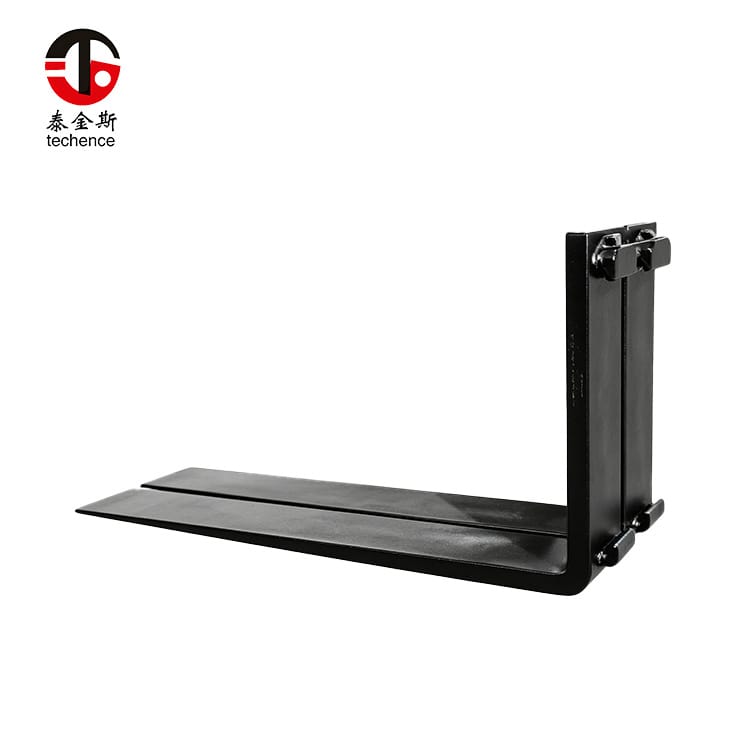
When specifying forklift fork thickness, easy insertion is only one part of the decision. The supported load must rest on an appropriate blade area once the forks are fully positioned. Identify where the pallet or package contacts the taper, whether the base can bridge the changing section and whether that contact introduces localized pressure. A delicate base may require a different load support arrangement even when the thin tip enters cleanly. Do not assume that a longer taper solves every low-clearance handling problem.
Keep wear references available for forklift fork thickness
In a review of forklift fork thickness, the profile of a tapered blade changes along its length. Inspection therefore needs defined measurement locations and the original reference geometry. Comparing an arbitrary point on a worn taper with a nominal heel dimension can produce a misleading conclusion. Ask for the manufacturer's inspection guidance and retain the approved drawing. Remove a suspect fork from service for competent assessment rather than trying to restore a thin tip by uncontrolled grinding or heating.
Document the operating boundary for forklift fork thickness
For a project involving forklift fork thickness, record the intended pallet types, load centers and entry direction. Include photographs of the real opening and a measured section through the package base. Where the same truck handles several pallet formats, check the least favorable opening and the most demanding load position separately. The selected design still needs an approved capacity and mounting interface. A useful purchase specification states which handling problem the taper addresses and which packaging or operating changes require another review.
Give suppliers the same forklift fork thickness inquiry
For buyers evaluating forklift fork thickness, comparable quotations for forklift fork thickness require a common inquiry package. Send the same drawing revision, application description, quantities and documentation requirements to each candidate supplier. Identify low-clearance pallets and sensitive package bases and list the critical references: tip height, taper transition, minimum loaded pallet opening. State which information is confirmed and which items require a technical proposal. If one supplier receives a worn sample and another receives a finished drawing, their offers may address different assumptions. Resolve that difference before judging the quotations by price.
When specifying forklift fork thickness, separate the base scope from options. Define whether the order covers an individual component, a matched pair, a complete assembly, connection hardware, spares or installation support. Request separate pricing where optional work genuinely changes the scope. Include expected packaging, delivery destination and the agreed commercial delivery basis so that freight responsibilities can be compared. Avoid asking for an immediate firm price while withholding the interface details that determine manufacturing and inspection effort. A realistic quotation starts with a sufficiently defined requirement.
Compare technical scope for forklift fork thickness
When specifying forklift fork thickness, the technical comparison for forklift fork thickness should identify compliance, exceptions and unresolved questions against the inquiry. Ask suppliers to reference the drawing characteristics rather than responding only that the item is standard. Review material condition, manufacturing scope, supplied features and the agreed inspection plan. If a supplier proposes an alternative, request a marked drawing and a clear statement of what changes. Do not treat a different geometry or reduced inspection scope as equivalent merely because the quotation uses the same product name.
In a review of forklift fork thickness, read test and certificate claims with the delivered item in mind. Ask what evidence will identify the actual component and which acceptance criteria the report will address. A company-level credential does not replace component-specific dimensional or functional evidence. Avoid assigning a technical advantage to an unsupported claim. The comparison should show the basis available for each requirement and the specific questions still open. Procurement can then involve engineering where the difference affects the installed system instead of trying to resolve a load-path issue through a price negotiation.

Build the landed comparison for forklift fork thickness
In a review of forklift fork thickness, for forklift fork thickness, calculate the comparable cost using the same quantity and scope. Include the component price, specified inspection, packaging, freight and other known charges under the agreed delivery basis. Show unknown charges as unresolved rather than entering zero. Separate recurring unit costs from one-time tooling or sample work. If expected production quantity is uncertain, present the cost at the relevant quantity levels instead of hiding the assumption in a single average. This makes the comparison useful when the project changes from a prototype to a repeat order.
Lead time also needs a common definition. Ask whether it starts after order placement, drawing approval, payment or material release, and whether it ends at factory readiness or destination arrival. Keep transit and receiving acceptance distinct from production time. For a critical replacement, review the schedule dependencies and the cost of an unplanned mismatch. Do not invent a downtime saving to justify a preferred supplier. Record the operational requirement and compare the confirmed delivery commitments and technical evidence against it.
Turn the selected forklift fork thickness offer into an order
The order for forklift fork thickness should capture the final accepted scope, drawing revision, approved alternatives and required records. Carry forward technical clarifications from the quotation stage so that they do not disappear when a purchasing system reduces the order to a short item description. Define sample approval and production release where applicable. State how changes will be proposed and authorized. A supplier should not need to infer whether an earlier preliminary sketch or a later marked drawing governs manufacture.
Agree the receiving evidence and discrepancy process before dispatch. Request identification that connects the supplied item with its reports and order. Keep warranty and service statements tied to their written scope rather than turning them into an unlimited performance promise. After delivery, retain the accepted quotation and order alongside the inspection record. This creates a reliable baseline for repeat purchases. The result is a supplier decision that can be explained through comparable scope, documented assumptions and confirmed evidence, making future procurement more consistent and easier to audit.
A practical review example for forklift fork thickness
Consider an illustrative procurement review for low-clearance pallets and sensitive package bases. The buyer has an existing installation, a drawing marked revision A and a supplier proposal marked revision B. No production result or customer case is implied by this example. The first review question is whether tip height, taper transition, minimum loaded pallet opening are stated on both drawings using the same reference convention. Put the confirmed requirement, proposed value and evidence beside each other. An omitted dimension remains an open question; it does not become acceptable merely because the rest of the drawing appears similar.
For forklift fork thickness, suppose the proposal changes one interface while retaining the advertised product name. Ask the supplier to identify the change and its effect on the mating assembly. If the difference changes fit, support or motion, obtain the responsible technical assessment before release. If it is accepted, issue a revised controlled drawing and carry that revision into the order, receiving record and equipment file. This example shows a decision method, not a universal dimensional limit or a substitute for equipment approval.
Decision and evidence comparison
| Decision point | Incomplete basis | Evidence to request |
|---|---|---|
| Application | Product name alone | low-clearance pallets and sensitive package bases |
| Critical interfaces | Overall size or photograph | tip height, taper transition, minimum loaded pallet opening |
| Compatibility | It fits during an unloaded check | Approved drawing and host-configuration review |
| Manufacturing scope | Generic quality claim | Specified material, processing and traceable inspection |
| Release | An informal message | Accepted revision, documented deviations and receiving record |
For general workplace context, consult the UK HSE lift-truck guidance. Its workplace guidance complements the equipment instructions; this link does not certify a Techence product or replace application-specific technical approval.
Review Techence’s Full taper forks product page, then send Techence your drawing and application requirements for confirmation of the proposed scope.
To discuss forklift fork thickness, prepare the current drawing revision, quantity, host equipment details and the evidence needed for rfq scope and comparable supplier quotations. Ask Techence to confirm the available configuration and identify any assumptions before quotation or production release.
Frequently asked questions
What information is needed for forklift fork thickness in this application?
Provide the host equipment identity, a current drawing and a description of low-clearance pallets and sensitive package bases. Identify tip height, taper transition, minimum loaded pallet opening, the supplied scope and any unknown requirements. Distinguish original design values from measurements taken from a worn part. The supplier can then confirm the proposal against a defined interface instead of guessing from the product name.
Can a matching size prove that forklift fork thickness is compatible?
No. Overall size is only one comparison. For full-taper forks for low openings, check tip height, taper transition, minimum loaded pallet opening and the effect on connected components, load geometry or motion. Material condition and approved operating requirements also need the appropriate evidence. A controlled fit assessment supports the decision but does not establish the capacity of the complete machine.
Which records should accompany forklift fork thickness?
Keep the approved drawing revision, component identification, agreed inspection results and any required functional or test records together. The evidence should identify the delivered unit or set and state the scope actually checked. For full-taper forks for low openings, retain the mating-assembly information so that later replacements can reproduce the approved configuration.
When should the full-taper forks for low openings application be reviewed again?
Review a change in host equipment, intended load, support arrangement, installation envelope or operating requirements that affects the approved configuration. Pay particular attention to tip height, taper transition, minimum loaded pallet opening. A substitute part or revised supplier drawing also needs assessment against the controlled requirement. The equipment owner and responsible engineer should resolve the affected interfaces before release.
How can a buyer request a quotation for forklift fork thickness?
Send Techence the application description, drawing, quantity, equipment details and documentation requirements. State that the inquiry concerns full-taper forks for low openings and rfq scope and comparable supplier quotations. Ask the team to identify assumptions and proposed alternatives explicitly. Confirm the final drawing and scope before manufacture; published category information alone cannot determine the correct configuration for every installation.

