Table of Contents
Pin type forklift forks must be specified around a real installation. In heavy equipment using a shaft-mounted carriage, the purchasing question is how pin-mounted forks should satisfy compatibility checks for substitute components. This guide focuses on that decision and the evidence a buyer should collect before releasing work. It does not assign a new machine capacity or claim a universal service interval.
The review of pin type forklift forks should begin with shaft diameter, mounting bore, axial retention. A clear drawing, known host configuration and an agreed acceptance plan make the supplier conversation more useful. The following checks explain how to turn those inputs into a documented decision.
Map the shaft and bore as one interface for pin type forklift forks
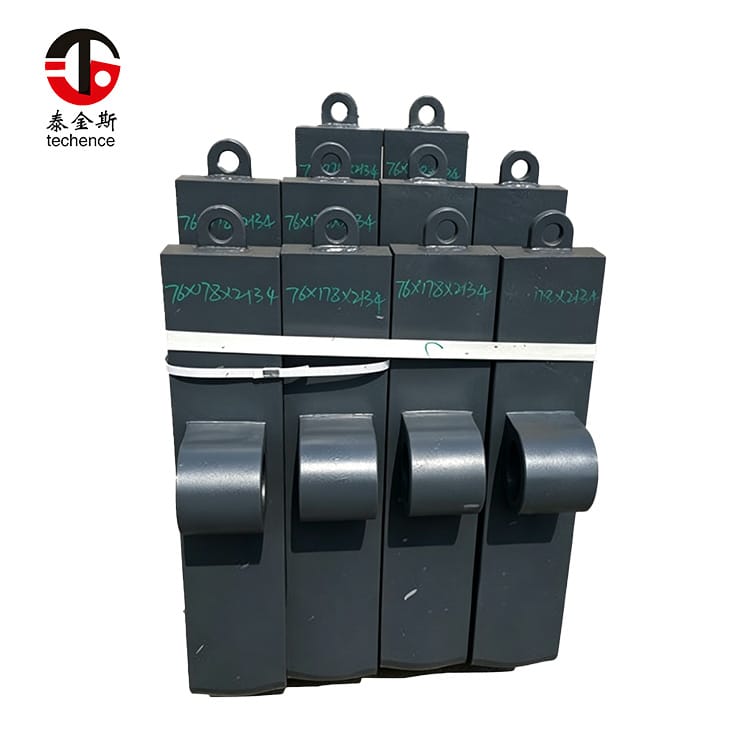
For buyers evaluating pin type forklift forks, a pin-mounted fork depends on the relationship between its bore, the supporting shaft and the retention arrangement. Shaft diameter alone leaves several questions unanswered: the working length, shoulder positions, support spacing, axial movement and the means of preventing release. Obtain a drawing of the carriage and shaft assembly. Where a bush is used, specify whether the quoted dimension refers to the parent bore or the finished bush. Mixing those references can produce a part that cannot be assembled.
Locate the load relative to the mounting axis for pin type forklift forks
When specifying pin type forklift forks, the distance from the shaft axis to the working blade affects the installation envelope and load geometry. Record the blade length, vertical drop, heel profile and the offset between the shaft and the load-facing surface. A long pin fork may clear the truck in one position but interfere at full tilt or at the lowest carriage position. Review the complete motion envelope with the equipment owner before accepting a drawing.
Design retention and spacing deliberately for pin type forklift forks
In a review of pin type forklift forks, spacing control may rely on collars, spacers, stops or another approved arrangement. The quotation should identify what is supplied and what remains on the customer's machine. A fork sliding freely on a shaft is not evidence that its installed spacing is acceptable. Check that retainers remain accessible and that their replacement does not require an unplanned carriage alteration. The shaft and support condition also need assessment when a replacement fork is ordered for used equipment.
Require evidence for the actual assembly for pin type forklift forks
For a project involving pin type forklift forks, identify the load case, load center and number of arms used in the rated arrangement. Do not substitute the nominal lifting capacity of the machine for the capacity of a particular fork installation. Request traceable material and inspection records against the approved geometry. For unusual offsets or heavy loads, obtain engineering review of the fork, shaft, supports and retention together. The delivered marking and paperwork should identify the same drawing revision so that future replacements can reproduce the interface.
Define equivalence for pin type forklift forks
For buyers evaluating pin type forklift forks, a substitute for pin type forklift forks needs a clear definition of equivalence. Begin with the approved component and identify the characteristics that affect fit, function, load path, motion and maintenance. For heavy equipment using a shaft-mounted carriage, the essential interface questions include shaft diameter, mounting bore, axial retention. Separate the features that must remain identical from those that may change after a responsible review. A supplier's statement that an item is a replacement is a useful proposal, but it should be supported by a drawing and a stated comparison scope.
When specifying pin type forklift forks, use the current equipment configuration as the reference. An original part number may refer to a different revision or to an assembly that has since been modified. Check the host identity, connected components and any adapters before comparing candidates. Preserve photographs and measurements as supporting evidence, while distinguishing them from original design information. Where a hidden requirement or internal feature is unknown, ask for technical confirmation. Do not infer equivalence from color, outward appearance or a matching headline dimension.
Compare interfaces of pin type forklift forks in a matrix
When specifying pin type forklift forks, the interface comparison for pin type forklift forks should show the original requirement, the candidate value, its evidence and the disposition. Include relevant dimensions, tolerances, mounting geometry, retainers, connection details and operating requirements. Where two suppliers use different reference conventions, convert the comparison to one defined datum rather than comparing labels. Record unknowns explicitly. A blank cell can otherwise be mistaken for compliance when the supplier has not actually addressed the requirement.
In a review of pin type forklift forks, check functional relationships as well as isolated sizes. Two items may share overall dimensions but position the load differently, reach different end positions or require different hydraulic conditions. Review their effect on the complete assembly and surrounding clearance. If the substitute needs an adapter or additional hardware, include that configuration in the assessment. An adapter can change projection, mass or engagement; it should not be treated as an invisible accessory. The responsible equipment owner or engineer must determine whether the installed configuration remains approved.

Evaluate evidence for substitute pin type forklift forks
Evidence for substitute pin type forklift forks should match the question being asked. Dimensional reports support geometry; material and treatment records support the supplied manufacturing scope; an agreed functional test supports the conditions actually tested. None of these alone automatically establishes the capacity or life of the complete machine. Ask for traceability between the candidate component, its reports and the proposed drawing revision. A document from a visually similar item is not a reliable substitute for evidence covering the actual part.
Assess the effect on maintenance and spare identification before approval. Different seals, bushes, wear references or adjustment methods can create future confusion even when the initial fit is acceptable. Ask whether service parts and instructions will remain available for the candidate configuration. Record any features that maintenance staff must distinguish from the original. If the substitute changes a critical characteristic, identify the engineering assessment and acceptance demonstration required. Procurement should not silently turn an unresolved technical exception into an accepted difference by issuing the order.
Release a compatible pin type forklift forks replacement
The approval of substitute pin type forklift forks should identify its exact drawing, supplied scope and permitted host configuration. Close outstanding interface questions before installation. Plan controlled fit and commissioning checks using the manufacturer's instructions and competent personnel. Record the completed assessment and update equipment information where required. A successful unloaded movement or initial fit is only one part of the evidence; release should cover the requirements established by the responsible review.
Keep approved substitutes in a controlled list with their conditions, rather than a free-text note that any similar item may be used. If a candidate was rejected, preserve the technical reason so that the same uncertainty is not rediscovered during the next urgent order. Review changes in the host equipment or supplier design before reusing a previous approval. Compatibility becomes reproducible when the team can show what was compared, which evidence supported the decision and exactly where the approved substitute may be installed.
A practical review example for pin type forklift forks
Consider an illustrative procurement review for heavy equipment using a shaft-mounted carriage. The buyer has an existing installation, a drawing marked revision A and a supplier proposal marked revision B. No production result or customer case is implied by this example. The first review question is whether shaft diameter, mounting bore, axial retention are stated on both drawings using the same reference convention. Put the confirmed requirement, proposed value and evidence beside each other. An omitted dimension remains an open question; it does not become acceptable merely because the rest of the drawing appears similar.
For pin type forklift forks, suppose the proposal changes one interface while retaining the advertised product name. Ask the supplier to identify the change and its effect on the mating assembly. If the difference changes fit, support or motion, obtain the responsible technical assessment before release. If it is accepted, issue a revised controlled drawing and carry that revision into the order, receiving record and equipment file. This example shows a decision method, not a universal dimensional limit or a substitute for equipment approval.
Decision and evidence comparison
| Decision point | Incomplete basis | Evidence to request |
|---|---|---|
| Application | Product name alone | heavy equipment using a shaft-mounted carriage |
| Critical interfaces | Overall size or photograph | shaft diameter, mounting bore, axial retention |
| Compatibility | It fits during an unloaded check | Approved drawing and host-configuration review |
| Manufacturing scope | Generic quality claim | Specified material, processing and traceable inspection |
| Release | An informal message | Accepted revision, documented deviations and receiving record |
For general workplace context, consult the UK HSE lift-truck guidance. Its workplace guidance complements the equipment instructions; this link does not certify a Techence product or replace application-specific technical approval.
Review Techence’s Pin Forklift Forks product page, then send Techence your drawing and application requirements for confirmation of the proposed scope.
To discuss pin type forklift forks, prepare the current drawing revision, quantity, host equipment details and the evidence needed for compatibility checks for substitute components. Ask Techence to confirm the available configuration and identify any assumptions before quotation or production release.
Frequently asked questions
What information is needed for pin type forklift forks in this application?
Provide the host equipment identity, a current drawing and a description of heavy equipment using a shaft-mounted carriage. Identify shaft diameter, mounting bore, axial retention, the supplied scope and any unknown requirements. Distinguish original design values from measurements taken from a worn part. The supplier can then confirm the proposal against a defined interface instead of guessing from the product name.
Can a matching size prove that pin type forklift forks is compatible?
No. Overall size is only one comparison. For pin-mounted forks, check shaft diameter, mounting bore, axial retention and the effect on connected components, load geometry or motion. Material condition and approved operating requirements also need the appropriate evidence. A controlled fit assessment supports the decision but does not establish the capacity of the complete machine.
Which records should accompany pin type forklift forks?
Keep the approved drawing revision, component identification, agreed inspection results and any required functional or test records together. The evidence should identify the delivered unit or set and state the scope actually checked. For pin-mounted forks, retain the mating-assembly information so that later replacements can reproduce the approved configuration.
When should the pin-mounted forks application be reviewed again?
Review a change in host equipment, intended load, support arrangement, installation envelope or operating requirements that affects the approved configuration. Pay particular attention to shaft diameter, mounting bore, axial retention. A substitute part or revised supplier drawing also needs assessment against the controlled requirement. The equipment owner and responsible engineer should resolve the affected interfaces before release.
How can a buyer request a quotation for pin type forklift forks?
Send Techence the application description, drawing, quantity, equipment details and documentation requirements. State that the inquiry concerns pin-mounted forks and compatibility checks for substitute components. Ask the team to identify assumptions and proposed alternatives explicitly. Confirm the final drawing and scope before manufacture; published category information alone cannot determine the correct configuration for every installation.