Table of Contents
Introduction
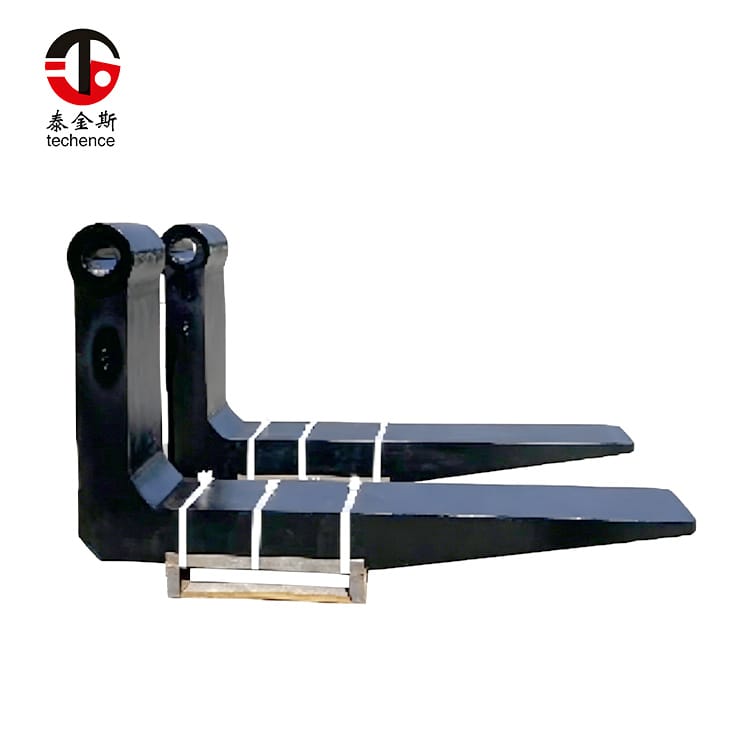
Fork length looks like one of the simplest forklift specifications, but it has a direct influence on load support, maneuverability, pallet entry, load center, and the way operators approach a handling task. A fork that is too short may leave part of the load unsupported, while an unnecessarily long fork adds weight and projection in front of the truck without automatically making the operation safer.
This is why a fork length forklift decision should start with the loads being handled rather than a preferred blade size. Pallet depth, support position, center of gravity, storage layout, carriage configuration, and the frequency of unusual loads all matter. The goal is not to fit the longest possible forks. It is to find a length that supports the approved loads properly without creating unnecessary interference elsewhere in the operation.
Fork length also cannot be considered independently from the forklift itself. A forklift is rated for defined load and center-of-gravity conditions, so changing the position of a load can affect the demands placed on the complete truck.
For operations reviewing new or replacement forks, the most useful question is therefore not “What fork length is standard?” but “What fork length fits the real load and handling environment?”
Why Fork Length Matters More Than It First Appears
The main purpose of a forklift blade is to support the load from below. Fork length determines how much of that load can be supported after the blade enters the pallet, skid, frame, or other load base.
When the forks are too short, operators may still be able to lift the load, but a larger portion of the load remains beyond the end of the blades. This can move the effective center of gravity farther forward and reduce the amount of support beneath the load. It may also encourage operators to lift before the forks are fully inserted.
The opposite problem appears when forks are much longer than the load requires. The extra blade length can extend beyond the far side of a pallet, interfere with loads stored behind it, reduce maneuvering clearance, and increase the fork weight carried in front of the mast.
Good fork length selection is therefore a balance between adequate load support and unnecessary projection.
Measure the Load Before Measuring the Fork
A practical fork length forklift assessment should begin with the actual dimensions of the load. This is more reliable than choosing a blade length from the forklift model alone.
Start with load depth, measured in the direction the forks enter. This dimension gives the first indication of how far the blades need to travel beneath the load. However, the total load depth is not always the same as the required supporting length.
A machine mounted on a skid, for example, may be long overall but supported through only a defined base frame. A palletized load may rest across the complete pallet deck. A steel assembly may have only two reinforced contact areas. These situations require different thinking even when their overall dimensions are similar.
The support points should therefore be documented together with the load depth. Identify where the load first contacts the forks, how far that support continues, whether the base can bend, and whether complete fork insertion is possible.
This helps prevent a common mistake: selecting forks according to the outside dimensions of the load without understanding where the weight is actually transferred into the blades.
Fork Length and Load Center Are Connected
Fork length does not determine forklift capacity by itself, but it can influence how a load is positioned.
Forklifts are rated using a specified maximum load and a specified forward center of gravity. If a deeper load places its center of gravity farther from the fork face, the forward load moment increases even if the total load weight remains unchanged.
This becomes especially important when longer forks are installed because they make it physically possible to engage deeper loads. The fact that the blades can reach beneath a longer load does not mean the truck can carry the same weight at the longer load center.
Consider a compact pallet and a long industrial skid with the same total weight. The compact pallet may keep its center of gravity relatively close to the carriage. The longer skid may place most of the weight much farther forward. The second load therefore creates a more demanding condition for the forklift.
Fork length selection should always be reviewed together with load depth, center of gravity, lift height, mast configuration, attachment weight, and the forklift’s approved operating data.
What Happens When Forks Are Too Short?
Short forks can create problems that are not immediately obvious during initial load engagement.
The most important issue is incomplete support. If the blades do not extend far enough beneath the load, the cargo may rest primarily toward the fork tips rather than over a larger supporting area. This can increase local stress and change the load’s effective center position.
Short forks can also make some loads more sensitive to movement during starting, braking, or turning. This is particularly relevant when the load base is flexible, the center of gravity is high, or the support structure does not distribute weight evenly.
Operators may compensate by tilting the mast farther backward or lifting the load before complete insertion. These behaviors should not be treated as substitutes for appropriate fork length.
Repeated difficulty reaching stable support is usually a sign that the existing blades, load orientation, pallet design, or handling method needs to be reviewed.
What Happens When Forks Are Too Long?
Longer forks provide more reach, but unnecessary length creates its own operating problems.
One of the most common is rear projection through the pallet. When blades extend beyond the load, the tips can contact another pallet, a rack component, packaging, a wall, or equipment positioned behind the load. In back-to-back storage, this can become particularly important because the operator may not be able to see the fork tips after they pass through the first pallet.
Long forks also increase the amount of equipment projecting in front of the carriage when the truck is traveling unloaded. This can make tight turns, parking, and movement around restricted spaces more difficult.
Blade length also contributes to fork weight and structural behavior. Increasing length without reviewing blade width, thickness, material, and rated conditions may create more deflection than expected.
For these reasons, a longer fork should have a clear operational purpose. Extra length that never supports the load provides little practical benefit.
Fork Length for Different Load Types
Different load bases require different approaches to fork length.
| Load Type | Fork Length Priority | What to Check | Common Risk |
|---|---|---|---|
| Standard pallet | Support most of the pallet depth without excessive projection | Pallet depth, rear clearance, rack layout | Fork tips entering the load behind |
| Long skid | Support the designed skid structure | Skid rails, center of gravity, insertion depth | Load carried too far toward the tips |
| Machinery frame | Reach approved support points | Fork pockets, frame drawings, balance point | Supporting a weak or unintended area |
| Wide industrial pallet | Combine correct length with wider fork spacing | Pallet depth, spacing, deck strength | Good length but poor lateral support |
| Long bundled materials | Support the load without excessive sag or forward center | Bundle stiffness, spacing, length, restraints | Load deflection or unstable center |
| Low-clearance pallet | Length must also work with fork thickness and taper | Opening height, taper, blade section | Correct length but forks cannot enter |
| Irregular load | Match defined supporting surfaces rather than outside dimensions | Contact points, center of gravity, stability | Choosing length from overall size only |
There is no single fork length that is ideal for all of these applications. Even within one facility, different load families may require different forks or a controlled method for handling occasional exceptions.
Fork Length, Width, and Thickness Should Be Selected Together
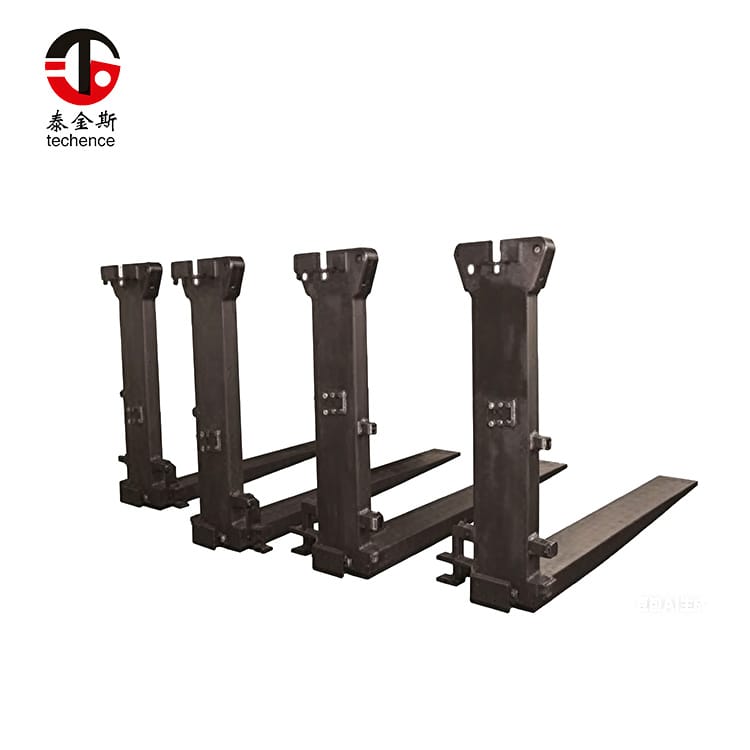
Fork length should not be treated as an isolated dimension. The blade section also matters.
A longer blade generally places greater structural demands on the fork, particularly when the load acts farther from the heel. Width and thickness therefore need to remain appropriate for the fork length, material, load center, and rated capacity.
At the same time, increasing blade thickness can reduce pallet-entry clearance. A fork may have the required length and capacity but still be impractical if its section is too large for the existing pallet openings.
Width presents a similar trade-off. Wider forks can increase contact area beneath heavy supports, but they may not fit narrow fork pockets.
A correct specification therefore considers the complete fork geometry: length, width, thickness, tip profile, heel, shank, and mounting arrangement. Selecting one dimension in isolation can simply move the problem somewhere else.
Standard Forks, Long Forks, and Fork Extensions
When existing forks are too short for a particular load, there are several possible solutions.
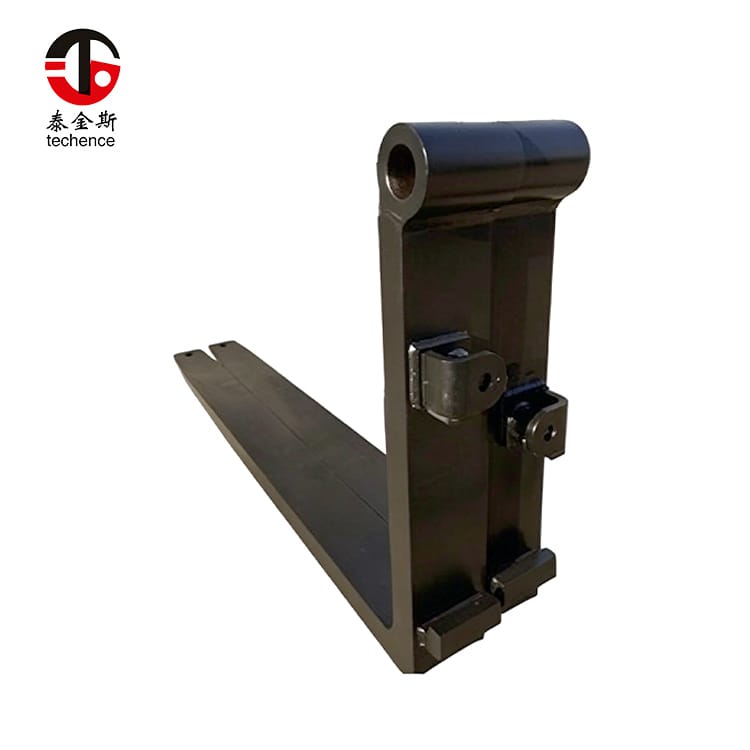
Purpose-built longer forks are generally more appropriate when deep or long loads form a regular part of the operation. Because the complete blade is designed for the required length, the fork section, mounting, material, and capacity can be evaluated as one unit.
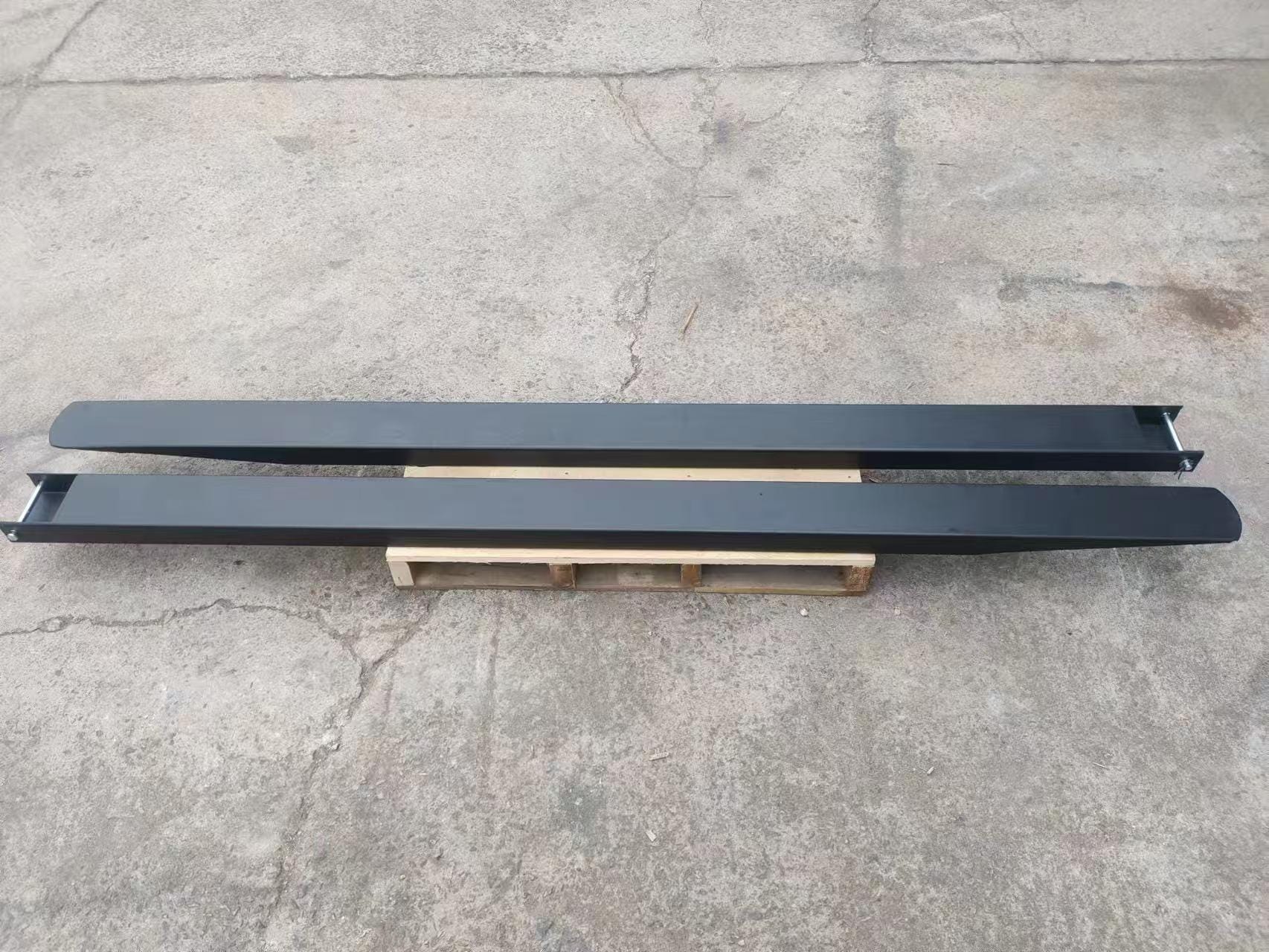
Fork extensions are different. They fit over the existing forks to provide additional supporting length for approved applications. Techence currently describes its fork extensions as a solution for increasing the effective fork length, with dimensions customizable to the application.
Extensions can make sense when longer loads are handled occasionally and the base forks remain appropriate for most daily work. However, using extensions continuously for a regular long-load operation may be less practical than specifying forks designed for that working length from the beginning.
The decision should therefore consider how often the additional reach is needed, how heavy the loads are, where their centers of gravity sit, and whether the longer configuration affects aisle space or capacity.
Do Not Choose Fork Length from Pallet Size Alone
Pallet dimensions are useful, but they do not tell the whole story.
The pallet may extend farther than the goods, or the goods may overhang the pallet. Some loads are concentrated near the front or rear of the pallet. Others are distributed evenly. Pallet boards may also flex differently under load.
This means two loads on pallets with identical dimensions can place different demands on the forks.
The real support pattern is especially important for machinery and heavy industrial products. A large crate may look like a uniform load but contain a dense component positioned toward one end. A long skid may support the machine through only two structural cross-members.
When the load is unusual, photographs and outside dimensions help, but drawings showing support points and center-of-gravity information are much more useful.
Fork length should follow the way the load transfers weight into the blades rather than the pallet label alone.
Carriage Compatibility Still Matters
Changing fork length does not change the need for correct carriage mounting.
Hook-mounted forks must match the actual carriage class and mounting dimensions. Pin-mounted or shaft-mounted designs need the correct eye size, pin diameter, side clearance, retainers, and supporting structure.
This matters particularly when replacing standard forks with longer or heavier blades. The new forks may create different weight and leverage conditions at the carriage.
Do not assume that a longer fork with the same hook shape is automatically suitable. The complete fork specification, carriage condition, machine configuration, and rated operating conditions should be reviewed.
The existing carriage should also be inspected for wear. A new set of forks installed on worn carriage bars or damaged locking positions may move excessively even when the fork dimensions are technically correct.
Fork Spacing Can Change the Answer
Length determines front-to-back support, while spacing determines side-to-side support. Both are necessary for load stability.
A long fork pair positioned too close together may support the load across its depth but still provide poor lateral stability. Moving the forks too far apart can create the opposite problem if they contact weak pallet boards or no longer align with the intended fork pockets.
Long loads can make this particularly noticeable. Machinery frames, wide skids, panels, bundled profiles, and industrial components may require both increased blade length and wider spacing.
The correct combination should place the forks beneath structural areas of the load while maintaining balance around the forklift centerline.
If fork spacing changes frequently between loads, a fork positioner may help operationally, but its own weight and forward thickness should then be included in the truck-capacity review.
Consider the Working Environment Before Adding Length
Forks need to fit the workplace as well as the load.
In a large open yard, extra blade length may create relatively little maneuvering difficulty. In a compact warehouse, narrow loading area, or tightly arranged production space, the same extra length can become a significant obstruction.
Before increasing fork length, review the complete route from load pickup to placement. Check turning areas, aisles, doorways, storage racks, transport vehicles, loading platforms, parked equipment, and other loads.
Also consider unloaded travel. Operators need to remain aware of the fork tips even when the truck is carrying nothing. Longer blades increase the front projection and can be harder to judge during tight maneuvers.
The storage arrangement matters as well. In back-to-back rack positions, long forks may pass through one pallet and contact another. In vehicle loading, they may contact the far wall or cargo already inside.
A fork length that works perfectly at pickup can still create problems somewhere else in the handling cycle.
How to Review an Existing Fork Length Problem
When an operation believes its current forks are the wrong length, it is useful to observe several real handling cycles before ordering replacements.
Watch how far the blades enter normal loads and whether operators stop before reaching full insertion. Look for loads that consistently sit near the tips, but also check whether the reason is insufficient fork length or an obstruction preventing deeper entry.
Then examine longer blades already used in the facility, if available. Determine whether the extra length genuinely supports the load or simply projects through the pallet.
Wear patterns can also provide clues. Heavy wear near the tips may suggest repeated partial insertion or concentrated support. Damage beyond the far side of pallets may indicate unnecessary projection.
This kind of observation often reveals that the correct solution is not simply “longer” or “shorter.” The operation may need a different taper, revised load orientation, improved pallet condition, different fork spacing, or a dedicated fork set for one unusual load family.
Custom Fork Length for Nonstandard Loads
Standard fork sizes are convenient when the load falls within common material-handling patterns. Custom forks become more relevant when load geometry is unusual or when the operation repeatedly handles the same specialized product.
Examples include machinery with fixed fork pockets, unusually deep skids, large fabricated assemblies, long industrial products, special transport frames, and equipment with restricted entry points.
A custom specification should be based on actual machine and load data. Fork length alone is not enough. The supplier also needs the required width and thickness, mounting type, carriage dimensions, load weight, center of gravity, support positions, lift height, and working conditions.
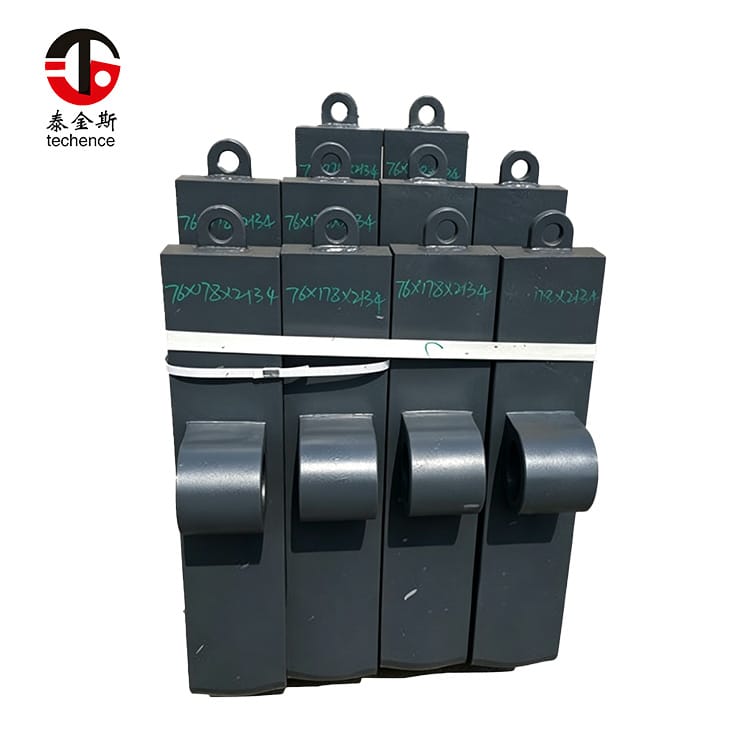
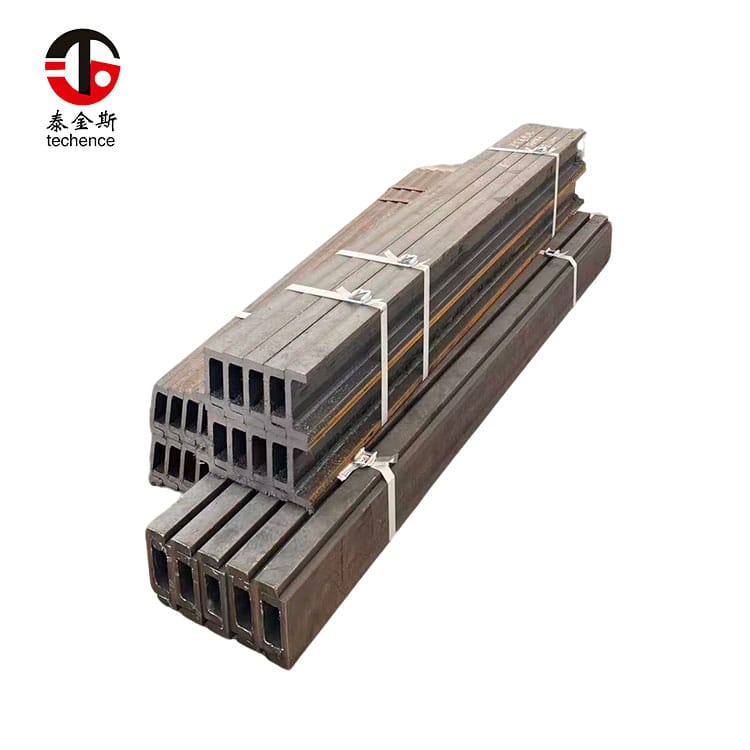
For unusual applications, a fork length and compatibility review based on drawings, load photographs, carriage measurements, and actual operating data is more reliable than selecting a longer blade from appearance alone. Techence identifies forklift forks and attachments as its core manufacturing scope.
Inspect Longer Forks Carefully in Service
Longer forks require the same basic inspections as standard forks, but blade straightness, tip position, and underside wear deserve particular attention.
Inspect the tips for bending, impact damage, deep gouges, and differences in height between the two blades. A long blade can make small angular differences more visible at the tip.
The underside should be checked for wear caused by floor contact. Operators sometimes allow long forks to drag because the tips are harder to judge from the cab. Repeated contact can remove material over time.
The heel should also be examined for cracks, deformation, heat marks, grinding, or unapproved repair. The mounting hooks, pins, locks, and carriage should remain secure and free from excessive movement.
Forks should be considered as a pair. If one blade bends or wears significantly differently from the other, the load may no longer sit evenly.
Common Fork Length Forklift Mistakes
One mistake is selecting the longest forks that will fit the truck. This often adds projection and weight without improving the support of normal loads.
Another is assuming fork length should always equal the complete load depth. What matters is how the load is supported and where its center of gravity lies. Some loads require nearly full-depth support, while others have defined structural support points.
Choosing length without reviewing blade section is another common problem. A much longer blade may require a different width, thickness, or fork design to maintain the intended performance.
Operations can also overlook the rear side of the pallet. Long forks that provide excellent support may still be unsuitable if their tips regularly contact loads stored behind the target pallet.
Finally, longer forks sometimes encourage handling of deeper loads without a new capacity review. Physical reach should never be confused with approved lifting capacity.
Information to Prepare Before Changing Fork Length
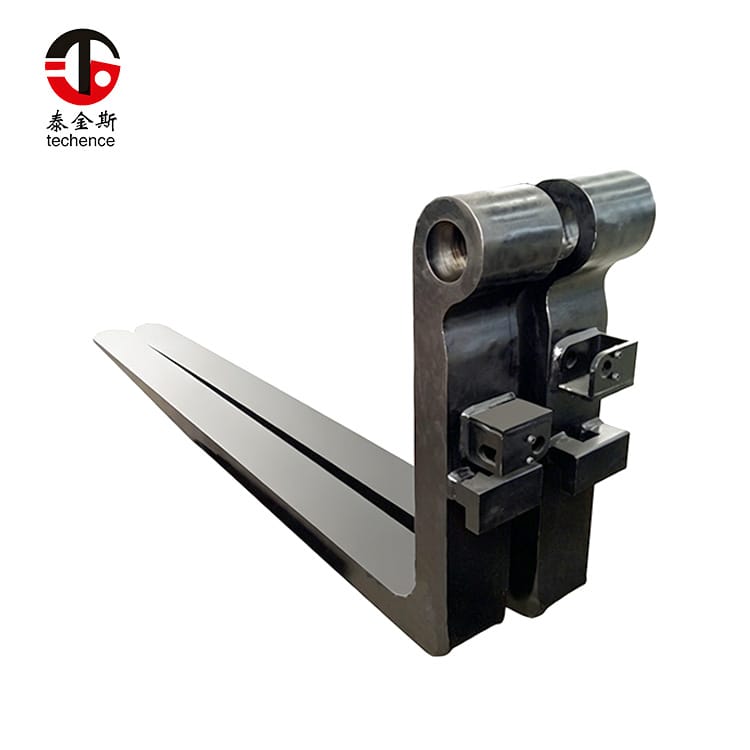
A useful fork length review starts with the forklift manufacturer and model, equipment identification, rated capacity, rated load center, mast type, lift height, carriage configuration, existing fork dimensions, and any installed attachments.
For the load, record maximum weight, width, depth, height, support positions, pallet or skid dimensions, fork-pocket dimensions, and center of gravity when known. Include the deepest and most difficult approved loads rather than only the average pallet.
The current handling problem should also be described clearly. Is the load sitting too close to the tips? Are the forks unable to reach the rear support? Do current forks project too far through pallets? Are operators having difficulty turning because the forks are too long?
Those details make it much easier to decide whether the correct answer is longer forks, shorter forks, extensions, a different fork profile, or a different handling method entirely.
Conclusion
Fork length affects much more than how far the blades reach beneath a load.
A good fork length forklift specification supports the approved load properly while keeping the center of gravity, carriage, fork section, maneuvering space, and forklift capacity in mind. Forks that are too short can leave the load insufficiently supported, while forks that are unnecessarily long can create projection, interference, additional weight, and operating difficulties.
The most reliable approach is to begin with the load. Measure its depth, identify the real support points, establish where the center of gravity lies, and look at how deeply the forks can actually be inserted. Then consider the complete forklift configuration and the environment in which it operates.
For occasional longer loads, fork extensions may be appropriate when properly matched to the existing forks and application. For frequent long-load work, purpose-designed longer forks are usually worth evaluating.
The right fork length is not the maximum length a forklift can carry. It is the length that provides the required support without creating unnecessary problems elsewhere in the handling cycle.
FAQ
How do I determine the correct fork length forklift setup?
Measure the load depth, identify its supporting points, and confirm where the center of gravity sits. The forks should provide sufficient support without unnecessary projection. Carriage compatibility, blade section, forklift capacity, storage layout, and the complete travel route should also be reviewed.
What happens if forklift forks are too short?
Forks that are too short may leave too much of the load unsupported and encourage operators to lift before full insertion. This can move the effective load position farther forward, reduce support quality, and make certain loads less stable during travel or placement.
Can forklift forks be longer than the pallet?
They can, but excessive projection may contact another pallet, rack component, vehicle wall, or nearby load. The required length should provide adequate support while considering what is located behind the pallet and how much clearance is available during normal operation.
Are fork extensions the same as longer forklift forks?
No. Fork extensions fit over existing blades and provide additional length for suitable applications, while long forks are complete fork arms designed for their full working length. The correct choice depends on handling frequency, load weight, load center, fork dimensions, and duty requirements.
Does changing forklift fork length affect capacity?
It can affect the overall operating condition because longer forks may allow the load center to move farther forward and can also add fork weight. The complete forklift, mast, carriage, fork configuration, lift height, and actual load center should be reviewed before handling deeper loads.