Table of Contents
Introduction
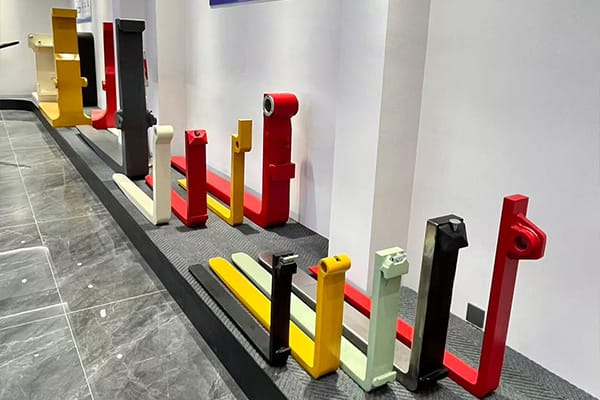
Steel forklift forks are built to carry demanding loads, but direct steel-to-product contact is not suitable for every material-handling job. Finished metal parts, coated surfaces, packaged products, panels, machinery components, and other appearance-sensitive goods can be scratched, marked, or damaged when they slide directly across a bare fork blade. In these applications, forklift fork sleeves provide a relatively simple way to create a protective layer between the forks and the load.
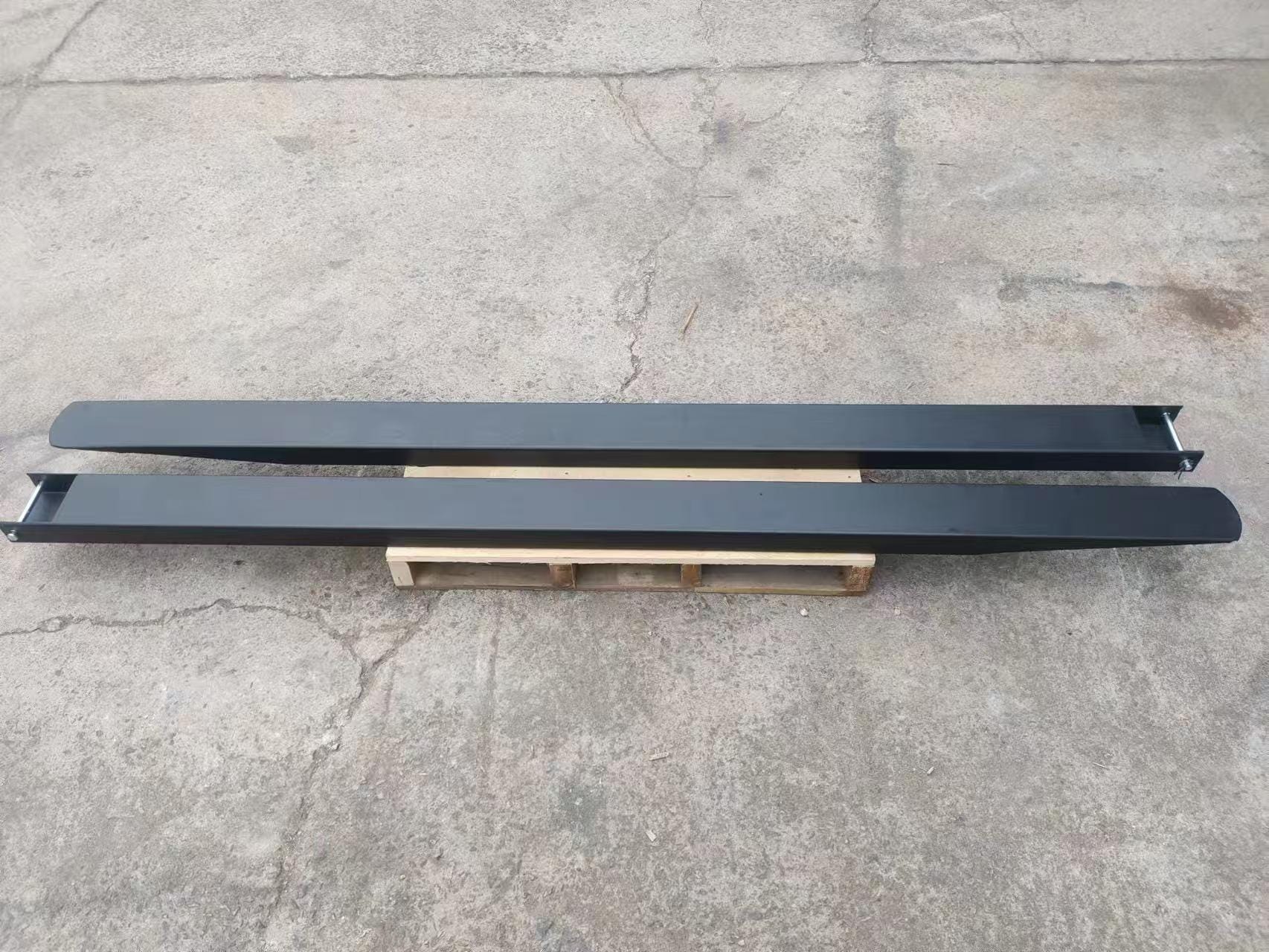
In this article, forklift fork sleeves refers to protective covers fitted over existing fork blades. The term is sometimes used alongside fork covers or fork protectors. These products should not be confused with fork extensions. A protective sleeve is mainly intended to change the contact surface between the fork and the load, while an extension is designed to increase the effective supporting length of the fork.
That distinction matters because the two products solve different problems. If the existing forks already provide enough support but their exposed steel surfaces risk damaging the product, protective sleeves may be appropriate. If the forks are physically too short for the load, the issue needs to be addressed through properly selected longer forks or approved extensions rather than surface protection alone.
The right forklift fork sleeves should fit the existing blade closely, remain secure throughout the handling cycle, tolerate the working environment, and avoid creating new problems with pallet entry, fork thickness, load support, or operator visibility.
What Are Forklift Fork Sleeves?
Forklift fork sleeves are protective coverings placed over part or all of the horizontal fork blade. Depending on the application, they may be manufactured from flexible textile materials, polymer-based materials, rubber-like compounds, or other protective surfaces designed to reduce direct contact between steel and the load.
Their primary purpose is usually product protection. A bare fork can have a hard surface, worn areas, edges, or minor surface irregularities that are acceptable for general pallet handling but unsuitable for finished or sensitive products. A sleeve provides an intermediate contact layer that can reduce scratching and marking when correctly selected.
The sleeve does not replace the structural fork. The original blade continues to carry the load, which means the condition, dimensions, capacity, carriage connection, and compatibility of the underlying forks remain important.
A forklift is rated according to defined load and center-of-gravity conditions, and changes to the front-end configuration need to be considered as part of the complete truck-and-load system.
Why Forklift Fork Sleeves Are Used
The most obvious reason to use forklift fork sleeves is to protect the product surface. In general pallet handling, the fork usually enters underneath the pallet rather than contacting the product directly. Surface protection becomes more important when the blades support the product itself, enter beneath finished equipment, or make contact with a sensitive load-support surface.
Consider a finished metal cabinet that needs to be lifted from underneath. Its structural weight may be well within the forklift capacity, but sliding a steel fork directly beneath a coated panel can leave visible marks. The same problem can occur with finished machinery, fabricated components, panels, certain packaged goods, or products where appearance is part of the final quality requirement.
Sleeves can also be useful when fork tips occasionally extend beyond the pallet or support frame. A protected surface may reduce the severity of incidental contact with nearby finished goods, although this should never be used as an excuse for forks that are unnecessarily long.
The main value of forklift fork sleeves is therefore not greater lifting capacity. They improve the contact condition between a suitable fork and a suitable load.
Forklift Fork Sleeves Are Not Fork Extensions
This is one of the most important distinctions for both product selection and SEO intent.
Forklift fork sleeves and fork extensions may both slide over existing fork blades, which makes them appear similar at first glance. Their functions are different.
A protective fork sleeve is intended mainly to cover the steel contact surface. Its length normally corresponds to the part of the blade that needs protection, and its material is selected around abrasion, cushioning, grip, cleanliness, or resistance to marking.
A fork extension is a structural load-handling accessory intended to increase the effective length of an existing fork for suitable loads. It therefore has different requirements involving extension length, underlying fork size, load support, retention, and capacity.
Using a protective sleeve because the forks are too short does not solve the support problem. Similarly, fitting heavy steel extensions simply because the product surface needs protection may add unnecessary weight and geometry.
The first question should always be whether the problem is load support or load protection.
Where Forklift Fork Sleeves Make the Most Sense
Forklift fork sleeves tend to be most useful where the products being handled have a finished surface or where direct steel contact creates an unacceptable risk of marking.
Finished machinery is a good example. A machine base may be strong enough for fork handling but already painted or coated before final transport. A bare fork can leave scratches around the contact area, particularly if the load slides slightly during entry or placement.
Fabricated metal components can create a similar issue. Stainless, coated, polished, or finished surfaces may need protection from direct fork contact even though the component itself is structurally strong.
Panels and sheet-type products may also benefit from an appropriate sleeve when they are supported directly by the forks. In these cases, the sleeve can provide a less aggressive surface than exposed steel.
Packaging is another consideration. Some boxes, wrapped products, crates, or protective outer layers can be punctured or damaged by rough fork surfaces or tip contact. Fork sleeves may reduce this risk, provided the product is still properly supported and the sleeve itself does not catch or tear the packaging.
Not every load needs protection. Standard pallets, rough industrial materials, scrap, stone, or loads where surface marking is irrelevant may receive little benefit from adding another layer over the forks.
Protective Sleeve Materials Behave Differently
There is no single sleeve material that is best for every operation. The surface needs to match the product, the environment, and the way the load moves across the forks.
Flexible textile-style sleeves are useful when the main objective is to create a softer barrier over the fork. Their ability to conform to different fork profiles can make installation straightforward, but the material needs to resist tearing, abrasion, and contamination during repeated use.
Polymer or polyurethane-type covers can provide a more substantial protective layer. Depending on the design, they may offer good abrasion resistance and a relatively smooth, non-metallic contact surface. The additional thickness still needs to be considered because it changes the effective dimensions of the fork blade.
Rubberized surfaces can provide more grip than bare steel. This may be useful for some loads, but more grip is not automatically better. A load that normally needs to slide smoothly along the blade during positioning may become harder to engage or release if the sleeve creates too much friction.
The correct material should therefore be chosen from the handling motion as well as the product surface. Ask whether the load slides onto the forks, is lowered directly onto them, needs controlled friction, or is frequently repositioned while supported.
How Forklift Fork Sleeves Change Fork Dimensions
One practical issue that is easy to overlook is the increase in blade thickness and sometimes blade width after the sleeve is installed.
A standard fork may fit easily inside a pallet opening when bare. Once a protective layer is added, the effective blade section becomes larger. A thick protective cover can reduce clearance beneath low pallets or inside narrow fork pockets.
This is especially important in applications where the current forks already have very little vertical clearance. Adding a sleeve can turn a previously acceptable fork entry into repeated contact with pallet boards or load supports.
Before ordering sleeves, measure the available opening rather than assuming that a small increase in thickness will not matter. The tightest pallet, skid, or fork pocket in the operation is usually more important than the average one.
The same principle applies to width. If a sleeve wraps around the sides of the blade, it can slightly increase the overall width and change how easily the forks enter narrow channels.
Forklift Fork Sleeve Selection Factors
| Selection Factor | What to Check | Why It Matters |
|---|---|---|
| Existing fork width | Actual blade width at the sleeve position | Determines whether the sleeve fits securely |
| Existing fork thickness | Blade thickness and taper | Affects sleeve fit and final overall thickness |
| Fork length | Length of the contact area requiring protection | Helps avoid unnecessary loose material |
| Fork taper | Change in thickness toward the tip | Influences how closely the sleeve fits |
| Load surface | Paint, coating, packaging, metal, panels or other finishes | Determines the required protection level |
| Required friction | Whether the load should slide or resist movement | Helps select a suitable sleeve surface |
| Pallet clearance | Minimum available fork-entry opening | Prevents sleeves from making the fork too thick |
| Working environment | Dust, moisture, abrasion, debris and cleaning | Influences material durability |
| Retention method | Strap, pin, fastening or fitted sleeve design | Prevents movement during handling |
| Cleaning needs | Type and frequency of contamination | Helps maintain a clean contact surface |
| Inspection access | Ability to remove or move the sleeve | Ensures the structural fork can still be inspected |
The table highlights why measuring the existing fork is necessary. Fork sleeves should not be purchased solely according to forklift model because blade dimensions can vary even between machines with similar capacities.
Sleeve Fit Should Be Close but Practical
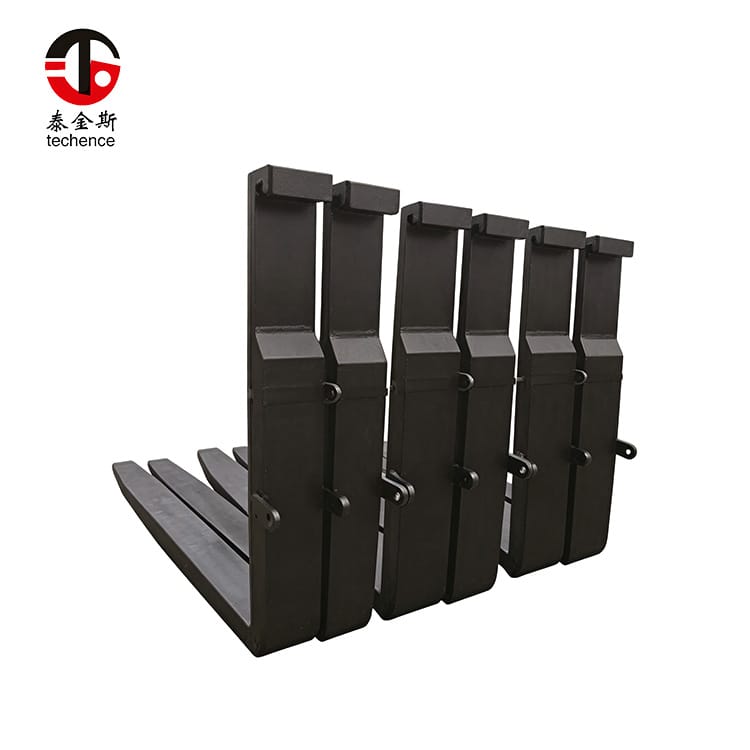
A good forklift fork sleeve needs to remain in position during fork entry, lifting, travel, and withdrawal. If the sleeve is excessively loose, it can bunch up, rotate, slide forward, or interfere with the load. If it is too tight, installation and removal may become difficult and the material may experience unnecessary stress.
Fork taper makes the fit more complicated. A fork is not always the same thickness along its entire length. The tip can be much thinner than the main blade, and the transition may extend over a significant portion of the fork.
This is why the sleeve should be selected according to the actual area it will cover. The dimensions of the main blade, taper, and tip may all matter.
Retention also needs to be appropriate for the application. A sleeve should not depend on friction alone if normal operation can pull it toward the fork tip. The fastening arrangement should keep it secure without introducing a protruding component that catches pallets or packaging.
The Sleeve Surface Can Change Load Behavior
Forklift fork sleeves are often installed to protect products, but they can also change the friction between the forks and the load.
Bare steel provides one contact condition. A textile, rubber, or polymer sleeve can behave differently. Some surfaces allow the load to slide more easily, while others create additional grip.
Higher friction may help reduce minor movement on certain loads, but it can also make fork withdrawal harder. If the operator lowers a load and the sleeve grips strongly against the bottom surface, the load may follow the forks slightly as the truck reverses.
Lower-friction materials can make entry and withdrawal easier but may provide less resistance to movement during travel.
Neither behavior is automatically better. The right surface depends on whether the load needs to slide during engagement and release and how securely it is supported during transport.
This is why representative load testing is more useful than judging a sleeve only by how soft or durable the material feels.
Load Capacity Still Depends on the Forklift and Forks
Protective forklift fork sleeves should not be treated as components that increase the structural capacity of the fork.
The underlying fork remains responsible for carrying the load. Its blade section, length, heel, shank, mounting, rated condition, and wear all remain relevant.
The sleeve may add only a modest amount of weight compared with a large structural attachment, but the complete configuration should still remain consistent with the forklift’s approved operating condition. Forklift capacity depends on the truck, load weight, load center, lift height, forks, mast, and any installed attachment or device.
A protective cover also should not conceal an unsuitable fork. A blade with excessive wear, bending, cracking, or mounting damage needs to be addressed before a sleeve is installed.
For this reason, sleeve installation is a good opportunity to inspect the bare forks carefully.
Check the Forks Before Installing Sleeves
Fork sleeves can cover a large part of the blade, so the structural condition of the fork should be checked before the protective material goes on.
The blade should be inspected for deep wear, bending, gouges, surface damage, or significant differences between the two forks. The heel deserves particular attention because it transfers load between the horizontal blade and vertical shank.
The fork tips should also be examined. A sharp burr or damaged corner can cut into the sleeve from the inside and shorten its life. Installing a new protective cover over a damaged fork surface may hide the problem temporarily without correcting it.
The hooks, locks, shank, and carriage connection remain visible in most sleeve designs and should continue to be included in routine checks.
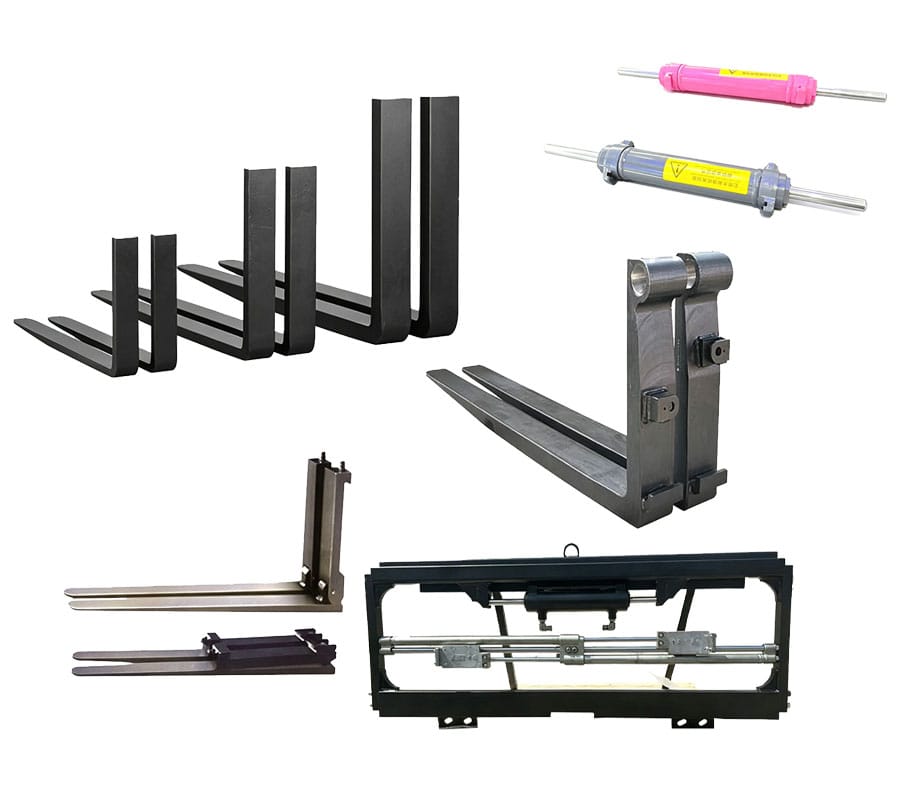
Techence’s forklift fork range includes standard, full taper, folding, pin-type, mining and heavy-duty fork configurations, illustrating how fork dimensions and mounting can vary considerably between applications.
Do Fork Sleeves Protect the Fork as Well as the Load?
The main reason for using protective sleeves is often load protection, but they can also reduce some forms of direct surface contact on the fork itself.
A sleeve may reduce rubbing between the blade and certain loads, keeping finished contact surfaces from grinding directly against steel. It can also act as a barrier against light surface abrasion.
This does not mean the fork becomes protected from structural damage. A sleeve cannot prevent overloading, bending, heel cracking, severe impact, excessive floor contact, or carriage wear.
In some situations, a sleeve can actually make inspection more important because wear beneath the cover is less visible during a quick walk-around check.
The sleeve should therefore be considered removable protective equipment rather than permanent structural armor.
When Forklift Fork Sleeves May Be the Wrong Solution
Protective sleeves are not necessary for every forklift.
They may offer little value when the truck handles only standard pallets and the forks never contact a sensitive product surface. In rough material-handling applications, the sleeves themselves may wear quickly without providing a meaningful operational benefit.
Sleeves are also not a solution for incorrect fork length. If the blade is too short to support the load properly, adding a protective cover does nothing to correct the support geometry.
They should not be used to hide damaged tips or heavily worn fork surfaces. The underlying fork must remain serviceable.
Another poor application is one where sleeve thickness prevents entry into existing pallets. Product protection at the top of the fork is not useful if the fork can no longer reach the correct load-support position.
Very high contamination environments also deserve attention. Debris trapped between the sleeve and fork can abrade the blade or damage the cover from the inside. If sleeves are used, removal and cleaning need to be practical.
Fork Sleeves vs Other Fork Protection Options
Forklift fork sleeves are only one way to reduce direct contact with a sensitive load.
Temporary protective pads can be appropriate when only a small contact area requires cushioning. Rubberized fork surfaces may provide a more permanent solution when the same type of load is handled continuously. Fork-tip protectors concentrate protection at the leading edge when puncture or impact at the tip is the main concern.
Some applications use coated or purpose-built forks rather than removable sleeves, especially when the protective contact surface is a permanent requirement.
The right choice depends on how much of the blade contacts the product, how often protection is needed, the level of abrasion, the required friction, and how frequently the protective surface needs to be replaced or cleaned.
Removable sleeves have an advantage when one forklift alternates between sensitive loads and conventional pallet work because they can allow the base forks to remain relatively standard.
Cleaning and Maintenance Matter
A protective sleeve gradually collects the same contamination found in the working area. Dust, metal particles, packaging fragments, oil, adhesive residue, fibers, and grit can accumulate on or beneath the sleeve.
This matters because a dirty protective surface can eventually become the thing that scratches the product. A piece of hard debris trapped between the load and sleeve may create a concentrated pressure point even when the sleeve material itself is soft.
Cleaning frequency should therefore reflect the products being handled. Appearance-sensitive components may require a much cleaner sleeve than rough industrial goods.
The sleeves should also be checked for cuts, worn-through areas, loose fastening points, stretching, hard embedded debris, or deformation. A damaged sleeve that no longer stays correctly positioned should be replaced rather than repeatedly adjusted during use.
Removing the sleeves periodically also allows the underlying fork blades to be inspected.
Test Forklift Fork Sleeves with Real Loads
A sleeve that fits the fork correctly can still behave differently than expected once a real load is handled.
A practical trial should use representative products and reproduce the normal handling sequence. Observe how easily the covered fork enters beneath the load, whether the sleeve stays in position, and whether additional thickness changes the approach.
During lifting and travel, check whether the load remains stable and whether the sleeve surface changes movement compared with bare steel.
When the load is placed down, pay attention to fork withdrawal. The sleeve should not bunch up, catch on packaging, pull out from under its fastening, or create enough friction to move the load unexpectedly.
After several cycles, inspect the product surface and the sleeves. The useful question is not simply whether the cover remained intact, but whether it genuinely reduced the type of product damage that justified installing it.
Common Forklift Fork Sleeve Selection Mistakes
One common mistake is ordering sleeves without measuring the forks. Fork blade width, thickness, taper, and length vary, so a loose general description such as “standard forklift forks” may not be enough to achieve a reliable fit.
Another mistake is assuming the thickest sleeve offers the greatest protection. Additional material can improve cushioning in some applications, but it also reduces pallet clearance and changes how the fork enters beneath the load.
Friction is sometimes overlooked as well. A sleeve selected only for softness may grip the load more strongly than expected, making withdrawal difficult.
Some users also leave sleeves installed continuously without inspecting the underlying forks. This can allow wear, corrosion, or surface damage to remain hidden.
Finally, forklift fork sleeves are occasionally confused with structural extensions. Product protection and additional fork length are different requirements and should be treated separately.
Information to Prepare Before Selecting Forklift Fork Sleeves
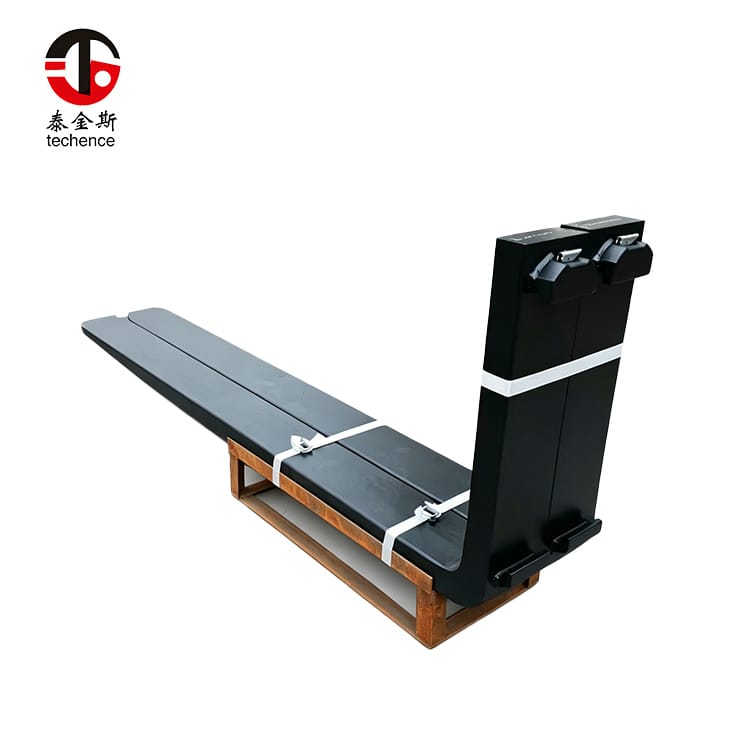
Start by measuring the existing fork blade. Record its width, thickness, length, taper, and the area that actually contacts the load. Clear photographs can help show whether the fork has a standard taper or a more specialized profile.
Next, describe the load. Identify the material being protected, the type of surface finish, the load weight, the contact area, pallet or skid dimensions, and whether the product slides along the blade during handling.
The working environment also matters. Note whether the sleeves will be exposed to moisture, abrasive dust, metal particles, oils, cleaning chemicals, outdoor conditions, or repeated washing.
Finally, define the problem clearly. Are the forks scratching a finished surface? Are the tips puncturing packaging? Does the product need more grip, or less? Is protection required across the entire blade or only in one contact area?
For nonstandard forks or sensitive load applications, a fork and sleeve compatibility review should be based on actual fork measurements, load photographs, contact conditions, and the normal handling process. Techence’s contact page specifically supports inquiries for forklift forks, attachments, and customized applications.
Conclusion
Forklift fork sleeves are a practical solution when the existing forks provide adequate structural support but their exposed steel surfaces are unsuitable for the product being handled.
Their main role is protection rather than additional capacity or length. A correctly selected sleeve can create a more suitable contact surface for finished machinery, coated components, panels, packaged products, and other loads where scratches, marks, or puncture damage need to be controlled.
Selection should begin with the fork dimensions and the load contact condition. Blade width, thickness, taper, sleeve material, surface friction, pallet clearance, retention, cleaning, and inspection access all affect how well the sleeve performs.
It is equally important to keep the distinction between forklift fork sleeves and fork extensions clear. If the problem is insufficient fork length, the support system needs to be reviewed. If the problem is direct steel contact with a sensitive product, a protective sleeve may be the simpler solution.
The best sleeve is not necessarily the thickest or softest. It is the one that fits the existing fork securely, protects the actual load surface, allows normal fork entry and withdrawal, and can be removed easily enough for cleaning and fork inspection.
FAQ
What are forklift fork sleeves used for?
Forklift fork sleeves cover the fork blades to reduce direct steel contact with sensitive loads. They are commonly considered where finished, coated, packaged, or appearance-sensitive products may otherwise be scratched, marked, rubbed, or punctured during fork entry and handling.
Are forklift fork sleeves the same as fork extensions?
No. Fork sleeves are mainly protective covers for the existing blades, while fork extensions increase the effective supporting length of the forks. If the fork is too short for the load, a protective sleeve does not correct the underlying support problem.
How do I measure forks for protective sleeves?
Measure the blade width, thickness, length, taper, and the section that needs protection. Also check the minimum pallet or fork-pocket clearance because the sleeve increases the effective blade dimensions and may affect load entry.
Can forklift fork sleeves affect load handling?
Yes. The sleeve material can change surface friction, blade thickness, and pallet clearance. A higher-friction sleeve may reduce sliding but can make fork withdrawal harder, while a thicker sleeve may interfere with low pallet openings. Testing with real loads is recommended.
Should forklift fork sleeves stay installed all the time?
That depends on the application. Sleeves should be removed periodically for cleaning and inspection of the underlying forks. If the forklift also performs rough pallet work where protection is unnecessary, removable sleeves may be more practical than leaving them fitted continuously.