Table of Contents
Introduction
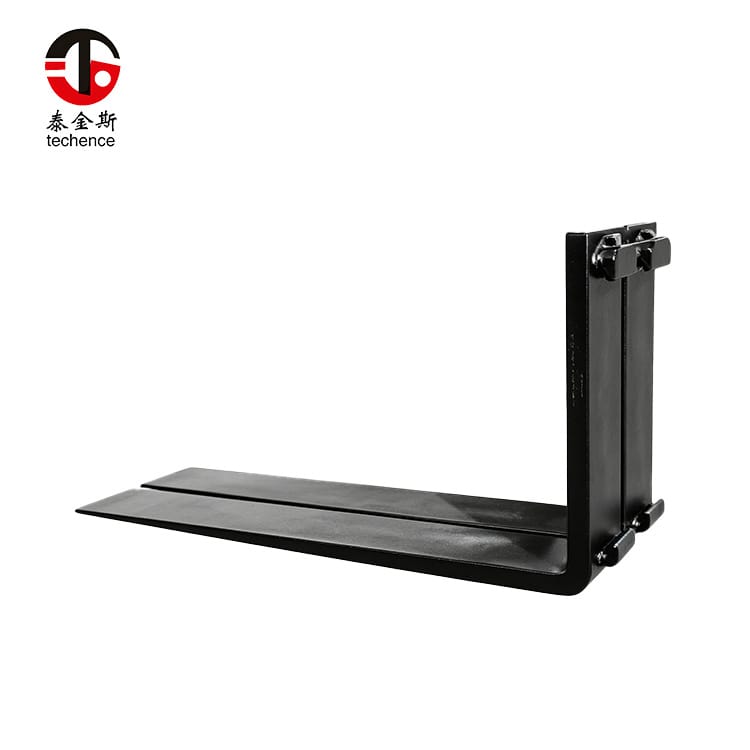
Forks are the part of a forklift that makes direct contact with the load, yet they are often selected with less attention than the truck itself. In routine pallet handling, this may not create an obvious problem because standard forks can cover a wide range of everyday tasks. Once load weight, dimensions, support points, pallet openings, or working conditions begin to vary, however, fork selection becomes much more important.
The best forks for forklift trucks are not necessarily the longest, thickest, or highest-capacity options available. A fork that is unnecessarily large adds weight to the front of the truck, may reduce entry clearance, and can make certain pallets harder to engage. A fork that is too short can leave part of the load unsupported, while an unsuitable hook or carriage interface can make an otherwise correctly sized fork impossible to install safely.
A useful selection process therefore starts with the load and works backward toward the forklift. The load tells you how much support is needed, where that support should be positioned, how far the blades must enter, and what type of tip or fork section is practical. The truck then determines which mounting system, carriage dimensions, fork weight, and capacity conditions can be accepted.
This article looks at the main factors that matter when selecting forks for forklift trucks, including fork length, blade section, taper, load center, carriage fit, manufacturing quality, wear, and specialized fork designs.
What Are Forks for Forklift Trucks?
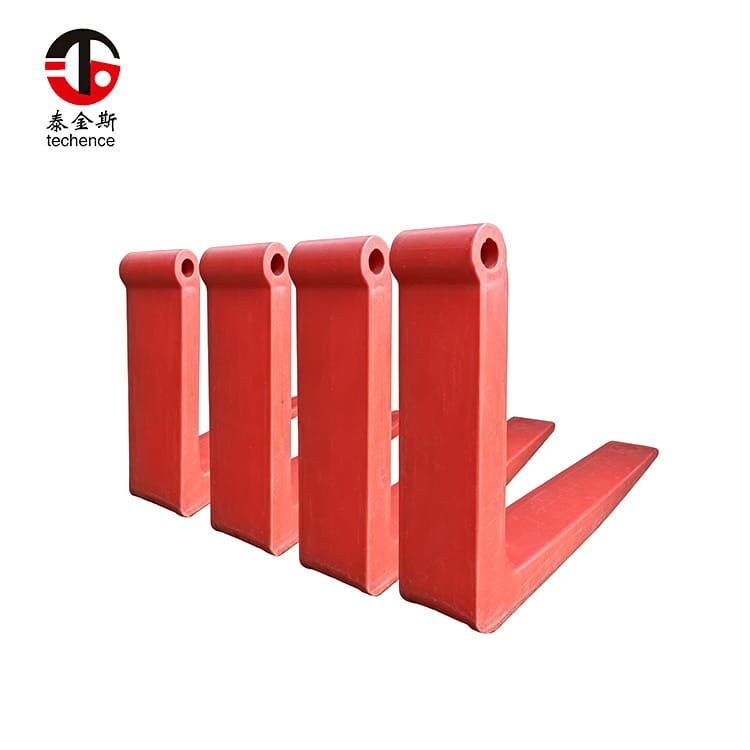
Forks for forklift trucks are load-supporting arms mounted to the carriage or another compatible lifting structure. A typical fork consists of a horizontal blade, a heel where the fork changes direction, a vertical shank, and a mounting system that connects the fork to the carriage.
A forklift is designed to lift and transport loads under defined capacity and load-center conditions. The forks form the direct mechanical connection between that lifting system and the material being handled. This means fork dimensions and load position influence how the complete truck performs.
Standard forks are often manufactured for common pallet applications, but forklifts can also use full taper forks, heavy-duty forged forks, folding forks, mining forks, port forks, pin-mounted forks, shaft-mounted designs, and other application-specific configurations. Techence’s current forklift fork range includes several of these fork types and multiple load and dimension configurations.
The important distinction is that the fork type should reflect the load. A thin-entry fork serves a different purpose from a heavy port fork, even when both are fitted to lifting equipment with similar nominal capacities.
Start with the Load Before Choosing the Fork
When operators complain that forks are difficult to use, the first reaction is often to change fork length or capacity. In practice, the load geometry usually provides a better explanation.
Begin by recording the maximum load weight, but do not stop there. Measure the load depth, width, height, fork-entry openings, distance between support points, and the position of the center of gravity. The load may weigh relatively little but extend far forward, or it may be compact but place most of its weight on a very small contact area. Those situations create different requirements.
The bottom of the load deserves particular attention. Pallets, skids, machinery frames, steel supports, and transport bases do not all distribute weight in the same way. A pallet may spread the load along a large portion of the blade, while a machine frame may contact each fork at only one or two narrow points.
Fork selection should therefore answer a practical question: where will the load actually sit on the blade after the forks are fully inserted?
If most of the load remains close to the fork tips, increasing the fork rating alone may not solve the problem. The forks may be too short, the load may not be inserted deeply enough, or the support geometry may need to be changed.
How Fork Length Affects Load Support
Fork length is one of the easiest specifications to understand and one of the easiest to misuse.
A fork needs enough length to support the load properly. When the blade is too short, the operator may lift the load before sufficient insertion has been achieved. This can leave a large part of the load beyond the supported area and move the effective center of gravity farther forward.
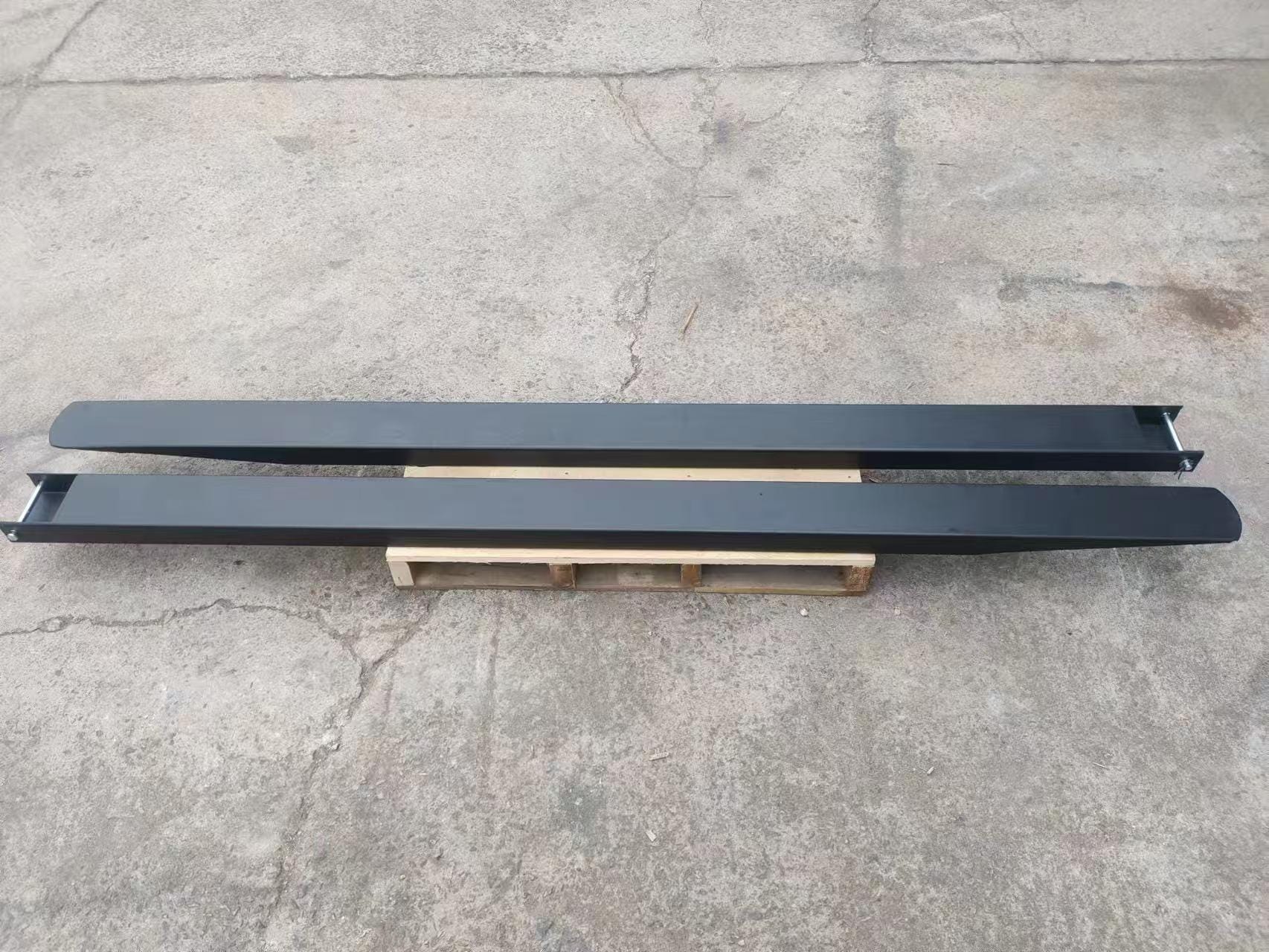
Longer is not automatically safer. A blade that extends unnecessarily far beyond the load adds fork weight, reduces maneuverability, and can create a risk of contacting loads, structures, or equipment behind the pallet being handled.
This is especially important in storage areas where two loads may be positioned back-to-back. Forks that project completely through the first pallet can enter or damage the load behind it.
The practical goal is to choose a blade length that gives adequate support to the intended load without creating unnecessary projection. For operations handling several load depths, the largest load should be reviewed together with the most common load rather than allowing one unusual item to determine every fork dimension.
Blade Width and Thickness Matter as Much as Length
Fork dimensions are usually expressed using blade width, thickness, and length. Buyers often focus heavily on length because it is easy to see, but the cross-section of the fork has a major influence on stiffness, load support, and entry clearance.
A wider blade creates a larger contact area beneath the load. This can be useful for heavy skids, machinery supports, and loads where local pressure should be distributed over more material. The disadvantage is that a wider fork may not fit narrow pallet openings or closely spaced support frames.
Blade thickness also contributes to stiffness, but increasing thickness reduces vertical entry clearance. A fork designed for heavy equipment may simply be too thick to enter a low pallet opening.
The correct section therefore needs to balance structural demand with physical access. If the load regularly uses low-entry pallets, changing to a thicker general-purpose fork can create a new problem even if the fork itself has more structural capacity.
This is one reason specialized designs exist. Full taper forks, for example, can provide a thinner entry profile where pallet clearance is restricted, while large-section forged forks are used where heavy industrial loads place more demand on the blade.
Standard Forks, Full Taper Forks, and Heavy-Duty Forks
Not every forklift application needs a special fork. Standard forks remain appropriate when pallets have consistent openings, load centers remain within the normal operating range, and the blades provide enough support.
Full taper forks are useful when fork entry becomes the limiting factor. Their longer taper gradually reduces blade thickness toward the tip, helping the forks enter lower openings. They are particularly relevant when the load-support opening is usable but a conventional tip or blade transition is too thick.
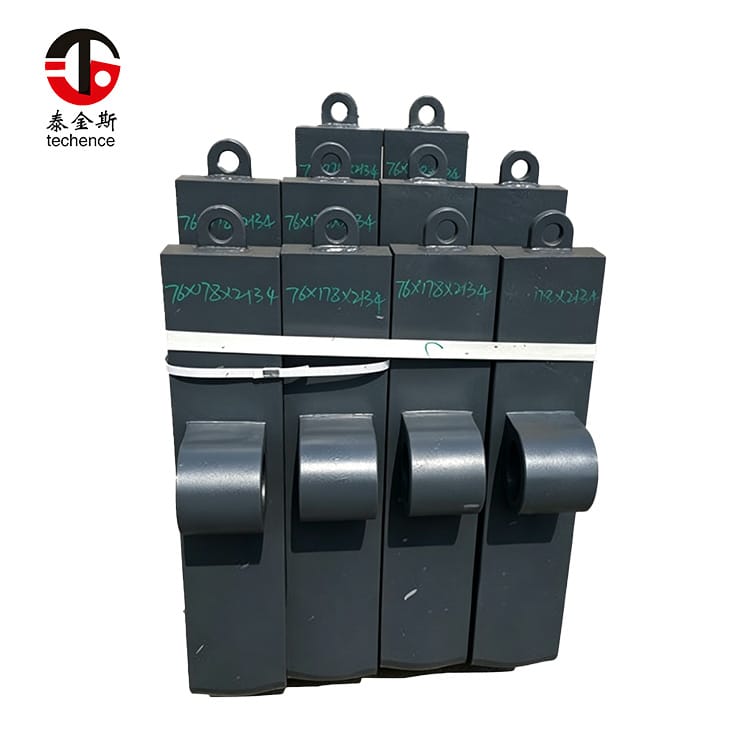
Heavy-duty forks solve a different problem. They use larger sections and application-specific dimensions for dense, long, concentrated, or otherwise demanding loads. Techence also lists forged heavy-duty fork systems among its current product offerings, reflecting the need for different designs rather than one universal fork specification.
The mistake is assuming these categories form a simple hierarchy. A heavy fork is not automatically better than a standard fork, and a full taper fork is not automatically better than a conventional taper. Each design responds to a different handling condition.
Fork Types and Their Typical Applications
| Fork Type | Typical Handling Situation | Main Advantage | Main Point to Verify |
|---|---|---|---|
| Standard forks | Routine pallet handling | Simple and versatile | Length, section, carriage fit |
| Full taper forks | Low pallet openings | Easier initial entry | Tip and taper geometry |
| Heavy-duty forged forks | Dense industrial loads | Larger structural section | Weight, load center, carriage |
| Port forks | Large cargo and industrial skids | Long and heavy-duty support | Fork length and support position |
| Mining forks | Harsh-duty heavy handling | Designed around impact and severe service | Duty cycle and mounting |
| Folding forks | Equipment that needs a compact non-working profile | Blades can fold when unloaded | Hinge, lock, folded clearance |
| Pin-mounted forks | Heavy or specialized carriages | Strong application-specific mounting | Pin diameter and retention |
| Shaft-mounted forks | Custom or adjustable carriers | Suitable for specialized frames | Shaft, eye, and side clearance |
| Custom forks | Nonstandard loads | Dimensions matched to the load | Complete load and truck data |
This comparison shows why searches for forks for forklift trucks should not lead to a single universal product. The load format and the machine interface should determine the fork type.
Load Center Is Often More Important Than Fork Capacity
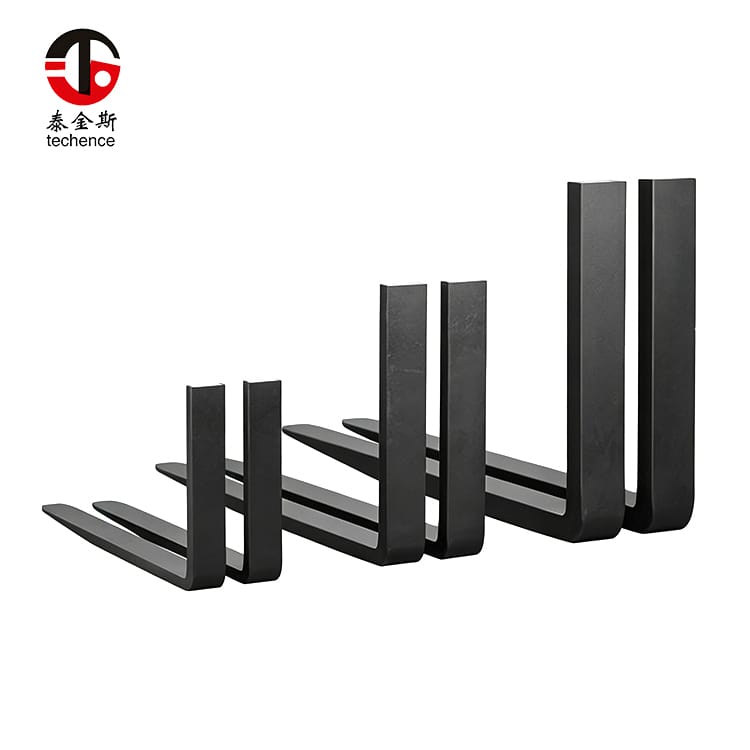
A fork may have sufficient rated capacity while the forklift itself cannot safely handle the same load in the proposed configuration.
This happens because forklift capacity is influenced by the horizontal position of the load’s center of gravity. As the load moves farther away from the carriage, the forward turning effect on the truck increases.
Consider two loads with the same weight. One is compact and sits close to the fork face. The other is much deeper, so its center of gravity is farther along the blades. The second load places a greater demand on the complete truck even though the scale would show the same weight.
Longer forks can make this easier to overlook. Because the blade can physically reach farther under a load, operators may assume the truck can carry the load in that position. Physical reach and allowable capacity are not the same thing.
The evaluation should therefore consider the forklift rating, mast, lift height, fork dimensions, load center, any installed attachment, and the real center of gravity of the product.
For irregular machinery or assemblies, do not assume that the center of gravity is at the geometric center. Motors, gearboxes, tanks, counterweights, or dense internal components can shift the balance considerably.
Choosing the Correct Fork Tip and Taper
Fork-tip geometry affects how easily a truck engages the load.
A conventional fork tip works well with most standard pallets. Problems develop when pallet openings are low, packaging hangs beneath the load, support structures are closely spaced, or operators work with very little vertical clearance.
In these cases, a thinner or longer taper may help. The important point is to identify where the interference occurs. If only the first few centimeters of the blade are contacting the pallet, tip shape may be the main issue. If the fork enters initially but then stops farther inside, the main blade thickness or support geometry may be causing the interference.
A thin tip should not be used as a substitute for proper pallet condition. Broken boards, collapsed supports, protruding fasteners, and deformed load bases need to be addressed separately.
Tip design also needs to reflect the operating environment. A very thin entry profile can be valuable in controlled pallet handling, while severe impact applications may need greater emphasis on tip durability.
Carriage Compatibility Cannot Be Assumed
One of the most common misunderstandings in fork replacement is assuming that forks for forklift trucks can be selected from truck capacity alone.
Two trucks with similar rated capacities may use different carriage classes or completely different mounting systems. Even trucks from the same model family may have been fitted with different masts or carriers.
For hook-mounted forks, important dimensions include the upper-hook opening, lower-hook position, shank height, fork-lock arrangement, and carriage-bar dimensions. The hooks should seat correctly without excessive looseness.
Pin- and shaft-mounted systems require different measurements. Pin diameter, fork-eye size, eye width, side clearance, shaft dimensions, and retainers all become important.
The truck that is actually operating should therefore be measured. Historical changes such as a replacement mast or custom carriage can make original model information incomplete.
A fork that appears to hang on the carriage is not necessarily correctly matched. Full seating, locking, lateral retention, and load transfer all need to be considered.
Fork Spacing Changes How the Load Is Supported
Fork spacing is sometimes treated as an operator adjustment rather than part of load engineering, but it has a significant effect on stability.
When the forks are too close together, the load has a narrow support base and can become less stable from side to side. When the forks are placed too far apart, they may contact weak areas of a pallet or fail to enter the intended openings.
The correct spacing usually places the blades beneath strong, stable support points while keeping the load balanced around the truck centerline.
Wide machinery frames and custom skids deserve extra attention because their support points may be fixed. Moving the forks outward to match these points can also change how forces enter the carriage.
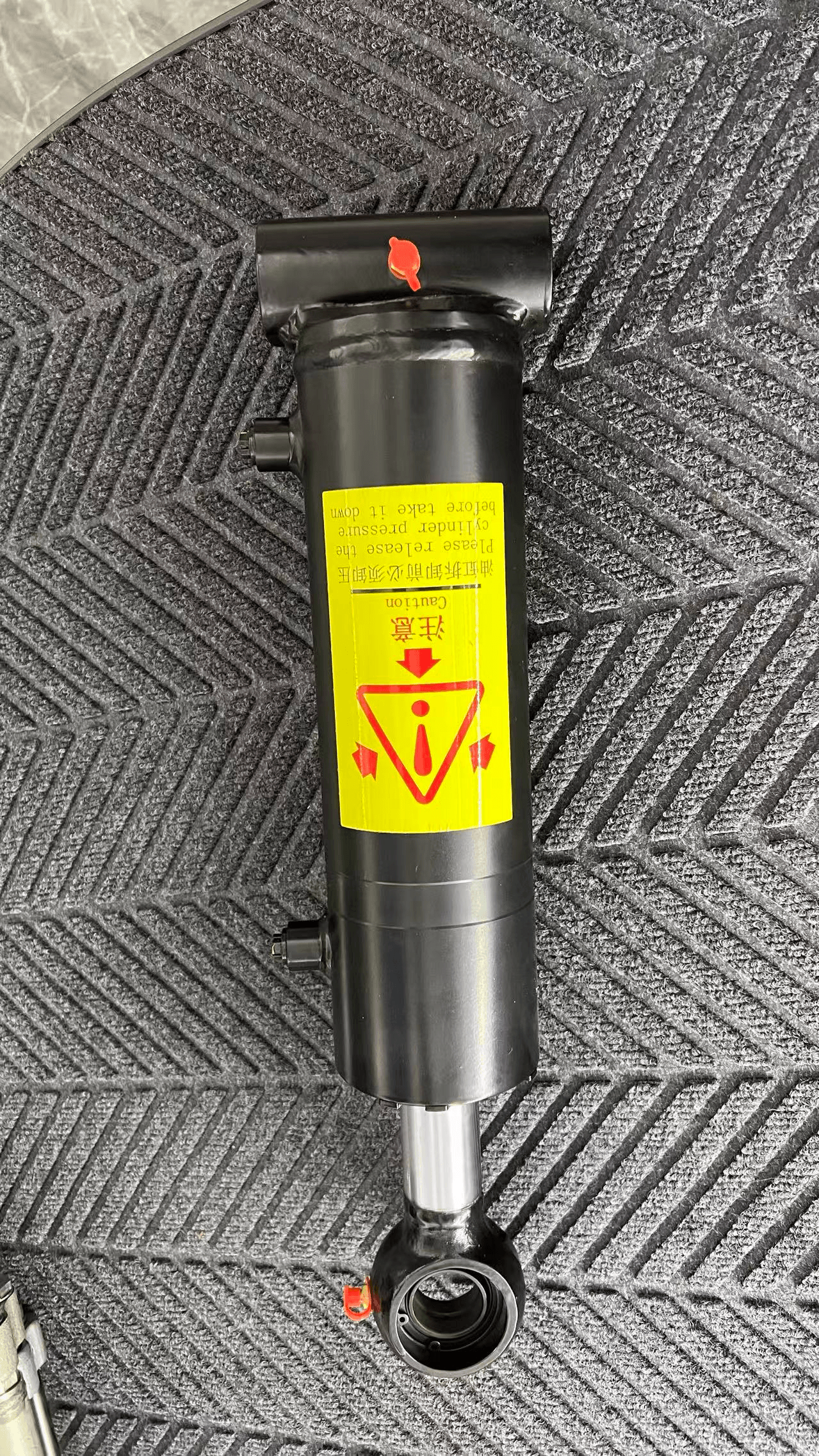
If the operation handles many different support widths, manually repositioning the forks several times per shift may become inefficient. In that situation, hydraulic fork positioning can be considered, but the attachment weight and residual truck capacity still need to be reviewed.
Fork Weight Should Not Be Ignored
Larger forks weigh more, and that weight sits in front of the mast.
For ordinary pallet forks, this may not attract much attention. With very long or heavy-duty blades, however, fork weight can become a meaningful part of the front-end configuration.
This is another reason to avoid oversizing. Increasing width, thickness, and length beyond what the application needs may create a fork that appears more robust but unnecessarily reduces the useful capacity available for the cargo.
Heavy forks can also affect installation and adjustment. Large blades may require lifting equipment or a dedicated procedure when they are mounted, removed, or repositioned.
When comparing fork options, ask not only whether the fork is strong enough but whether its dimensions are actually necessary for the load.
Manufacturing Quality Is More Than Steel Grade
Buyers sometimes compare forks mainly by material name. Material is important, but a good steel grade alone cannot guarantee a good fork.
Fork performance also depends on forming or forging, heat treatment, heel geometry, dimensional accuracy, surface condition, machining, and consistency between the two blades.
The heel deserves particular attention because it transfers the load from the horizontal blade into the upright shank. An abrupt section change, poor geometry, or damage in this area can create an unfavorable concentration of stress.
Heat treatment must also match the material and section size. The goal is not simply to make the fork as hard as possible. A working fork needs an appropriate balance of strength, toughness, fatigue resistance, and resistance to permanent deformation.
The two forks should also behave as a pair. Differences in blade height, shank angle, taper, mounting position, or length can lead to uneven contact with the load.
Product identification and traceability are useful over the long term because maintenance teams eventually need to confirm what was installed, what its rated conditions were, and what specification should replace it.
When Custom Forks Make Sense
Custom forks are useful when the load cannot be handled properly by standard catalogue dimensions.
Typical reasons include unusual fork pockets, very wide or narrow support points, long machinery frames, restricted vertical clearance, specialized pin mounting, or loads with concentrated contact areas.
Customization should begin with measurements rather than a request such as “make the forks longer” or “make them heavier.” A longer blade affects weight, stiffness, maneuverability, and load center. A thicker blade may no longer enter the load. A wider blade may require changes to the carriage or fork spacing.
Useful information includes the maximum load, load dimensions, center of gravity, support-point locations, required blade length, fork-pocket dimensions, carriage details, lift height, and working environment.
Where these conditions are nonstandard, a fork selection and customization review should be based on drawings, measurements, load photographs, and machine data rather than visual similarity alone. Techence’s site specifically presents custom forklift forks and attachments as part of its manufacturing scope.
How to Inspect Forks Before Daily Use
Fork inspection should be part of normal forklift use rather than something performed only when a problem becomes obvious.
Start by looking at the blade and tip for bending, twisting, deep gouges, unusual wear, or impact damage. Compare the height of the two fork tips. A noticeable difference can indicate that one fork has bent, the mounting has worn, or the pair is no longer correctly matched.
The heel should be checked carefully for cracks, deformation, grinding marks, heat discoloration, or evidence of an unapproved repair. Because the heel carries significant bending load, changes in this area deserve attention.
The shank, hooks, locks, pins, or shaft interface should also be inspected. A good blade installed on a worn carriage or damaged mounting system can still move excessively.
Blade thickness should be monitored where wear is expected, especially on the underside of the fork. Abrasive floors, pallets, steel frames, and repeated contact can gradually remove material.
Identification and capacity markings should remain readable. When those markings disappear, future inspection and replacement become more difficult.
Why Fork Damage Often Indicates Another Problem
A damaged fork is sometimes the result of normal wear, but repeated damage often points to a broader handling issue.
Fork tips that are regularly bent or heavily marked may indicate poor approach alignment, damaged pallet openings, uneven floors, or frequent impact. Excessive underside wear may result from operators dragging the forks along the ground. Unequal fork wear can indicate that the load is consistently positioned off-center.
Cracks or deformation after a heavy event should prompt a review of the load as well as the fork. The load may have exceeded the expected weight, the center of gravity may have been farther forward, or one fork may have taken more of the load.
Replacing the damaged fork without understanding why it failed can lead to the same problem again.
Maintenance records become useful here. When inspection teams record where wear occurs and how quickly it develops, patterns become easier to recognize.
Replace Forks as a Working Pair
One fork can sometimes become damaged before the other, but replacing only the visibly damaged blade requires careful evaluation.
The new fork should match the remaining fork in section, length, taper, capacity, mounting dimensions, shank angle, and tip height. The condition of the older fork also matters. Pairing a new fork with one that has experienced substantial wear can create uneven support.
The carriage should be checked at the same time. Worn carriage bars or locking positions can affect the new fork immediately after installation.
The objective is not merely to mount two fork-shaped components. Both blades should create a level and predictable supporting surface for the load.
Common Mistakes When Selecting Forks for Forklift Trucks
One frequent mistake is choosing forks according to truck capacity without measuring the load. This can result in blades that are too short, too thick, or poorly spaced even though their nominal capacity appears suitable.
Another mistake is automatically specifying longer forks for large loads. If the extra length is not required for support, it adds weight and front projection without providing a meaningful benefit.
Some operations also overlook pallet-entry dimensions. Increasing blade thickness can make a fork stronger in one respect but prevent it from entering existing pallets or skids.
Mounting dimensions are another source of error. Similar-looking hook forks may belong to different carriage configurations.
Finally, buyers sometimes focus only on the heaviest load. The most difficult load may instead be the longest, lowest-clearance, most uneven, or most concentrated item in the operation.
A good fork specification takes the full load range into account.
Information to Prepare Before Selecting New Forks
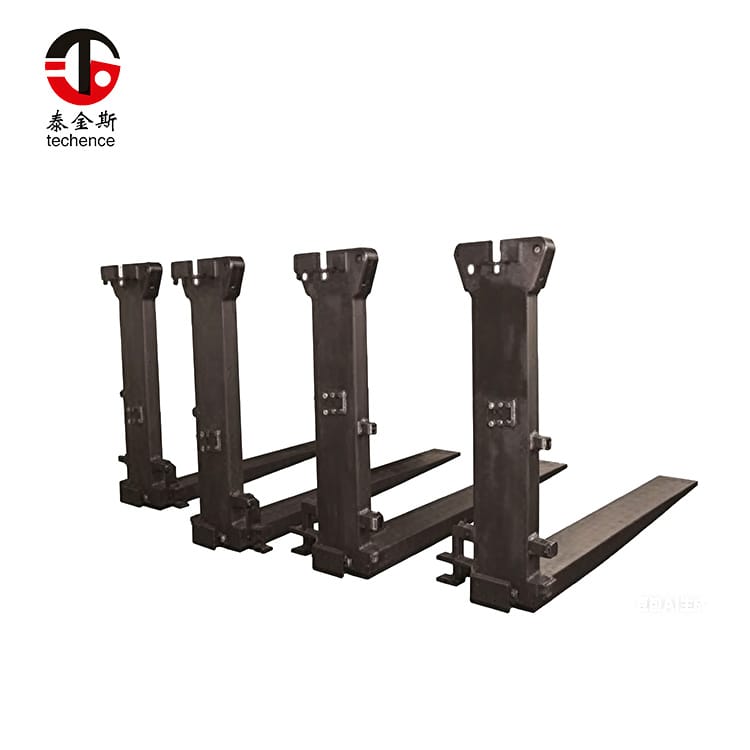
Before ordering replacement or custom forks for forklift trucks, collect the actual machine and load information.
For the forklift, record the manufacturer and model, equipment identification, rated capacity, rated load center, mast type, maximum lift height, carriage configuration, current fork dimensions, and any attachments already installed.
For the load, record maximum weight, width, depth, height, support positions, fork-pocket dimensions, required insertion depth, and center of gravity when known. Include unusual loads as well as the standard daily products.
For the working environment, note the floor condition, rack or storage arrangement, aisle space, loading height, impact exposure, operating frequency, and whether the forks frequently contact abrasive or corrosive materials.
This information gives the supplier a much stronger basis for recommending a fork than a forklift model number alone.
Conclusion
Choosing forks for forklift trucks is not simply a matter of finding a pair with the correct capacity label.
The load needs to fit the blades, the blades need to fit the carriage, and the complete configuration needs to remain suitable for the forklift’s actual operating condition. Fork length, width, thickness, taper, spacing, weight, mounting system, load center, and working environment all influence the final result.
Standard forks remain the right choice for many ordinary pallet applications. Full taper forks become useful when entry clearance is limited. Heavy-duty, port, mining, folding, pin-mounted, and custom forks solve more specialized handling problems.
In practical terms, the best forks are usually the ones that provide enough support without unnecessary size or weight, enter the load without interference, remain correctly matched as a pair, and can be inspected throughout their service life.
Starting with the real load rather than the fork catalogue makes that decision much easier.
FAQ
How do I choose the right forks for forklift trucks?
Start with the maximum load weight, load depth, center of gravity, support points, and pallet openings. Then match the required fork length, width, thickness, taper, capacity, and mounting system to the actual forklift carriage and operating conditions.
Are all forklift forks interchangeable?
No. Forks can differ in carriage class, hook position, mounting type, blade section, length, capacity, and load-center conditions. Even forklifts with similar nominal capacities may use different forks, so the actual carriage and existing fork dimensions should be verified.
Should forklift forks be longer than the load?
Forks should provide adequate support without projecting unnecessarily beyond the load. Excessively long forks add weight and can contact nearby materials, while forks that are too short can leave part of the load unsupported and move its effective center of gravity farther forward.
What is the difference between standard forks and full taper forks?
Standard forks suit general pallet handling, while full taper forks have a longer reduction in blade thickness toward the tip. This creates a lower entry profile and can help when pallet or skid openings provide limited vertical clearance.
When should forklift forks be replaced?
Forks require evaluation when they develop cracks, permanent bending, twisting, severe wear, damaged mounting components, unequal tip height, or other conditions outside the applicable inspection limits. The cause of unusual damage should also be investigated before replacement.