Table of Contents
Introduction
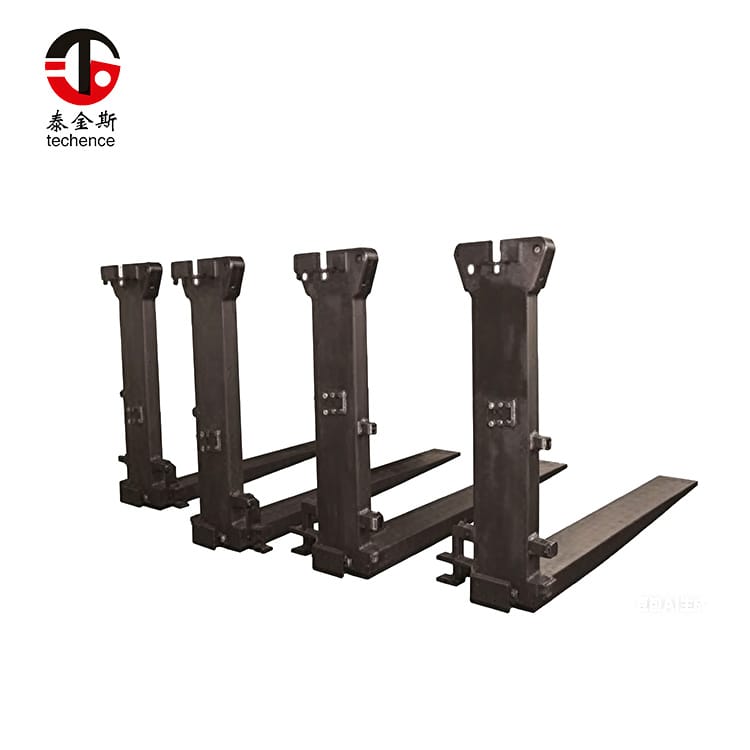
Fork tines are among the most important load-bearing components on a forklift. Also known as forklift forks, fork blades, or fork arms, they extend beneath pallets and other loads so the forklift can lift, transport, and position materials. Although their structure may appear simple, fork tines must withstand repeated bending loads, impact, abrasion, and heavy-duty operating conditions, which makes correct selection essential for both equipment performance and safe material handling.
Choosing suitable fork tines involves much more than determining how long the forks should be. Buyers also need to consider blade width, thickness, fork capacity, load center, mounting configuration, fork class, taper, carriage compatibility, and the actual type of material being handled. A fork that works well in a conventional warehouse may be completely unsuitable for a port, steel mill, mine, construction project, or heavy machinery application.
This guide explains the main types of fork tines, important dimensions, common mounting systems, selection factors, wear indicators, and the information buyers should prepare when ordering standard or customized forklift forks.
What Are Fork Tines?
Fork tines are the horizontal load-supporting arms installed on the front carriage of a forklift. Each fork normally consists of a blade, heel, shank, mounting section, and tip. The blade extends beneath the load, while the shank connects the fork to the carriage and transfers lifting forces through the mast and forklift structure.
In industrial terminology, “fork tines,” “forklift forks,” “fork arms,” and “fork blades” are often used to describe the same basic component. Although terminology may vary between manufacturers, operators, and technical documents, their primary function remains the same: supporting, lifting, and transporting loads as part of the forklift’s material-handling system.
Fork tines are engineered load-bearing components rather than simple steel bars. Their performance depends on factors such as material selection, geometry, heel design, mounting configuration, dimensions, rated capacity, forging, and heat treatment. For industrial purchasing and replacement applications, these factors should be evaluated together to ensure the fork is suitable for the forklift, carriage, load, and operating environment.
Main Types of Fork Tines
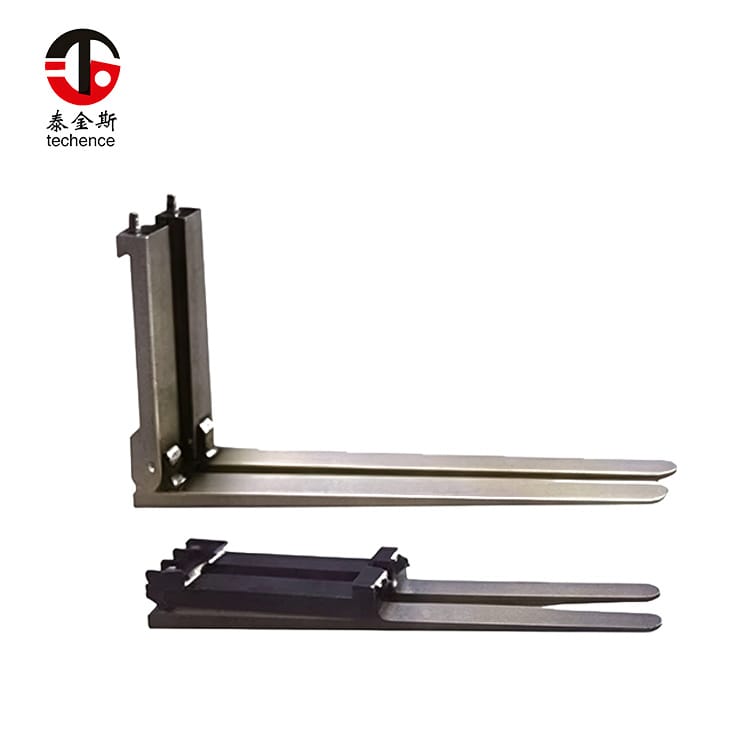
Different forklift applications require different fork configurations. Standard warehouse trucks usually use hook-mounted forks, while specialized industrial equipment may need pin forks, roller forks, full taper forks, blank forks, or large heavy-duty forged forks.
Hook forks are among the most commonly used designs because they can be mounted directly to standard forklift carriages and repositioned laterally according to pallet or load width. They are widely used in warehouses, logistics centers, manufacturing facilities, and general industrial handling. Techence provides several hook forklift fork configurations for different equipment requirements.
Pin-type forks are mounted through a shaft or pin rather than conventional upper and lower hooks. They are often found on larger or specialized forklifts used in mining, ports, construction, or other demanding applications. When ordering these forks, pin diameter, mounting position, shank dimensions, and corresponding carriage dimensions must be accurately confirmed.
Roller forks use a different mounting arrangement and are typically associated with specialized industrial equipment. Their geometry can vary substantially from one machine to another, so drawings, original equipment specifications, or accurate measurements are particularly important when purchasing replacements.
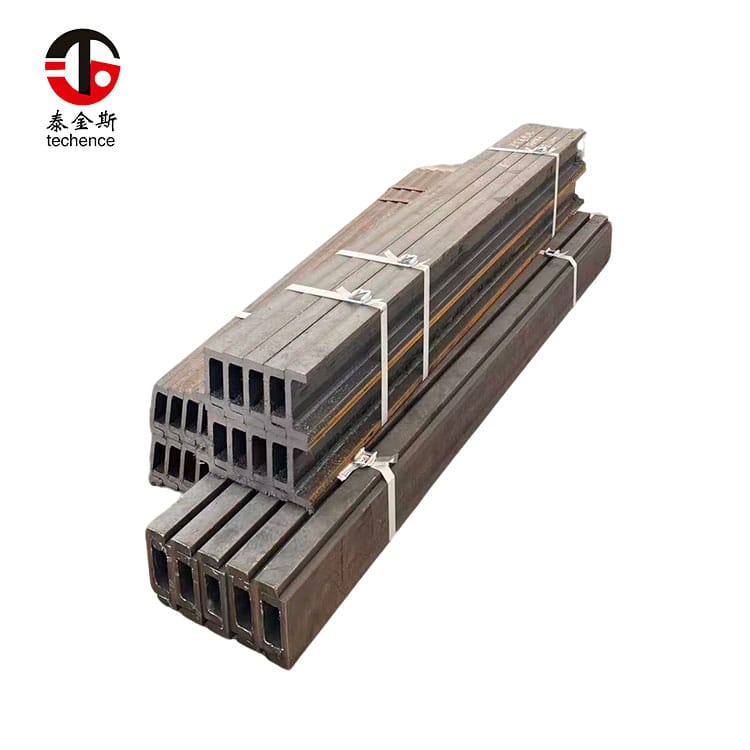
Blank forks are useful for equipment manufacturers and OEM projects where the final mounting system needs to be machined or fabricated according to a custom design. They allow greater flexibility for non-standard carriages and specialized material-handling equipment.
Full taper forks gradually become thinner toward the tip, making it easier for the blade to enter beneath pallets or loads with limited bottom clearance. Techence manufactures full taper forklift forks for applications where easier entry under the load is required.
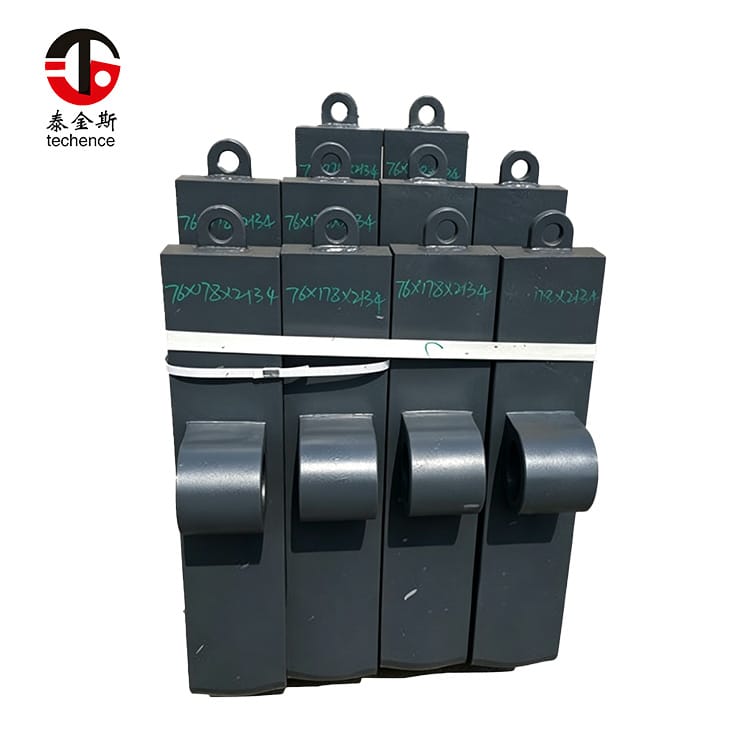
Heavy-duty forks are designed for much larger loads and more demanding operating conditions. These forks may have substantially greater blade thickness, width, shank dimensions, and capacity than conventional warehouse forks. They are commonly used in ports, mines, steel plants, heavy machinery factories, stone processing facilities, and similar environments.
Common Fork Tine Types Compared
| Fork Tine Type | Main Characteristic | Typical Application |
|---|---|---|
| Hook Fork | Standard carriage mounting | Warehousing and logistics |
| Pin Fork | Mounted through pin or shaft | Heavy-duty forklifts |
| Roller Fork | Specialized roller mounting | Industrial equipment |
| Blank Fork | Unfinished mounting section | OEM and custom projects |
| Full Taper Fork | Thin tapered blade tip | Low-clearance loads |
| Heavy-Duty Fork | Larger cross section and capacity | Ports, mining and steel |
| Custom Fork | Built to customer specification | Non-standard industrial loads |
The correct type should always be selected according to the forklift, carriage, operating environment, load geometry, and required capacity. Selecting forks only by appearance can easily result in compatibility or performance problems.
Important Fork Tine Dimensions
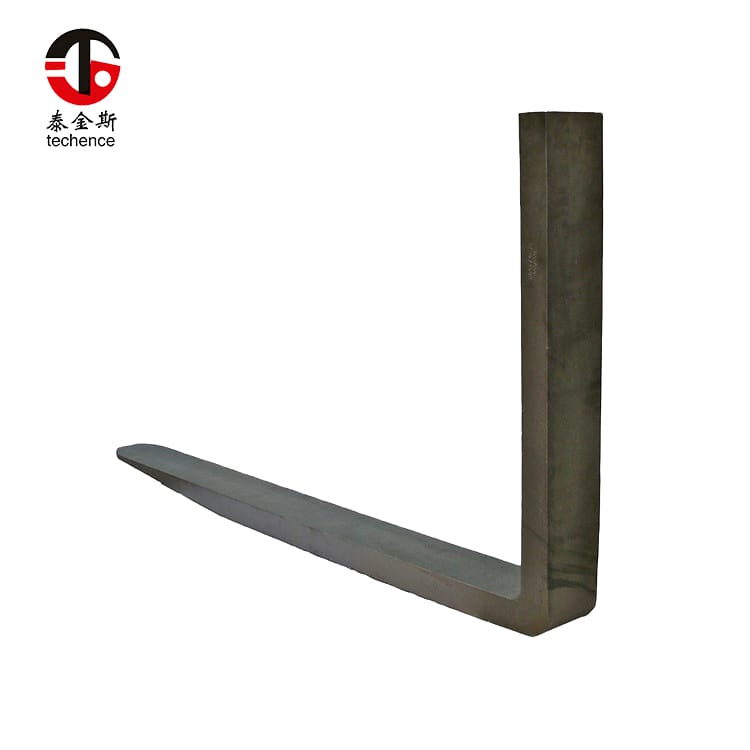
The dimensions of fork tines directly affect how they support and enter a load. The three most commonly quoted measurements are thickness, width, and blade length. A typical fork specification might therefore be written as 50 × 150 × 1,500 mm, although a professional replacement or custom order usually requires more information than these three measurements.
Blade length determines how far the fork extends beneath the load. Width affects load contact and determines whether the fork can enter a pallet opening. Thickness is an important structural dimension, particularly around the heel and blade area, although thickness alone cannot be used to determine fork capacity.
Shank height, hook spacing, fork class, tip thickness, mounting dimensions, pin diameter, and rated load center may also need to be confirmed. Buyers replacing existing forks should therefore provide a complete dimensional picture rather than requesting a replacement solely by blade length.
For a more detailed explanation of measuring fork length, width, thickness, and mounting dimensions, see the previous guide on forklift fork dimensions.
How Fork Tine Length Affects Load Handling
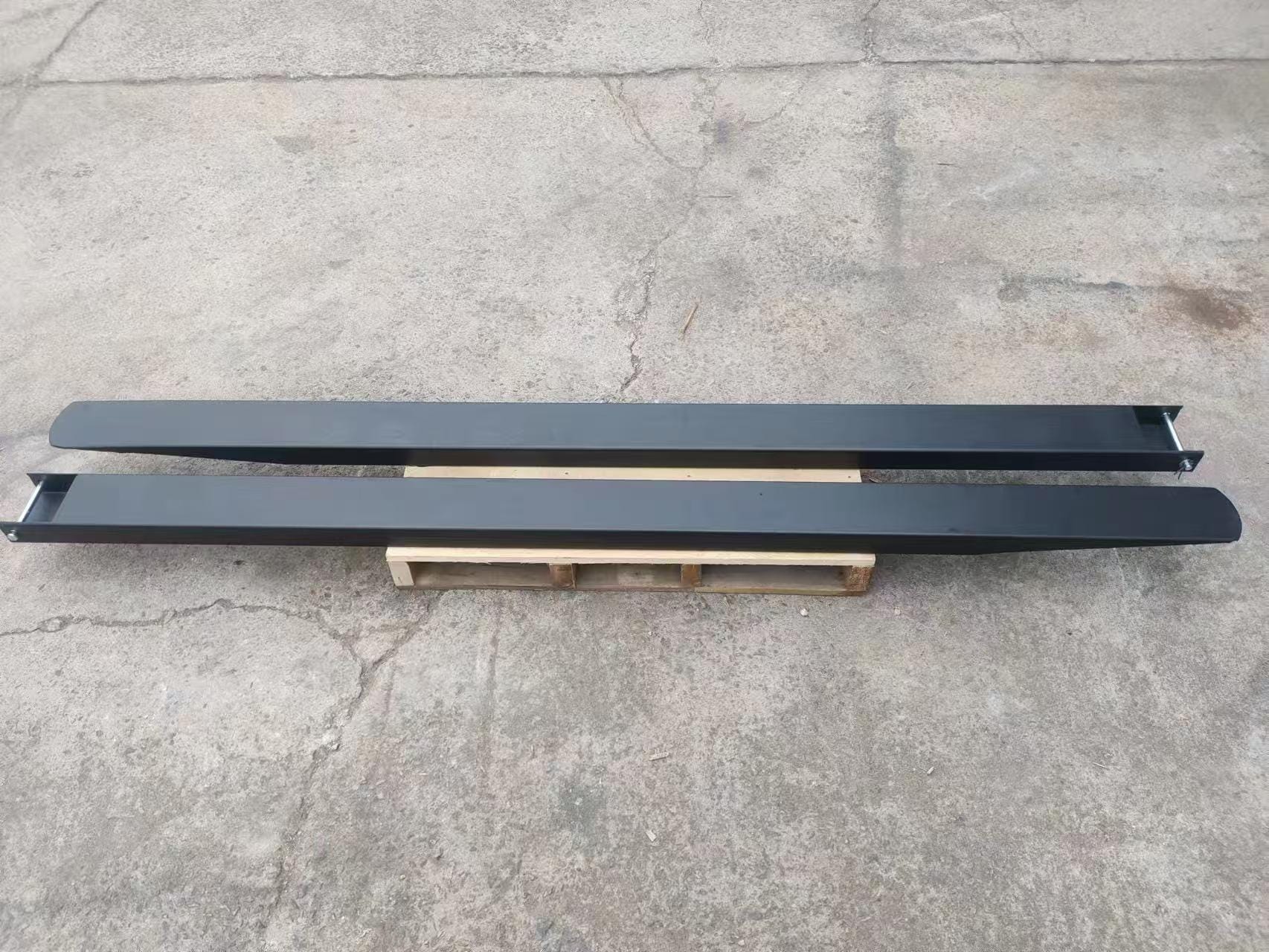
Fork length should be matched to the actual load rather than chosen simply according to the longest option available. If the fork is too short, the load may not receive adequate support. If it is unnecessarily long, the extended blade can make maneuvering more difficult and may protrude beyond the load into adjacent storage areas.
Length also needs to be considered together with load center. Moving the center of gravity farther away from the forklift increases the overturning moment acting on the truck, which can affect usable capacity. This is particularly important when longer forks, fork extensions, or specialized attachments are used.
Attachments can also change the operating characteristics of a forklift by altering load position, visibility, and the relationship between the load and the truck’s balance point. For this reason, fork length, load dimensions, load center, and forklift capacity should always be evaluated as a complete system rather than as independent variables.
Why Fork Width and Thickness Matter
Fork width determines how much surface area supports the load and whether the blade can enter the load opening properly. Warehouse forklifts normally use narrower forks because they must fit standard pallet openings, while heavy industrial forklifts may use considerably wider forks to support large machinery, steel, stone, or fabricated structures.
Thickness influences the structural cross section of the fork, but it should never be treated as the only indicator of capacity. Material grade, width, length, heel geometry, forging quality, heat treatment, mounting design, and rated load center all contribute to the final load rating.
A larger fork is therefore not automatically a better fork. The objective is to achieve the right combination of strength, entry clearance, load support, mounting compatibility, and forklift capacity for the intended application.
Fork Tines and Carriage Compatibility
One of the most common mistakes when buying replacement forks is focusing on blade dimensions while ignoring the carriage. Two fork tines can have the same width, thickness, and length but use completely different mounting arrangements.
For hook forks, the upper and lower hooks must match the carriage correctly. The fork class and hook spacing must therefore be confirmed before ordering. Pin-mounted and roller-mounted forks require a different set of measurements, including pin diameter, shaft position, and mounting geometry.
Buyers should ideally provide the forklift brand, model, rated capacity, carriage class, existing fork markings, load center, and clear photographs of the mounting area. This information helps reduce the risk of ordering forks that match the blade size but cannot be installed on the equipment.
How to Choose the Right Fork Tines
The most reliable selection process begins with the material being handled. A standard pallet, large industrial machine, steel plate, stone product, timber bundle, container-related cargo, or mining component can create very different requirements for fork length, width, thickness, taper, spacing, and capacity.
After defining the load, buyers should confirm the maximum weight and the expected center of gravity. The forklift’s rated capacity and load center should then be checked to ensure the proposed fork configuration remains suitable for the equipment.
The next step is dimensional confirmation. Existing fork length, width, thickness, shank height, hook spacing, and other relevant mounting details should be recorded. If the current forks are badly worn, however, these measurements should be compared with original equipment documentation or previous drawings because years of wear may have reduced the original blade dimensions.
Operating environment is another important factor. Forks used in a warehouse generally experience different levels of impact, abrasion, and contamination than those used in mining, ports, steel manufacturing, construction, or stone handling. In demanding environments, buyers may need heavier sections, specialized mounting systems, or custom fork designs.
Forged Fork Tines for Heavy-Duty Applications
Forging is commonly used for industrial forklift forks because the process allows steel to be formed into the required geometry while maintaining structural continuity through important areas such as the heel. These sections repeatedly experience high bending stress during lifting operations, particularly when loads are heavy or operating cycles are frequent.
A typical manufacturing process for forged forks may include material selection, heating, forming, heel shaping, heat treatment, machining, straightening, dimensional inspection, surface treatment, and testing. The final performance depends on the complete manufacturing process rather than on forging alone.
For heavy material-handling applications, buyers should look beyond basic dimensions and evaluate material specifications, rated capacity, heat treatment, manufacturing consistency, marking, quality inspection, and relevant testing documentation.
Techence manufactures a broad range of forged forklift forks covering standard and customized applications, including heavy-duty forks for ports, mining, industrial machinery, and other demanding material-handling environments.
When Should Fork Tines Be Replaced?
Fork tines are subject to continuous wear and should be inspected regularly. Repeated contact with floors, pallets, steel surfaces, and abrasive materials gradually changes the original blade dimensions, while impact and overload can cause bending, cracking, or deformation.
Several types of damage require particular attention, including cracks, bent blades or shanks, incorrect fork angles, unequal fork tip heights, excessive blade or shank wear, worn hooks, defective positioning locks, and illegible markings. These conditions can affect load support, carriage engagement, and overall forklift operation.
Forks that show visible cracks, severe heel wear, significant thickness loss, bent blades, damaged hooks, or unequal tip heights should not simply continue operating until failure occurs. Inspection results should be compared with manufacturer recommendations and applicable safety requirements to determine whether the forks need replacement or professional evaluation.
Both fork arms should also be checked together. If one fork has experienced significant damage or deformation, the other may have been exposed to the same impact or overload. A matched pair provides more consistent load support than combining forks with substantially different wear, geometry, or capacity.
Common Mistakes When Buying Fork Tines
One frequent purchasing mistake is ordering forks only according to length. A request such as “1,500 mm fork tines” does not provide enough information because forks with identical lengths can have completely different widths, thicknesses, capacities, shank heights, and mounting configurations.
Another mistake is assuming forks from similar forklifts are interchangeable. Machines with comparable rated capacities may still use different carriage classes or mounting systems, so equipment model and carriage information should always be checked.
Buyers should also avoid copying dimensions from heavily worn forks without confirming the original specification. If an old blade has lost material through years of abrasion, producing a new fork according to the worn measurement may result in an incorrect replacement.
Price alone should not determine the final choice either. Fork tines carry the load directly, so material quality, heat treatment, manufacturing method, dimensional accuracy, capacity verification, and proper compatibility are much more important than selecting the lowest initial purchase price.
When Custom Fork Tines Are Needed
Standard fork tines are suitable for conventional pallet handling, but specialized industries frequently require non-standard dimensions or mounting arrangements. Oversized machinery, steel components, mining equipment, stone, fabricated structures, long materials, and port cargo may all require custom fork designs.
Customization can include blade length, width, thickness, shank dimensions, fork tip geometry, taper, hook configuration, pin mounting, roller mounting, and rated capacity. Custom forks are also useful for equipment manufacturers developing their own carriage or lifting system.
For these applications, a technical drawing is normally the most effective way to communicate requirements. The drawing should identify the major blade and mounting dimensions together with required capacity and load-center information.
What Information Should You Provide When Ordering?
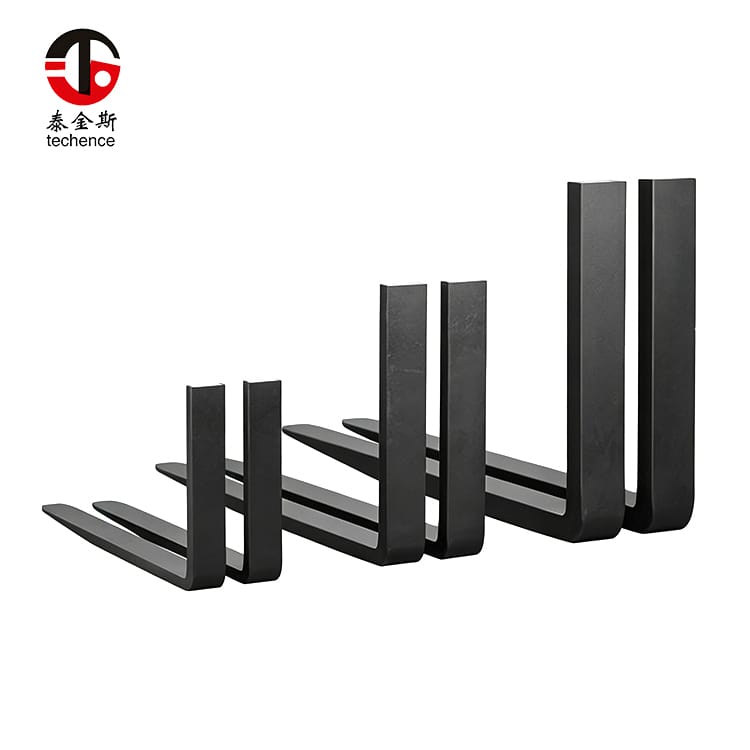
A complete inquiry helps the manufacturer evaluate the required fork more accurately. Buyers should provide the forklift manufacturer and model, rated truck capacity, load center, blade length, width, thickness, shank dimensions, fork class, mounting type, required fork capacity, and the type of material being handled.
Photographs of the existing fork and carriage can also be helpful, especially when the equipment uses an unusual mounting design. For customized or heavy-duty applications, a technical drawing should be provided whenever possible.
The more clearly the operating conditions and load requirements are described, the easier it is to determine whether a standard fork can be used or whether a customized solution is more appropriate.
Conclusion
Fork tines are critical load-bearing components that directly affect how a forklift supports, lifts, and positions materials. Correct selection requires much more than choosing a suitable blade length. Width, thickness, fork capacity, mounting system, carriage compatibility, taper, load center, forklift capacity, and operating environment all need to be considered together.
Hook forks are suitable for many standard warehouse and industrial forklifts, while pin forks, roller forks, full taper forks, blank forks, heavy-duty forks, and custom configurations serve more specialized applications. When existing forks need replacement, buyers should measure them carefully but also verify original specifications to avoid reproducing dimensions that have already been reduced by wear.
For heavy or unusual loads, a customized forged fork can often provide a more appropriate solution than attempting to adapt a standard product. Clear equipment information, load data, photographs, and technical drawings can significantly improve the accuracy of fork selection and quotation.
FAQ
What are fork tines on a forklift?
Fork tines are the horizontal load-bearing arms mounted on the forklift carriage. They are also commonly called forklift forks, fork blades, or fork arms.
Are fork tines and forklift forks the same thing?
Yes. In most industrial applications, these terms refer to the same components, although “fork arm” is commonly used in technical standards.
What are the main types of fork tines?
Common types include hook forks, pin forks, roller forks, blank forks, full taper forks, heavy-duty forks, and customized fork configurations.
How do I know what size fork tines I need?
The correct size depends on the forklift model, carriage configuration, load dimensions, capacity, load center, and operating application. Length alone is not enough to determine the correct replacement.
Can longer fork tines be installed on a forklift?
Longer forks may be suitable in some applications, but forklift capacity, load center, load dimensions, carriage compatibility, and manufacturer requirements should be evaluated before changing the original configuration.