Table of Contents
Introduction
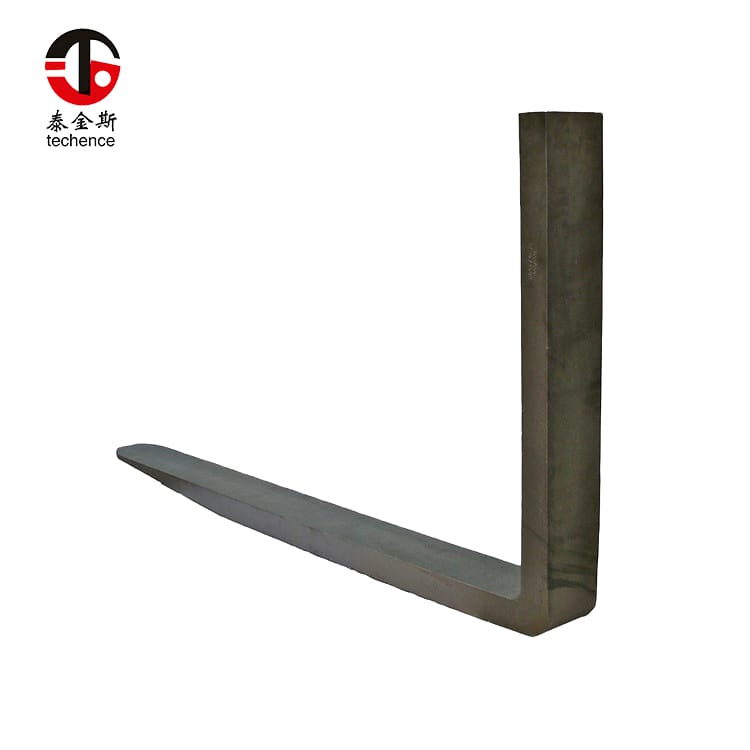
Forks are among the most heavily loaded components on a forklift. Every lifting cycle places bending stress through the blade, heel, and shank while the fork also experiences repeated impact, abrasion, and changes in load position. For this reason, the way a fork is manufactured can have a significant influence on its structural characteristics and suitability for demanding material-handling environments.
Forged forks are widely used on industrial forklifts because the steel is shaped under compressive force to form the required blade, heel, and shank geometry. Welded or fabricated fork structures, by comparison, are created by joining separate steel sections into the required form. Both manufacturing approaches can serve specific engineering purposes, but they are not interchangeable in every application.
This article compares forged and welded fork structures from the perspectives of manufacturing process, grain flow, heel strength, fatigue resistance, dimensional flexibility, load conditions, and industrial applications. It also explains what should be evaluated when selecting forks for warehouses, ports, steel facilities, mining operations, construction equipment, and other demanding environments.
What Are Forged Forks?
Forged forks are forklift fork arms produced by shaping heated or otherwise workable steel through controlled compressive force. Forging is a metal-forming process in which pressure or repeated impact is used to change the shape of the material rather than simply joining separate pieces together.
In a typical forklift fork manufacturing process, suitable steel is heated and formed so that the blade, heel, and shank develop into the required fork geometry. Additional operations can include heat treatment, straightening, machining, dimensional inspection, surface finishing, and capacity verification according to the intended application.
The heel deserves particular attention because it connects the horizontal blade with the vertical shank. During lifting, this transition area experiences substantial bending forces. A properly controlled forging process allows the manufacturer to form this critical section without relying on a major structural joint between the blade and shank.
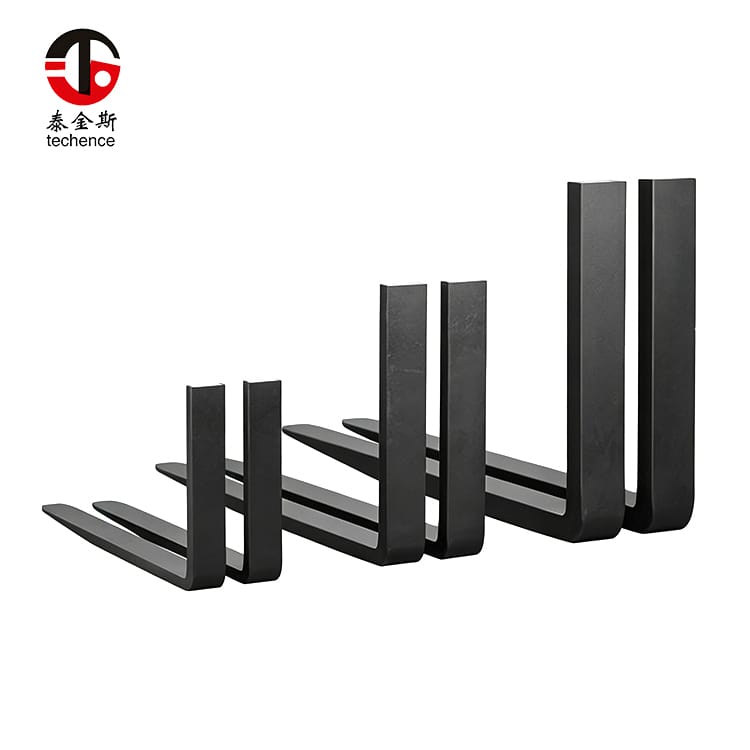
Forged forks can be produced in many configurations, including standard hook forks, pin-mounted forks, full taper forks, heavy-duty forks, port forks, mining forks, and customized fork arms.
What Are Welded Fork Structures?
A welded or fabricated fork structure is produced by joining separately prepared steel components through welding rather than forming the principal fork geometry from one forged section. Depending on the design, different plates, bars, mounting components, or structural sections may be joined to create the final load-handling component.
It is important to distinguish a fully fabricated fork structure from a forged fork that contains welded auxiliary components. A forged fork may still incorporate additional brackets, stops, reinforcements, or specialized mounting features depending on its design. The presence of a weld somewhere on an assembly does not automatically mean the primary fork arm is fabricated.
Welded structures can provide considerable design flexibility because individual sections can be prepared in different dimensions before being joined. This can be useful for specialized attachments and engineered material-handling structures that do not follow conventional forklift fork geometry.
The suitability of a welded structure depends heavily on engineering design, material compatibility, welding procedures, joint preparation, heat input, inspection, and the location of the welded areas relative to the principal load path.
Forged Forks vs Welded Forks at a Glance
The differences between the two approaches are easier to understand when the main characteristics are compared directly.
| Factor | Forged Forks | Welded/Fabricated Fork Structures |
|---|---|---|
| Primary Structure | Steel shaped into fork geometry | Separate sections joined together |
| Heel Formation | Formed as part of the main fork body | May incorporate structural joints depending on design |
| Grain Flow | Can follow the formed geometry | Varies between individual components |
| Design Flexibility | High, but tooling and forming must support geometry | Very flexible for unusual fabricated shapes |
| Heat-Affected Joint | No main blade-to-shank weld in a conventional forged fork | Welded areas create local heat-affected zones |
| Heavy-Duty Application | Common in industrial forklift forks | Depends strongly on engineering and joint design |
| Dimensional Customization | Length, width, thickness, taper, and mounting can vary | Individual sections can be fabricated to specialized geometry |
| Inspection Focus | Material, forging, heat treatment, dimensions, heel and surface condition | Material, dimensions, weld integrity, joints, and fabrication quality |
Neither manufacturing method should be evaluated from the process name alone. Material properties, geometry, capacity, heat treatment, quality control, and the complete engineering design remain essential.
Why Grain Flow Matters in Forged Forks
Metal contains an internal grain structure that changes during forming processes. When steel is forged, controlled deformation can cause the grain flow to follow the general shape of the component. This is one reason forging is widely used for parts that experience repeated mechanical loading.
For a forklift fork, the relationship between the blade, heel, and shank is especially important. Instead of producing these primary sections independently and then creating a major joint between them, forging can create a more continuous structural transition through the heel.
This does not mean that every forged component automatically has excellent mechanical properties. Poor temperature control, unsuitable material, inadequate heat treatment, improper geometry, or manufacturing defects can still affect performance. The value of forging depends on how effectively the entire manufacturing process is controlled.
For demanding fork applications, the forging stage should therefore be considered together with material selection, heat treatment, dimensional control, and inspection.
Why the Heel Is Critical to Fork Design
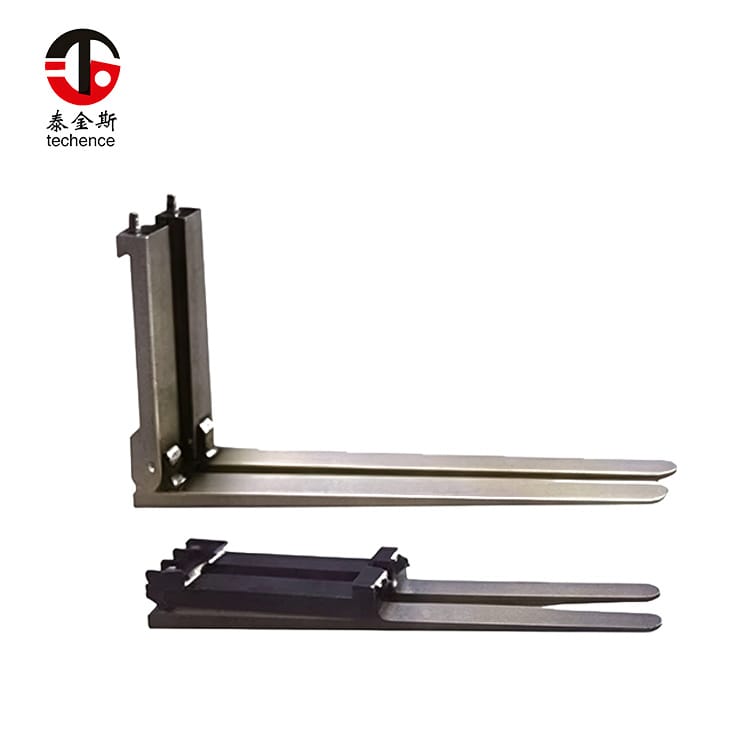
The heel is the curved transition between the horizontal blade and vertical shank. When a forklift supports a load, the blade acts in bending and transfers the resulting forces through the heel into the shank and carriage.
Because of this load path, the heel is one of the most highly stressed regions of a conventional fork. Geometry that is too abrupt can create stress concentration, while inadequate material properties can reduce resistance to repeated loading.
Forging allows this transition to be formed with a continuous radius appropriate to the fork design. The heel geometry can then be controlled during subsequent processing and inspection.
For heavy-duty applications, heel dimensions should not be modified casually after manufacturing. Grinding, heating, welding, or reshaping the heel can alter the original geometry or material condition and may affect how stresses are distributed through the fork.
Forged Forks and Fatigue Resistance
Forklift forks do not normally experience a single load and then remain unused. They repeatedly lift, lower, travel, position loads, and encounter changes in force during normal operation. This repeated loading makes fatigue behavior an important engineering consideration.
A properly manufactured forged fork can provide a continuous primary structure through the blade, heel, and shank, avoiding a major welded joint in this critical load path. This can be valuable in applications where high lifting cycles and repeated bending stresses are expected.
Fatigue performance still depends on many other factors. Surface damage, deep scratches, corrosion, excessive wear, sudden impact, overloading, incorrect load center, and improper use can all affect the service condition of a fork regardless of how it was manufactured.
Regular inspection is therefore essential even for heavy-duty forged forks. Manufacturing method can support good mechanical performance, but it does not eliminate the need for correct operation and maintenance.
The Role of Heat Treatment
Forging shapes the steel, while heat treatment helps establish the final balance between strength, hardness, toughness, and resistance to wear. These characteristics are particularly important for forks because the component must support substantial loads while also resisting impact and repeated bending.
If a fork were made excessively hard without sufficient toughness, it could become less tolerant of shock loading. If it were too soft, wear and permanent deformation could become more significant. The objective is therefore not simply to maximize one material property but to create an appropriate balance for the intended fork design.
The required heat-treatment process depends on the steel grade, fork dimensions, capacity range, and application. Large heavy-duty forks may require different process control from comparatively small warehouse forks because section thickness affects heating and cooling behavior.
Manufacturing consistency is especially important when two forks are intended to operate as a matched pair.
Where Welded Designs Can Be Useful
Welding remains an important manufacturing process throughout the material-handling industry. Specialized attachments, frames, carriages, support structures, lifting devices, and custom assemblies frequently use welded construction because it allows complex shapes to be created from multiple components.
Fabricated structures can be particularly useful when the design does not resemble a conventional fork arm or when several functional elements must be integrated into one attachment.
The key distinction is therefore the application. A conventional load-bearing fork experiences a particular stress pattern through the blade, heel, and shank, while an engineered attachment may distribute forces across a completely different structural system.
A welded design should consequently be evaluated according to its own engineering calculations, material specifications, welding procedures, load paths, inspection requirements, and intended operating conditions rather than being judged only by comparison with a conventional forged fork.
Why Forged Forks Are Common in Heavy-Duty Applications
Ports, mining sites, steel plants, stone facilities, construction operations, and heavy manufacturing environments can expose forklift forks to large loads and difficult working conditions. Forks may need to support machinery, steel products, molds, structural components, mineral materials, or other loads far larger than conventional warehouse pallets.
These applications often require increased blade width and thickness, longer fork arms, larger heel sections, and specialized mounting configurations. The fork must also tolerate repeated working cycles and occasional impact associated with demanding industrial environments.
Forged designs are commonly used in these conditions because the main blade, heel, and shank can be formed into a continuous load-bearing structure. Techence’s forklift fork range includes standard and heavy-duty configurations for different industrial applications, with variations in fork geometry and mounting style.
However, the term “heavy duty” should not be interpreted only from physical size. Capacity, load center, material specification, forklift configuration, and the actual load all need to be evaluated together.
Forged Fork Dimensions Still Matter
A forged fork can only perform correctly when its dimensions match the application and equipment. Manufacturing method does not compensate for incorrect length, width, thickness, shank height, or mounting configuration.
Fork length should provide suitable support beneath the load without unnecessarily changing load position. Width should balance load-contact area with pallet or material clearance. Thickness contributes to the structural section but should always be considered together with material, geometry, and rated capacity.
Mounting dimensions are equally important. Hook-type forks must match the carriage class and hook geometry, while pin-mounted or specialized forks require compatible connection dimensions.
For custom applications, dimensional drawings can clearly define the blade, heel, shank, mounting arrangement, and relevant load information. This is particularly useful when the equipment handles non-standard machinery or industrial materials.
Forged Forks for Standard and Custom Applications
Forged fork manufacturing is not limited to extremely large forklifts. The same general process can support a broad range of fork configurations for warehouse trucks, industrial forklifts, agricultural equipment, construction machinery, ports, mines, and specialized material-handling systems.
Standard applications may use conventional hook-type forks with familiar blade proportions and carriage interfaces. Specialized operations may require full taper blades for easier entry, pin-mounted forks for particular carriage designs, or wider and thicker sections for heavy industrial loads.
Customization becomes particularly valuable when the load does not fit conventional pallet-handling assumptions. Machinery, steel sections, stone, large molds, long materials, and fabricated structures can require different fork dimensions and support positions.
The correct design should therefore begin with the relationship between the forklift, carriage, load, and operating environment rather than simply selecting the physically largest available fork.
What to Consider When Selecting Forged Forks
The first consideration should be the forklift itself. Rated capacity, load center, carriage configuration, mast arrangement, and existing fork mounting system establish the basic equipment requirements.
The load should then be evaluated in terms of weight, dimensions, center of gravity, support points, and material characteristics. A uniform pallet behaves differently from machinery with concentrated weight on one side, while a long steel component creates different support requirements from a compact industrial mold.
Fork dimensions can then be matched to these operating conditions. Length, width, thickness, heel geometry, taper, shank dimensions, and mounting details should function as one complete configuration.
Material and manufacturing processes should also be considered together. Steel specification, forging control, heat treatment, machining, dimensional inspection, and final verification all influence the finished component.
For applications involving unusual geometry, technical drawings and clear load information provide a much stronger basis for evaluating a forged fork configuration.
Inspection of Forged Forks in Service
Even correctly designed forged forks experience wear during service. Repeated pallet entry can wear the underside of the blade, while contact with floors and industrial materials can create scratches or surface damage. Hooks and positioning components can also wear over time.
Inspection should focus on the blade, heel, shank, mounting area, locking components, tip alignment, surface condition, and remaining dimensions. Cracks, severe bending, excessive thickness loss, damaged hooks, or significant differences in tip height indicate that the fork requires professional evaluation.
Both forks should be considered together because they operate as a pair. Differences in geometry, wear, or condition can lead to uneven support beneath the load.
The severity and frequency of inspection should reflect the application. A fork operating continuously in a mine or port may experience very different conditions from one used intermittently in a controlled warehouse environment.
Common Misunderstandings About Forged Forks
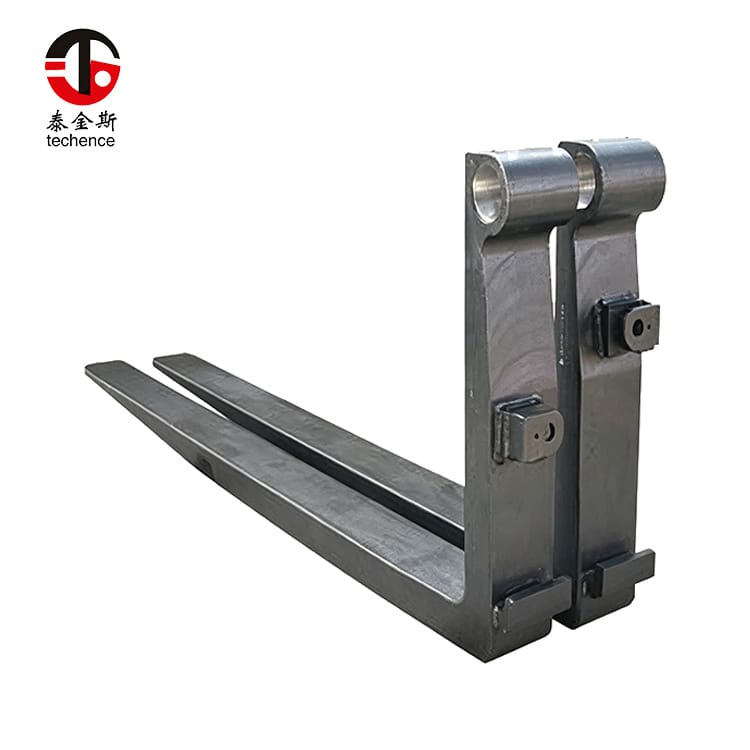
One common misunderstanding is that every forged fork automatically has the same performance. In reality, forged forks can differ substantially in material, heat treatment, dimensions, geometry, manufacturing consistency, and intended capacity.
Another misconception is that simply increasing blade thickness creates a stronger solution. Thickness is important, but fork performance also depends on width, length, heel geometry, steel properties, load center, and the overall forklift configuration.
It is also incorrect to assume that any welded structure is inherently unsuitable. Welding is essential for many engineered attachments and material-handling systems. The more useful question is whether the structural design and manufacturing method are appropriate for the load path and operating conditions.
Finally, forged forks still require correct use and regular inspection. Forging can provide valuable structural characteristics, but improper loading, severe impact, excessive wear, or incompatible equipment can still affect performance.
Conclusion
Forged forks and welded fork structures are created through different manufacturing approaches and are suited to different engineering requirements. A forged fork forms the principal blade, heel, and shank through controlled metal deformation, creating a continuous primary load-bearing structure. Welded fabrication joins separate components and can provide greater flexibility for specialized attachments and complex structural assemblies.
For conventional and heavy-duty forklift fork applications, forging is widely used because the heel and other critical regions can be formed without a major blade-to-shank structural joint. The final performance, however, still depends on material selection, heat treatment, fork dimensions, rated capacity, load center, manufacturing quality, and correct application.
When evaluating forged forks, the most important question is not simply whether the component is forged. The fork must also match the forklift, carriage, load geometry, capacity requirements, and operating environment. A complete technical evaluation provides a much more reliable basis for selecting a suitable fork configuration.
FAQ
What are forged forks?
Forged forks are forklift fork arms formed by shaping steel under controlled compressive force. The process creates the blade, heel, and shank as part of the main load-bearing fork structure.
Are forged forks suitable for heavy-duty forklifts?
Forged forks are commonly used in heavy-duty applications, but suitability still depends on dimensions, material, capacity, load center, mounting configuration, and the actual operating conditions.
What is the main difference between forged and welded forks?
A forged fork forms its primary geometry through metal deformation, while a welded or fabricated structure joins separate components. The two approaches create different structural configurations and should be evaluated according to the intended application.
Does a thicker forged fork always have a higher capacity?
No. Thickness is only one factor. Width, length, heel geometry, steel properties, heat treatment, load center, and overall design also influence the fork’s rated capability.
Can forged forks be customized for special applications?
Yes. Forged forks can be produced with different blade lengths, widths, thicknesses, tapers, shank dimensions, and mounting configurations to suit specialized forklifts and industrial loads.
Need Help Choosing the Right Forged Forks?
If you’re unsure which forged fork dimensions, mounting configuration, material characteristics, or load capacity are suitable for your forklift and working conditions, our team is here to help. Standard warehouse applications and heavy-duty environments such as ports, mining, steel handling, and construction can require very different fork configurations.
Contact Techence today for technical guidance based on your forklift, carriage, load dimensions, load center, and operating environment. A properly matched forged fork configuration can help provide reliable load support and consistent performance in demanding material-handling applications.