Table of Contents
Introduction
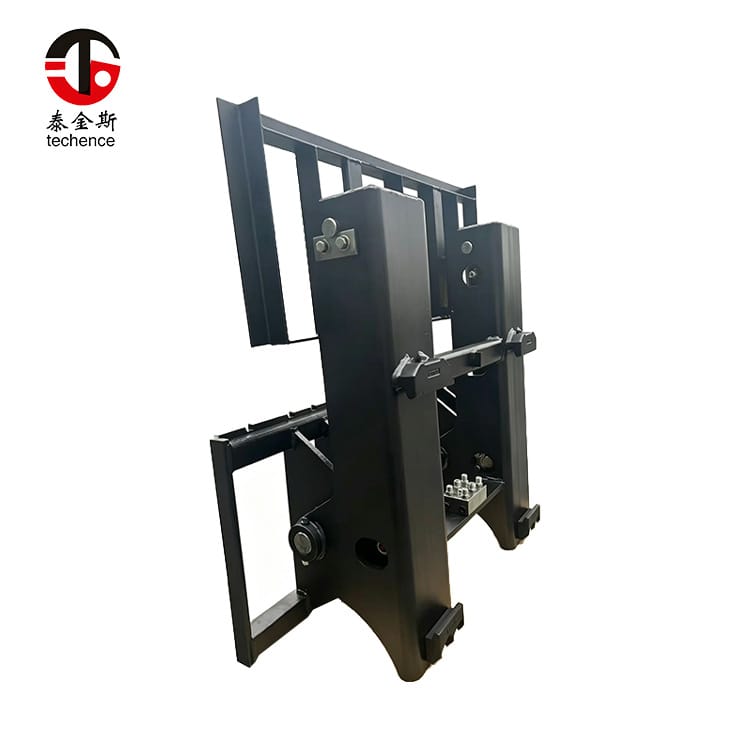
A forklift clamp attachment allows a forklift to handle loads that cannot always be supported effectively by conventional fork arms alone. Instead of relying only on support from underneath a pallet, clamp attachments apply controlled pressure to the sides of a load so materials such as cartons, bales, rolls, containers, recycling materials, and certain industrial products can be lifted and positioned more efficiently.
The correct clamp configuration depends on much more than the external size of the load. Clamp arm shape, opening range, hydraulic pressure, contact surface, carriage compatibility, attachment weight, load center, visibility, and the physical properties of the material all influence how the system performs. A clamp designed for rigid industrial goods may be unsuitable for cartons or other materials that can be damaged by excessive side pressure.
For this reason, selecting a forklift clamp attachment should begin with the actual load and operating environment rather than attachment appearance alone. This guide explains the main clamp types, how clamping force works, how attachments influence forklift operating characteristics, what dimensions need to be evaluated, and how different configurations suit different material-handling applications.
What Is a Forklift Clamp Attachment?
A forklift clamp attachment is a load-handling device mounted at the front of a forklift carriage. Depending on the design, two hydraulic arms move inward and outward to grip a load from opposite sides. Some systems combine clamping with additional functions such as side shifting, rotation, tilting, or specialized arm movement.
Clamp attachments extend the range of materials that a forklift can handle beyond conventional palletized goods. They are commonly used in warehouses, manufacturing plants, paper processing facilities, recycling operations, textile environments, logistics centers, and other industrial settings.
This type of equipment is part of the broader field of material handling equipment, where lifting systems are adapted according to the physical shape, weight distribution, surface condition, and movement requirements of the material.
Unlike ordinary forks, a clamp attachment makes direct contact with the sides of the load. This means the applied pressure becomes an important operating factor. The attachment must hold the load securely without creating unnecessary force that could deform, crush, mark, or otherwise damage the material.
How a Forklift Clamp Attachment Works
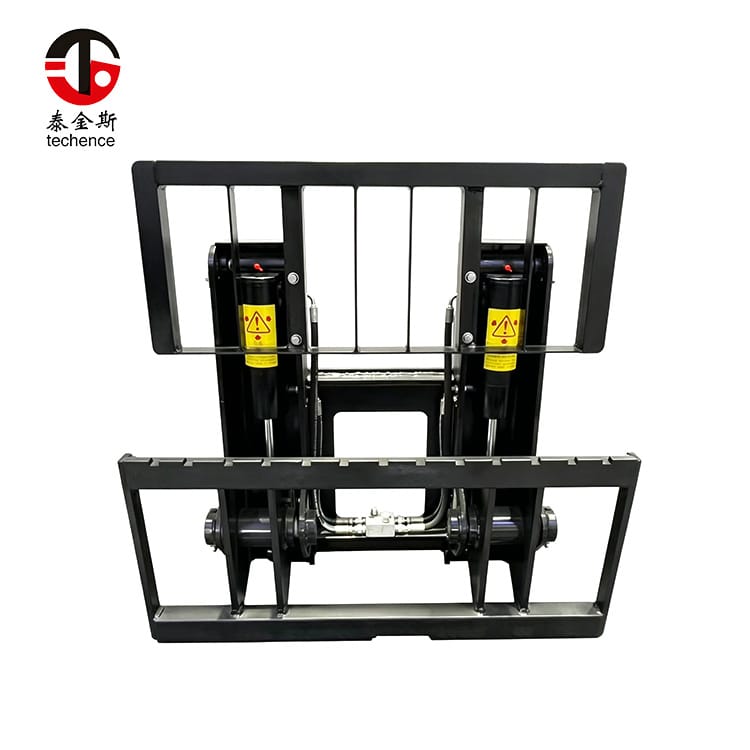
Most forklift clamps use the forklift’s hydraulic system to open and close the clamp arms. Hydraulic cylinders move the arms across the attachment frame, allowing the operator to adjust the opening according to load width.
When the arms contact the load, hydraulic pressure produces the clamping force needed to hold it. The appropriate force depends on several variables, including load weight, surface friction, rigidity, dimensions, center of gravity, and the size of the contact area.
A rigid industrial block behaves very differently from a stack of cartons even if both loads have similar external dimensions. The rigid load may tolerate higher localized pressure, while packaged goods may require broader contact pads and more careful pressure control.
Clamping force should therefore be controlled rather than maximized. Too little force can allow the load to move, while excessive pressure can damage compressible materials. Correct adjustment becomes especially important when the same forklift handles several different product types.
The attachment frame transfers the load through the carriage and mast into the forklift. Mounting class, hydraulic connections, hose routing, attachment depth, and operating clearance therefore need to be considered as part of the complete system.
Main Types of Forklift Clamp Attachments
Forklift clamps are available in different forms because loads vary significantly in shape and handling characteristics. Although several designs use similar hydraulic principles, the contact surfaces and arm geometry are adapted to specific applications.
Carton clamps generally use broad, flat contact pads that distribute pressure across a relatively large surface. They are suitable for packaged goods, appliances, and other materials where pallets may not be required. Because cartons can deform, controlled pressure and appropriate pad surfaces are especially important.
Bale clamps typically use larger gripping arms designed for compressed materials such as textiles, paper waste, recycling materials, or similar bundled goods. These loads can have irregular surfaces, so arm geometry and grip characteristics need to accommodate variation.
Paper roll clamps use curved arms that better match cylindrical rolls. Some designs also provide rotation so the load can move between horizontal and vertical orientations.
Drum and container clamps use gripping structures designed around specific container shapes. Depending on the application, they may engage with the sides, rims, or other reinforced areas of the container.
Custom clamp systems can also be developed for industrial blocks, fabricated products, recycling materials, or irregular loads where standard clamp geometry is not suitable.
Common Clamp Attachment Types Compared
| Clamp Type | Contact Design | Typical Application |
|---|---|---|
| Carton Clamp | Broad flat pads | Packaged goods and appliances |
| Bale Clamp | Wide gripping arms | Textiles, paper and recycling materials |
| Paper Roll Clamp | Curved arms | Cylindrical paper or material rolls |
| Drum Clamp | Shaped gripping mechanism | Drums and similar containers |
| Block Clamp | Reinforced contact surfaces | Rigid industrial blocks |
| Hinged Clamp | Clamp arms with additional movement | Bulk or irregular materials |
| Custom Clamp | Application-specific design | Non-standard industrial loads |
The attachment category provides only a starting point. Opening range, arm dimensions, pad material, hydraulic requirements, load center, carriage class, and forklift configuration still need to be evaluated individually.
Why the Load Should Determine the Clamp Design
The load itself should be the starting point for defining a clamp configuration. Two loads with the same weight may require very different attachments because their surfaces, shapes, rigidity, and centers of gravity can differ substantially.
A rigid steel or industrial component may tolerate concentrated pressure, while packaged products often need a larger contact area to reduce the risk of deformation. Large bales may need taller arms to distribute force over a broader section, while rolls require curved contact surfaces that correspond more closely with their cylindrical shape.
Surface condition also matters. Smooth packaging may create less friction than rough industrial materials, while wet, dusty, oily, or wrapped surfaces can change how effectively the pads grip the load.
Weight distribution should also be considered. A load that appears symmetrical externally may still have an uneven center of gravity. Machinery, mixed-content containers, and fabricated assemblies can contain heavier components on one side, which affects how the clamp should engage and position the material.
A complete technical evaluation should therefore consider load weight, width, height, depth, rigidity, contact surface, center of gravity, and handling orientation together.
Understanding Clamp Opening Range
Opening range describes how far the clamp arms can move between their minimum and maximum positions. It determines the range of load widths that the attachment can accommodate.
If the minimum opening is too large, the arms may not close sufficiently around narrow materials. If the maximum opening is too small, wider loads cannot be gripped properly. Applications handling several load sizes therefore need a working range that reflects the actual variation encountered during normal operation.
Arm thickness and contact-pad geometry also influence usable opening. Two clamps with similar nominal opening ranges can interact differently with a load if their arm structures and pad thicknesses are different.
Hydraulic cylinder stroke plays an important role in controlling movement across this range. The system should allow smooth arm travel without forcing the attachment to operate continuously near its mechanical limits.
For operations where product dimensions vary frequently, it is more useful to evaluate the practical minimum and maximum load widths than to focus only on the largest load.
Why Clamping Force Matters
Clamping force determines how firmly the attachment holds the load. The objective is to create enough friction and restraint for stable handling while avoiding unnecessary pressure.
The required force depends on load weight, contact area, surface friction, movement, acceleration, and material rigidity. A broad contact area can distribute pressure more evenly, which is especially valuable for cartons, appliances, paper products, and other materials that may deform.
Using excessive hydraulic pressure does not automatically improve handling. Sensitive materials can experience compression damage, while overly aggressive force may also change load shape and reduce stability.
Rigid products generally tolerate higher local pressure, but the attachment should still operate within the intended hydraulic and structural range.
The most effective clamp configuration combines suitable pad design, sufficient contact area, appropriate friction, and controlled hydraulic force rather than relying on pressure alone.
Clamp Pads and Contact Surfaces
Contact pads play an important role in both grip and product protection. Pad size, surface material, texture, shape, and condition influence the amount of friction generated between the clamp and the load.
Broad flat pads help distribute force across packaged goods. Curved surfaces are more appropriate for cylindrical materials, while specialized contact textures may be useful where additional friction is needed.
Pad wear can change attachment performance over time. A worn or polished surface may provide less grip, while contamination from oil, dust, packaging residue, or other materials can reduce friction even when the pad remains structurally intact.
The pad design should therefore correspond with the physical characteristics of the material. A surface intended for rigid industrial loads may not be suitable for fragile packaging, just as a soft contact pad may not perform well with abrasive industrial products.
Regular inspection of the pad surface helps maintain consistent gripping behavior.
How the Attachment Affects Forklift Operating Characteristics
Installing a clamp changes the physical configuration of the forklift. The attachment has its own mass and depth, and it usually positions the load farther forward than conventional fork arms alone.
As the load’s center of gravity moves farther from the mast, the operating characteristics of the forklift can change. This means the original truck rating cannot be considered independently from the attachment configuration.
Attachment weight, attachment center of gravity, load dimensions, load center, mast arrangement, and lifting height should be evaluated together. A compact attachment can behave differently from a deeper structure even if both are designed for similar load types.
This becomes especially important with large, deep, or irregular materials because the effective center of gravity may already be positioned farther forward.
The forklift, attachment, and load should therefore be treated as one complete material-handling system.
Carriage and Hydraulic Compatibility
A clamp attachment must connect securely to the forklift carriage. Many forklifts use standardized carriage classes, while specialized equipment may use different mounting arrangements.
Class II, Class III, and Class IV interfaces are commonly found across different forklift sizes. The clamp mounting structure needs to correspond with the carriage geometry so that the attachment remains correctly positioned during operation.
Hydraulic compatibility is equally important. Basic clamping requires hydraulic control for opening and closing the arms. Additional functions such as side shift, rotation, or tilt may require further hydraulic circuits.
Hose routing should permit full attachment movement without excessive bending, rubbing, or interference with the mast. Poor hose placement can reduce service life and may also interfere with operator visibility.
Techence provides a range of forklift attachments for different industrial material-handling applications, including hydraulic and specialized configurations.
Side Shift and Clamp Functions
Combining clamping with side shift allows the operator to move the attachment laterally while maintaining control of the load. This can improve alignment with storage positions, production equipment, transport vehicles, or stacking locations.
Side shift is particularly useful when precise positioning is required. Instead of repositioning the entire forklift repeatedly, the attachment can make smaller lateral adjustments.
However, every additional function changes attachment geometry, hydraulic requirements, and structural complexity. The available side-shift range should therefore suit the actual application rather than simply being maximized.
Moving a clamped load laterally also changes its position relative to the forklift centerline. Large, tall, or uneven loads require controlled movement to maintain stable handling.
Clamp and side-shift functions should therefore be evaluated as part of one integrated system.
Forklift Clamps for Recycling and Bulk Materials
Recycling facilities often handle products that are unsuitable for conventional pallet handling. Compressed paper, textiles, packaging waste, and other bulky materials can benefit from clamp systems that hold the load directly.
These materials may vary in density, shape, and surface condition, so the arms need to accommodate dimensional changes while maintaining stable contact. Taller bales can also require a larger contact area so that force is distributed across a suitable portion of the load.
Some recycling applications use clamps together with tilting or hinged functions to restrain materials during movement or assist with discharge.
The operating environment also influences component requirements. Dust, debris, frequent hydraulic cycles, impact, and outdoor exposure can affect cylinders, pivot points, guide surfaces, hoses, and contact pads.
For these conditions, attachment structure and maintenance requirements should reflect both the material and the working environment.
Forklift Clamps for Cartons and Packaged Goods
Carton handling presents a different challenge because the attachment must create enough friction to support the load without damaging the packaging.
Broad pads help distribute pressure across a larger area. Suitable pad surfaces can also improve grip without requiring unnecessary hydraulic force.
Load consistency is another important factor. A uniform stack of identical cartons behaves differently from mixed packaging with varying strength, density, and internal contents. Even when external dimensions are similar, the amount of pressure each load can tolerate may be different.
Hydraulic settings may therefore need to reflect product characteristics. Using the same clamping force for every material can lead to deformation or inconsistent grip.
Carton clamp performance depends on the combined relationship between contact area, pad design, load rigidity, friction, and pressure control.
Visibility and Attachment Geometry
Clamp attachments add frames, hydraulic cylinders, arms, pads, and hoses in front of the operator. These components can influence visibility toward the load and surrounding working area.
A well-designed attachment should balance structural requirements with practical visibility. Excessive obstruction can make it more difficult to align the clamp arms accurately with narrow or irregular loads.
Hydraulic hose placement should also avoid unnecessary visual interference. The routing needs to support attachment movement while keeping the operator’s forward view as clear as practical.
Large loads may already restrict visibility even before the attachment is considered. Operational procedures should therefore reflect the actual view available during transport and positioning.
Visibility should be treated as part of attachment performance rather than as a secondary consideration.
Inspection and Maintenance
Clamp attachments contain structural, hydraulic, and moving components that should be checked regularly. Wear can develop in arm guides, pivot points, contact pads, carriage mounts, cylinders, hoses, and hydraulic connections.
Uneven arm movement may indicate mechanical resistance, guide wear, hydraulic imbalance, or cylinder-related problems. The arms should move smoothly and consistently according to the attachment design.
Hydraulic leakage also requires attention because reduced pressure can affect gripping performance. Hoses should be checked for abrasion, cracking, sharp bends, or contact with moving components.
Contact pads should remain clean and structurally sound. Worn or contaminated surfaces can reduce friction and change the force required to hold the same load.
Inspection intervals should reflect operating intensity. Attachments used continuously in recycling, manufacturing, logistics, or heavy industrial environments may require closer monitoring than equipment used only occasionally.
Common Selection Mistakes
One common mistake is focusing only on load weight. Width, depth, surface friction, rigidity, center of gravity, and contact area can be equally important when determining clamp behavior.
Another mistake is selecting an opening range that only accommodates one load size. Applications with significant dimensional variation need both minimum and maximum working widths to be considered.
Excessive clamping pressure is another frequent issue. Greater hydraulic force does not automatically create better control and may damage sensitive materials. Pad design, surface friction, and contact area should help provide grip without unnecessary pressure.
Carriage and hydraulic compatibility can also be overlooked. An attachment may suit the load physically while remaining unsuitable for the forklift’s mounting or hydraulic configuration.
Attachment depth and mass should also be considered because they influence the relationship between the load and the forklift.
How to Define the Right Clamp Configuration
A clear technical assessment should begin with detailed load information. Useful factors include maximum weight, minimum and maximum width, height, depth, surface characteristics, rigidity, center of gravity, and normal handling orientation.
The required functions should then be defined. Some applications need only opening and closing movement, while others may benefit from side shift, rotation, tilt, or specialized arm geometry.
Forklift information should include the model, rated capacity, carriage class, mast configuration, hydraulic circuits, and available operating space.
Environmental conditions such as dust, moisture, temperature, impact exposure, and operating-cycle frequency can also influence attachment structure and maintenance planning.
For specialized applications, drawings and photographs can provide useful technical context by showing load geometry, contact areas, carriage relationships, and movement requirements.
Conclusion
A forklift clamp attachment can expand the range of materials a forklift handles by providing direct side support for cartons, bales, rolls, containers, recycling materials, and specialized industrial loads.
Effective clamp configuration depends on the relationship between load weight, dimensions, surface characteristics, center of gravity, opening range, clamping force, pad design, carriage compatibility, hydraulic requirements, and attachment geometry.
The most suitable solution begins with a clear understanding of the material rather than simply selecting an attachment according to its general category. When the load, forklift, carriage, and operating environment are evaluated together, the clamp system can provide more stable load control and more consistent material-handling performance.
FAQ
What is a forklift clamp attachment used for?
A forklift clamp attachment grips loads from the sides and is commonly used for cartons, bales, rolls, containers, recycling materials, and other products that may not rely on conventional pallet support.
How does a forklift clamp attachment hold a load?
Hydraulic cylinders move the clamp arms toward the material. Controlled pressure, contact-pad design, and friction work together to maintain a secure grip.
Does a forklift clamp attachment affect forklift operation?
Yes. Attachment mass and depth can change load position and the overall center-of-gravity relationship, so the forklift, attachment, and load should be evaluated as one complete system.
What factors are important when selecting a forklift clamp attachment?
Important factors include load weight, width, height, depth, surface condition, center of gravity, opening range, carriage configuration, hydraulic requirements, and operating environment.
Can a forklift clamp attachment include additional functions?
Yes. Depending on the application, clamp systems can include side shifting, rotation, tilting, or specialized arm movement to support different handling requirements.
Need Help Choosing the Right Forklift Clamp Attachment?
If you’re unsure which clamp type, opening range, arm design, hydraulic configuration, or carriage interface is suitable for your forklift and materials, our team is here to help. Cartons, bales, recycling materials, rolls, and heavy industrial loads can require very different attachment configurations, so matching the clamp to the actual working conditions is essential.
Contact Techence for technical support based on your forklift, carriage, load dimensions, hydraulic requirements, and application environment. A properly matched clamp attachment can help improve load control, handling stability, and material-handling efficiency.