Table of Contents
Introduction
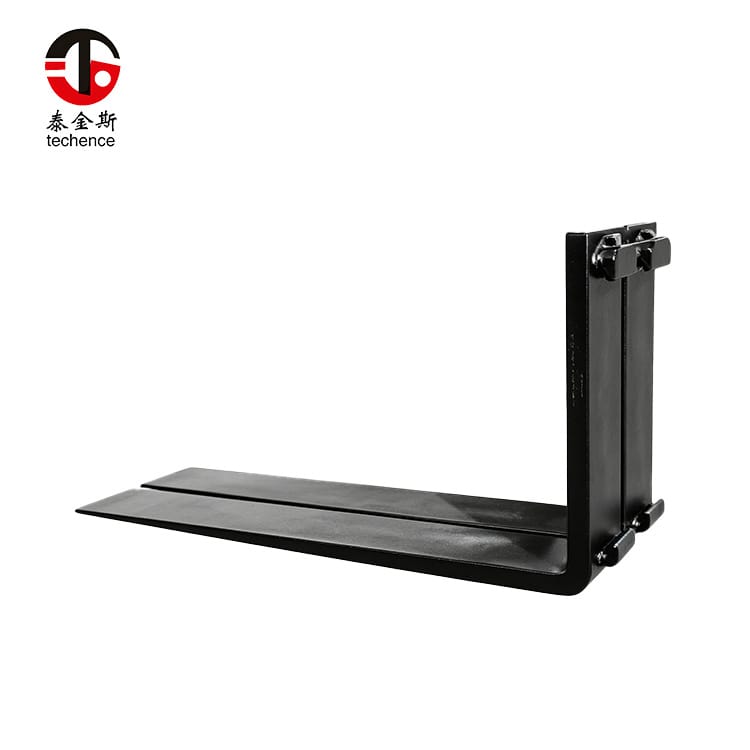
Forklift forks operate under repeated load, impact, friction, and bending stress every day. Over time, even high-quality forks can lose material, develop deformation, suffer mounting wear, or become unsuitable for the loads they are expected to handle. When this happens, choosing the right replacement forklift forks becomes an important maintenance and purchasing decision rather than a simple parts order.
A replacement fork must match more than the length of the old component. Fork width, thickness, shank height, mounting configuration, carriage class, rated capacity, load center, and actual operating conditions all need to be considered. Installing forks that look similar but do not properly match the forklift can create problems with load support, carriage fit, and overall handling performance.
This guide explains when forklift forks should be replaced, how to inspect existing forks, what dimensions buyers need to confirm, and how to choose suitable replacement forks for warehouse, industrial, port, construction, mining, and other material-handling applications.
Why Forklift Forks Need Replacement
The forks mounted on a forklift carry loads directly and are exposed to more physical contact than many other components on the truck. The fork blades repeatedly enter pallets, move across warehouse floors, contact steel structures, and support loads of different shapes and weights. This creates gradual wear even when the forklift is operated correctly.
Normal wear usually develops slowly. Blade thickness can decrease, heels can become worn, mounting hooks may lose material, and fork tips may no longer sit at the same height. More serious damage can result from overload, impact, poor load positioning, collisions, or operating on uneven surfaces. Cracks, severe bending, or damaged mounting sections require much more immediate attention.
Replacement should therefore be based on the actual condition of the forks rather than on age alone. A fork used in a clean warehouse may experience very different wear from one operating in a port, mine, steel facility, stone yard, or heavy manufacturing plant. Inspection frequency and replacement planning should reflect these operating differences.
Signs That Replacement Forklift Forks May Be Needed
Visible condition is one of the first indicators that existing forks should be evaluated. Cracks around the heel, shank, blade, or mounting area are particularly important because these sections are subject to repeated bending forces. A crack should never be treated as a cosmetic defect.
Excessive blade wear is another common reason for replacement. The underside of the fork can gradually lose thickness through repeated contact with floors and loads. Because fork strength depends partly on its cross section, significant material loss can reduce the fork’s ability to perform as originally designed.
Bent blades or shanks also require attention. A fork that no longer maintains its original geometry may support a load unevenly or sit incorrectly on the carriage. Similarly, if the tips of a fork pair are noticeably different in height, one or both forks may have experienced deformation.
Mounting components should be inspected at the same time. Worn hooks, pins, locking devices, or positioning components can affect how securely the fork remains attached to the carriage. Even if the blade itself appears usable, excessive mounting wear can still justify replacement.
Fork markings also matter because they provide important identification information. When capacity or manufacturing identification can no longer be verified, buyers should avoid making assumptions about the fork based only on its dimensions or appearance.
Should Forklift Forks Be Replaced as a Pair?
In many situations, it is better to evaluate both forks together rather than replacing only the visibly damaged side. A forklift normally handles loads through a matched pair of forks, so differences in thickness, wear, geometry, capacity, or tip height can create uneven load support.
If one fork has been damaged by impact or overload, the second fork may have experienced the same event even if the damage is less obvious. This is particularly relevant when the forks have operated together for many years under the same conditions.
A new fork should not automatically be paired with an old fork simply because their nominal dimensions are similar. The remaining fork should be carefully checked for wear, deformation, mounting condition, and identification before deciding whether it can continue in service.
For industrial purchasing teams, replacing a matched pair can also simplify future inspections and maintenance records because both forks begin service under the same conditions and with the same specification.
What to Measure Before Ordering Replacement Forklift Forks
Accurate measurements are essential when ordering replacement forklift forks. The most familiar dimensions are blade thickness, blade width, and blade length, but these measurements alone do not provide a complete replacement specification.
Blade length is measured along the horizontal portion of the fork and determines how far the fork extends beneath the load. Width describes the horizontal dimension across the blade, while thickness describes the vertical cross section. All three measurements influence compatibility with pallets, loads, and operating requirements.
The shank must also be measured because it determines how the fork interfaces with the carriage. Hook-mounted forks require accurate upper and lower hook positions, while pin-mounted, shaft-mounted, or other specialized forks require different interface measurements.
A useful replacement specification normally includes the following information:
| Item | Why It Matters |
|---|---|
| Fork Length | Determines load support and reach |
| Fork Width | Affects load contact and pallet entry |
| Fork Thickness | Important to fork cross section |
| Shank Height | Helps confirm carriage compatibility |
| Mounting Type | Identifies how the fork attaches |
| Hook or Pin Dimensions | Determines correct mounting fit |
| Fork Class | Helps match hook-type carriages |
| Load Center | Important for capacity evaluation |
| Rated Capacity | Confirms load requirement |
| Forklift Model | Supports compatibility checking |
Measurements taken from old forks should be treated carefully. If the blades or hooks are severely worn, the current dimensions may no longer represent the original specification. Where possible, buyers should compare physical measurements with equipment records, original drawings, previous purchase documents, or readable fork markings.
How to Match Replacement Forks to the Carriage
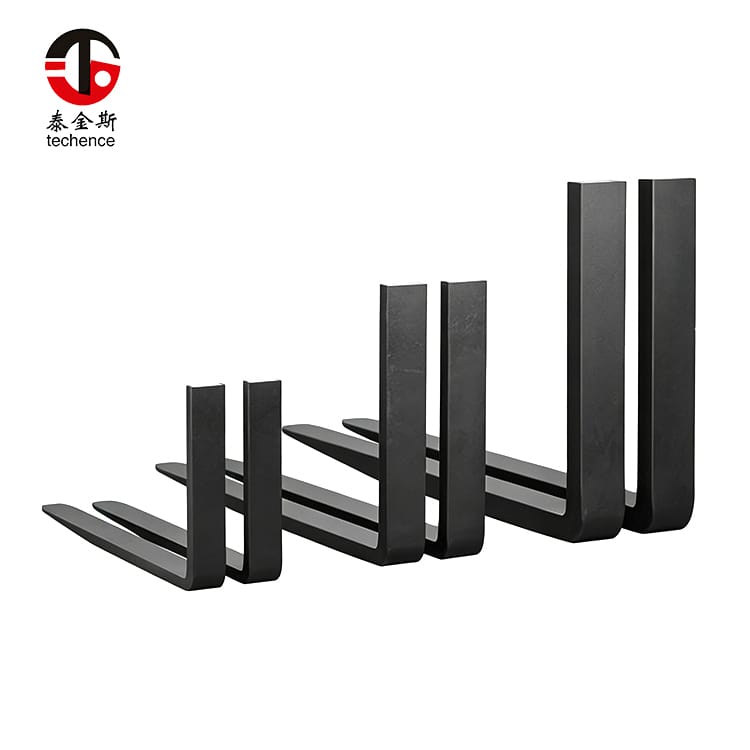
One of the most common replacement mistakes is finding forks with the correct blade size but the wrong mounting arrangement. Forks cannot be selected only by length, width, and thickness because the carriage interface determines whether the component can actually be installed correctly.
Hook-type forks need the correct hook spacing and carriage class. Pin-type forks require the appropriate pin diameter and mounting position. Specialized industrial trucks may use shaft, roller, bolt-on, or customized systems that require drawings or detailed measurements.
The forklift manufacturer and model should therefore be recorded before ordering. Photos of the front carriage, existing fork mounting area, and fork identification markings can also help clarify the required configuration.
For unusual or older equipment, a dimensional drawing is often more reliable than relying on a model number alone. Equipment may have been modified during its service life, so the currently installed carriage may not always match the original factory configuration.
Replacement Fork Length, Width and Thickness
The replacement fork should not automatically be made longer or heavier simply because a larger component appears stronger. Each dimension affects how the fork interacts with the load and forklift.
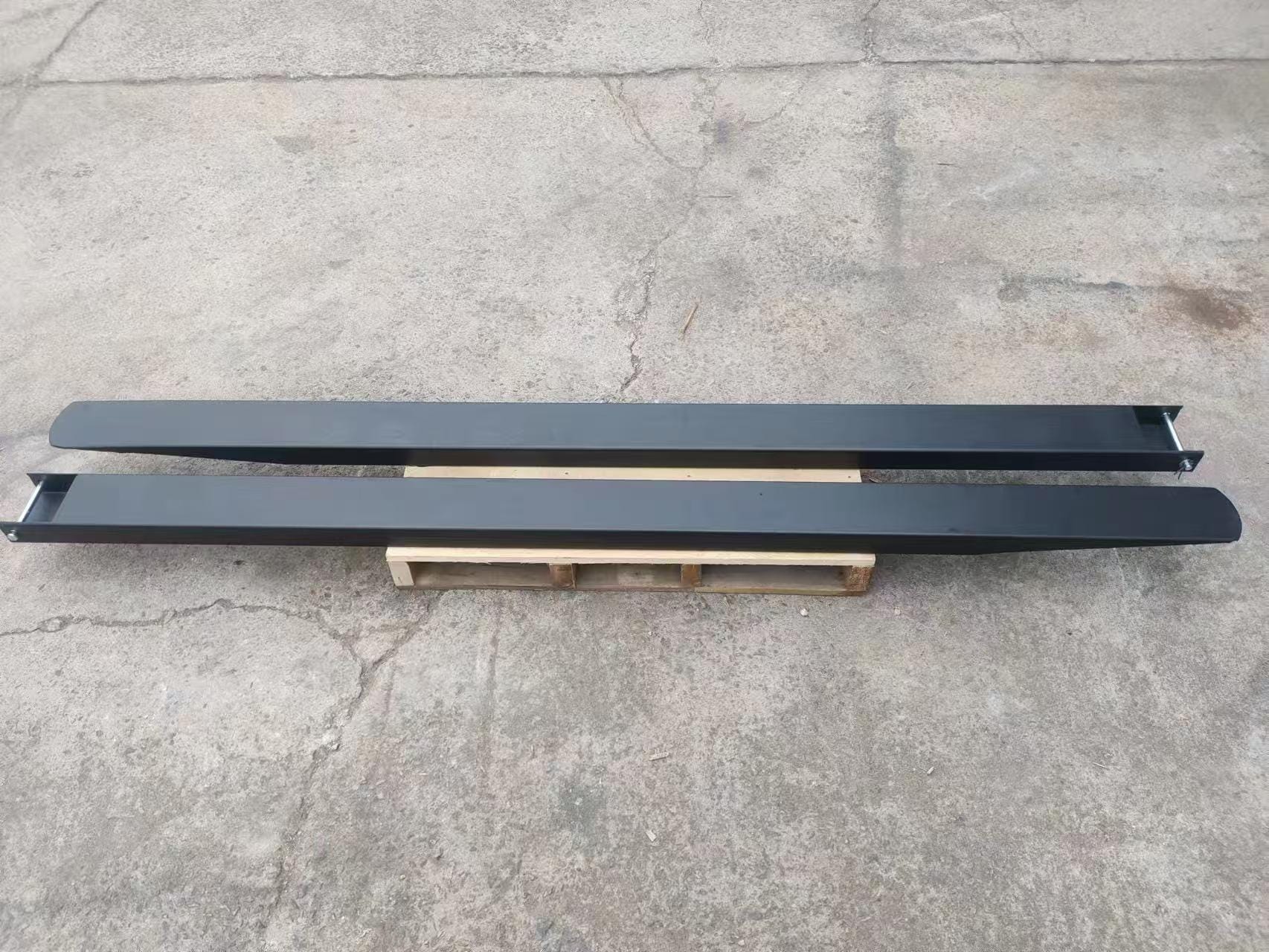
Fork length needs to provide adequate support beneath the load without creating unnecessary protrusion or changing load positioning. Very long forks may be useful for certain materials, but they can also reduce maneuverability and influence the effective load center if the load is positioned farther forward.
Fork width should provide suitable contact beneath the load while remaining compatible with pallet openings or lifting points. Standard warehouse operations may require relatively narrow forks, while heavy machinery, steel, stone, or construction materials may benefit from wider support surfaces.
Thickness contributes to the structural cross section of the fork, but capacity cannot be determined from thickness alone. Material, width, length, geometry, heat treatment, manufacturing method, and rated load center must also be considered.
For this reason, the safest replacement approach is to match the complete engineering requirement rather than simply increasing one dimension.
Choosing Replacement Forks for Different Applications
The operating application should be considered before finalizing replacement forklift forks. Warehouses handling standardized pallets normally place a strong emphasis on pallet entry, maneuverability, and compatibility with conventional carriages. These applications may often use standard hook-type forks.
Ports, mining operations, steel plants, construction sites, and heavy manufacturing facilities create different requirements. Loads may be significantly heavier, larger, longer, or more irregular, which can require larger cross sections, different mounting systems, or customized fork geometry.
Low-clearance loads may benefit from tapered fork designs, while unusual machinery or fabricated products may require special blade lengths or widths. Specialized equipment may also use pin-mounted or custom mounting systems instead of conventional hooks.
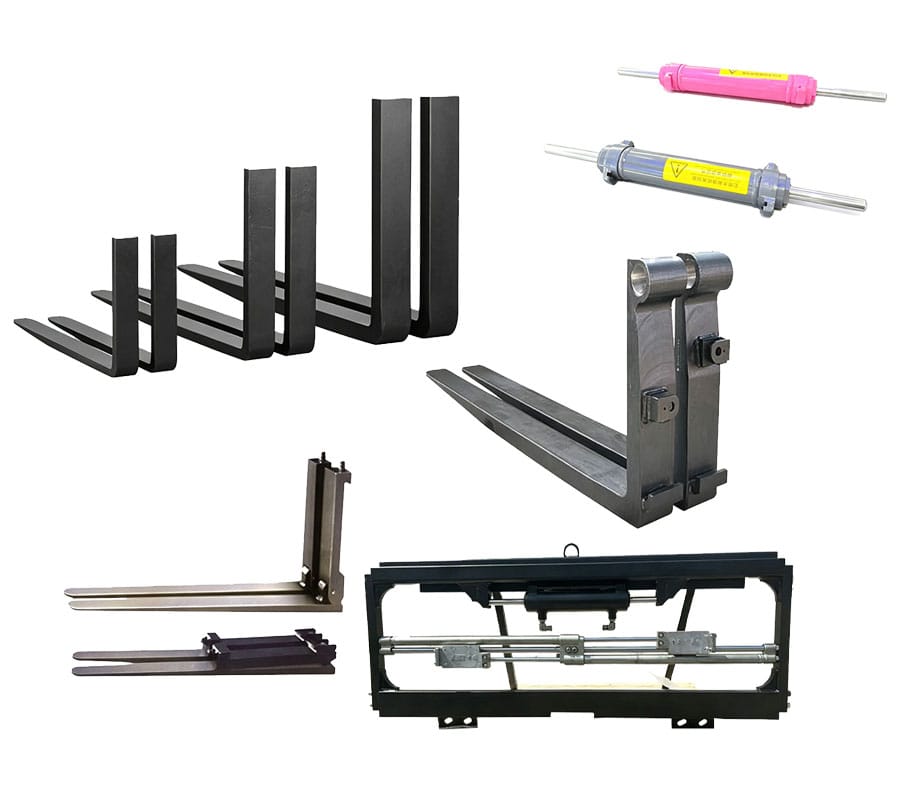
Buyers can review the available forklift fork configurations from Techence when comparing standard and non-standard replacement options. The final choice should still be based on the actual truck, load, carriage, and operating conditions rather than on product appearance alone.
When Custom Replacement Forklift Forks Make Sense
Standard replacement forks are often suitable when the original equipment uses a common carriage configuration and conventional load dimensions. However, customized forks may be a better choice when the equipment, load, or working environment falls outside normal specifications.
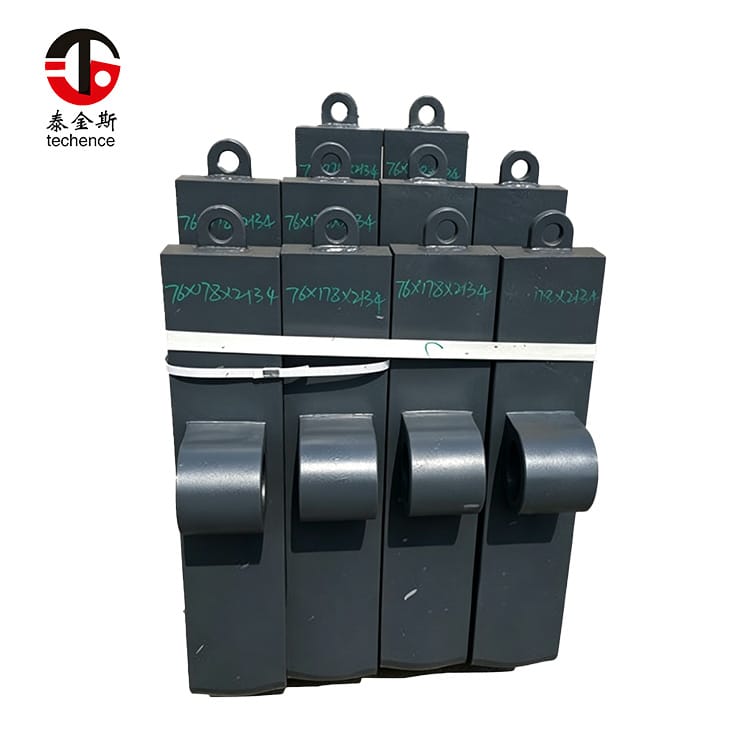
Custom replacement forks can be useful for older machinery where the original component is no longer readily available, equipment with non-standard mounting dimensions, extremely long or heavy loads, specialized port equipment, mining machinery, steel-handling applications, or OEM material-handling systems.
Customization may involve blade length, width, thickness, shank height, taper, hook geometry, pin diameter, mounting distance, or other dimensional details. In these cases, providing a drawing is much more reliable than describing the fork only with basic dimensions.
The operating load should also be clearly defined. Buyers should provide maximum load weight, load dimensions, center-of-gravity information where relevant, and details about the working environment. This gives the manufacturer a more complete basis for evaluating the fork specification.
Common Mistakes When Buying Replacement Forklift Forks
Ordering only by forklift model is a frequent mistake. Model information is useful, but forklifts can be equipped with different mast or carriage configurations, and equipment may have been modified after leaving the factory. Physical measurements should therefore be confirmed whenever possible.
Another common mistake is ordering by fork length alone. Two forks with identical blade lengths can have completely different thicknesses, widths, capacities, hooks, and carriage classes. Length should always be considered as part of the complete specification.
Copying measurements from heavily worn forks can also create problems. Years of abrasion may reduce blade thickness or hook dimensions, meaning the worn component no longer represents the original manufacturing size.
Buyers should also avoid assuming that a larger replacement fork automatically increases forklift capacity. The overall truck capacity is determined by the forklift configuration, load center, mast, carriage, attachments, and other factors. Installing larger forks does not increase the rated capacity of the truck.
Finally, replacement forks should not be modified casually after purchase to force them to fit an incompatible carriage. Grinding, heating, bending, welding, or altering load-bearing areas can affect the original fork design and should not be used as a substitute for ordering the correct component.
Information to Provide When Requesting a Quote
A detailed inquiry can reduce communication time and make replacement selection more accurate. Buyers should begin with the forklift brand, model, rated capacity, and load center, then provide the existing fork dimensions and mounting configuration.
Clear photographs are useful when identifying hook positions, fork markings, locking systems, pin arrangements, or unusual carriage designs. Photos should ideally show the complete fork as well as close-up views of the mounting area.
For custom replacement forklift forks, a technical drawing is strongly recommended. The drawing can include blade length, width, thickness, shank dimensions, hook or pin positions, mounting distance, taper, and other required details.
Buyers should also describe the material normally handled by the forklift. A supplier evaluating forks for palletized goods needs different application information from one evaluating forks for steel, machinery, stone, timber, mining components, or port cargo.
How Replacement Planning Can Reduce Downtime
Waiting until a fork fails or becomes unusable can create unnecessary equipment downtime. For forklifts that operate continuously or support critical production processes, replacement planning should be part of routine maintenance rather than an emergency purchase.
Recording fork dimensions, identification information, inspection history, and previous replacement specifications makes future sourcing easier. Fleet managers operating several similar forklifts can also identify which fork specifications are interchangeable and which machines require unique components.
For specialized or custom forks with longer production times, maintaining accurate drawings and purchasing records is especially valuable. This allows replacement orders to be prepared before wear reaches a critical stage.
Regular inspection also helps maintenance teams identify gradual changes rather than discovering problems suddenly. Monitoring blade thickness, heel condition, fork tip alignment, mounting wear, and visible deformation provides a clearer picture of when replacement should be planned.
Conclusion
Selecting replacement forklift forks requires more than finding a component with the same length as the existing fork. Buyers need to consider blade width, thickness, shank dimensions, mounting configuration, fork class, rated capacity, load center, forklift model, and actual application requirements.
Existing forks should be inspected for cracks, wear, bending, uneven tip height, damaged hooks, and other changes that can affect performance. When measurements are taken from worn forks, they should be compared with original specifications whenever possible to avoid reproducing dimensions that have already changed through service.
Standard replacement forks are suitable for many warehouse and industrial forklifts, while heavy-duty, non-standard, or older equipment may require customized forks. Providing accurate measurements, equipment information, photographs, application details, and technical drawings helps create a more reliable basis for selecting the correct replacement.
FAQ
When should forklift forks be replaced?
Forks should be evaluated for replacement when they show significant wear, cracks, deformation, damaged mounting components, unequal tip heights, or other changes that affect their original geometry or ability to support loads properly.
Should replacement forklift forks be purchased as a pair?
Both forks should always be inspected together. Replacing them as a matched pair can be appropriate when both have similar operating age, wear, or exposure to impact, particularly when the remaining fork no longer closely matches the condition of the new replacement.
What measurements are needed for replacement forklift forks?
Important measurements include blade length, width, thickness, shank height, and mounting dimensions. Buyers should also provide the forklift model, carriage type or class, rated capacity, load center, and required mounting configuration.
Can I replace standard forks with longer forks?
Longer forks may be suitable for some applications, but they should not be installed based on length alone. Load dimensions, load center, forklift capacity, carriage compatibility, and operating conditions should be evaluated before changing the original fork configuration.
Can replacement forklift forks be customized?
Yes. Replacement forks can be produced with customized blade dimensions, shank geometry, taper, hooks, pins, and other mounting details when standard products do not match the equipment or load requirements.
Need Help Choosing the Right Forklift Forks?
If you’re unsure which forklift forks are best for your equipment, load capacity, or working conditions, our team is here to help. Whether you need standard hook forks, heavy-duty forks, replacement forks, or a custom solution, we can help you evaluate the right dimensions, mounting type, and capacity for your application.
Contact us today for a personalized recommendation and make sure your forklift is equipped with forks that match your load and operating requirements. Don’t wait until worn, damaged, or incorrectly sized forks affect productivity—get in touch now to find the right forklift fork solution for your business.